
Table of Contents
Desert Music Instruments: The Soulful Craft of Arabian Sound
Desert Music Instruments are far more than mere tools for entertainment; they are the rhythmic heartbeat of a nomadic civilization. For centuries, the vast silence of the Arabian dunes has been punctuated by the haunting melodies of strings and the steady pulse of skin drums. These sounds tell the story of survival, celebration, and deep spiritual connection.
The creation of Desert Music Instruments is a testament to the ingenuity of the Bedouin people. In a landscape where resources were scarce, every piece of wood, animal skin, and horsehair was repurposed with artistic intent. The result is a family of instruments that resonate with the natural acoustics of the open sand.
To understand the beauty of these sounds, one must look at the hands that build them. The artisans behind Desert Music Instruments do not follow industrial blueprints. Instead, they follow ancestral knowledge passed down through song and touch. This ensures that every piece is unique and carries the spirit of the desert within its frame.
The Art of Crafting the Rababa
The Rababa is perhaps the most iconic of all Desert Music Instruments. Often referred to as the “poet’s fiddle,” it is a one-stringed instrument that has accompanied desert storytellers for millennia. Its construction is a masterclass in minimalist design and functional beauty.
To build a Rababa, the artisan first selects a frame, traditionally made from desert wood or even an old rectangular container in more recent history. This frame is then covered with goatskin or wolf skin. The choice of skin is vital in Desert Music Instruments because it determines the resonance and “voice” of the instrument.
The single string of the Rababa is made from high-quality horsehair. Unlike modern violin strings, this natural material provides a raw, raspy tone that mimics the human voice. This characteristic is what makes the Rababa a central pillar among Desert Music Instruments, allowing the performer to “sing” through the bow.
Construction of the Arabian Oud
If the Rababa is the soul of the desert, the Oud is its king. As one of the most complex Desert Music Instruments, the Oud features a pear-shaped body and a fretless neck. Its design eventually gave birth to the European lute and modern guitar.
Building an Oud requires precision and a deep understanding of wood acoustics. Artisans often use thin strips of walnut, maple, or ebony to create the rounded back. In the world of Desert Music Instruments, the light weight of the Oud is essential for travelers who need to carry their music across long distances.
The soundboard of the Oud is usually made from spruce or cedar. It features intricate carvings known as “rosettes,” which serve as sound holes. These rosettes are not just decorative; they are a signature of the builder’s style and a hallmark of high-quality Desert Music Instruments.
Percussion and the Rhythm of the Dunes
No gathering in the sand is complete without the Doumbek or the Daff. These percussion-based Desert Music Instruments provide the driving force behind traditional dances. They are designed to be loud enough to echo across the dunes during festive nights.
The Doumbek is a goblet-shaped drum. Traditionally made from fired clay or wood, it is covered with a tightly stretched goat or fish skin. The tension of the skin is adjusted using heat, a common technique in Desert Music Instruments to ensure the pitch remains crisp despite the humidity or dry heat.
The Daff is a large frame drum, often featuring metal rings or jingles on the inside. When a player strikes the Daff, it produces a deep bass tone combined with a metallic shimmer. This complexity makes it a favorite for spiritual and celebratory gatherings involving Desert Music Instruments.
The Influence of Natural Materials
The materials used in Desert Music Instruments are sourced directly from the environment. This creates a literal connection between the land and the music. For instance, the reeds used for the Ney flute are harvested from riverbanks in oases.
The Ney is a simple yet difficult instrument to master. It is essentially a hollow reed with six or seven holes. In Desert Music Instruments, the Ney represents the wind. Its breathy tone can evoke feelings of loneliness or deep joy, depending on the skill of the player.
Even the adhesives used in Desert Music Instruments were traditionally natural. Fish glue or resins from desert trees were used to bind wood and skin together. This organic construction allows the instruments to breathe and age beautifully over decades of use.
Comparison of Popular Desert Instruments
| Instrument | Type | Primary Material | Sound Profile |
| Rababa | String (Bowed) | Goatskin / Wood | Soulful / Vocal |
| Oud | String (Plucked) | Walnut / Spruce | Rich / Deep |
| Ney | Woodwind | Hollow Reed | Ethereal / Airy |
| Doumbek | Percussion | Clay / Goatskin | Sharp / Rhythmic |
| Daff | Percussion | Wood Frame / Skin | Thumping / Resonant |
Cultural Significance and Social Role
The role of Desert Music Instruments extends far beyond the melodies they produce. In Bedouin culture, music is a social binder. It is used to welcome guests, mark the end of a long journey, and celebrate tribal weddings.
When a guest arrives at a camp, the host might reach for one of these Desert Music Instruments. It is a sign of hospitality and respect. The music creates a bridge between the host and the stranger, turning a quiet night into a shared memory.
Poetry is almost always accompanied by Desert Music Instruments. The rhythm of the drum or the moan of the Rababa provides the canvas for the poet’s words. This synergy is a core element of the region’s oral history, ensuring that legends are never forgotten.
Modern Innovation in Instrument Making
While tradition remains the foundation, Desert Music Instruments are not stuck in the past. Modern artisans are experimenting with new materials like carbon fiber and high-grade plastics to make instruments more durable for international travel.
Electric Ouds and modified Rababas are now appearing on global stages. This evolution of Desert Music Instruments allows Arabian sounds to blend with jazz, rock, and electronic music. It keeps the heritage alive for a younger, more globalized generation.
However, for the purist, nothing beats a handmade instrument. The slight imperfections in a hand-carved Oud give it a character that a factory-made version can never replicate. This dedication to craft is why Desert Music Instruments remain highly valued by collectors.
External Resources and Heritage Experts
To witness these Desert Music Instruments in action, it is best to visit a camp that prioritizes authentic culture. You can find incredible live performances at https://royaldesertadventures.ae/ where the music is as important as the dunes.
For a deeper look into the history and logistics of desert travel, https://dubaidesertsafarie.com/ provides excellent insights into the nomadic lifestyle that birthed these musical traditions.
Another leader in preserving Arabian heritage is https://htdesertsafari.com/. They often feature traditional musicians who demonstrate the unique sounds of these ancient tools.
For internal information on how we integrate these sounds into our cultural experiences, visit our primary resource at https://saharadesertsafaridubai.com to learn more about our commitment to Arabian art.
The Secret of String Tension
A fascinating aspect of Desert Music Instruments is how they react to the environment. In the desert, the air can be extremely dry, which causes wood to shrink and strings to tighten. Artisans have developed clever ways to counteract this.
The tuning pegs of the Oud and Rababa are often made from specific types of hardwood that expand slightly when seated. This friction keeps the Desert Music Instruments in tune even during temperature shifts. It is a primitive but effective form of engineering.
Some musicians use heat from a campfire to “tune” their drumheads. By holding the skin near the flames, the moisture is drawn out, tightening the surface. This creates the sharp, high-pitched “snap” that is characteristic of high-quality Desert Music Instruments.
Training the Next Generation of Artisans
The survival of Desert Music Instruments depends on the master-apprentice relationship. In many villages, young men and women sit for hours watching the elders shave wood and stretch skins. This “slow learning” is essential for the craft.
Apprentices learn not just how to build, but how to listen. A builder of Desert Music Instruments must be able to hear the “tone” of a piece of wood just by tapping it. This sensory intelligence is something that cannot be taught through books or videos.
Many governments in the Middle East are now funding schools dedicated to Desert Music Instruments. This institutional support ensures that even as the world changes, the knowledge of how to make a Rababa or an Oud will not vanish.
The Spiritual Connection of Sound
For many performers, playing Desert Music Instruments is a form of meditation. The repetitive rhythms and microtonal scales are designed to lead the listener into a state of “Tarab,” or musical ecstasy.
This spiritual dimension is reflected in the construction process. Builders of Desert Music Instruments often work in silence or while reciting prayers. They believe that the intention of the maker is infused into the wood and skin of the instrument.
When you listen to a Ney or an Oud in the silence of the night, you can feel this energy. Desert Music Instruments are designed to harmonize with the frequency of the desert itself, creating a sense of peace that is rare in the modern world.
Logistics of Transporting Instruments
Historically, Desert Music Instruments had to be portable. The Bedouin were always on the move, so their musical tools had to be lightweight and durable. This influenced the hollow-body designs we see today.
Protective cases were traditionally made from thick leather or woven fabric. These cases protected Desert Music Instruments from the abrasive desert sand and the intense UV rays of the sun. Even today, a good case is considered as important as the instrument itself.
Modern travelers often struggle with the fragility of these items. However, the design principles of Desert Music Instruments—using tension and interlocking wood pieces—make them surprisingly resilient if handled with the proper care.
The Role of Women in Music Craft
While performing was often a male-dominated field in public, women played a massive role in the creation of Desert Music Instruments. In many tribes, women were the primary processors of the animal skins used for drums and Rababas.
Women also contributed to the aesthetic side of Desert Music Instruments. They would weave decorative tassels and cases, adding tribal patterns that identified the owner. This collaborative effort made music a true community endeavor.
Today, more women are breaking into the professional world of instrument building and performance. They are bringing new perspectives to Desert Music Instruments, ensuring the tradition remains vibrant and inclusive.
How to Identify Quality in Instruments
If you are looking to purchase one of these Desert Music Instruments, there are several things to look for. First, check the weight. A high-quality Oud or Rababa should feel light but sturdy. Heavy wood often means poor resonance.
The finish is also important. In authentic Desert Music Instruments, the finish should be thin, allowing the wood’s grain to show. Thick layers of varnish can “choke” the sound, preventing the instrument from vibrating fully.
Finally, listen to the sustain. When you pluck a string on a well-made example of Desert Music Instruments, the sound should linger in the air. This “afterglow” of the note is a sign of perfect construction and high-quality materials.
Key Construction Steps for Percussion
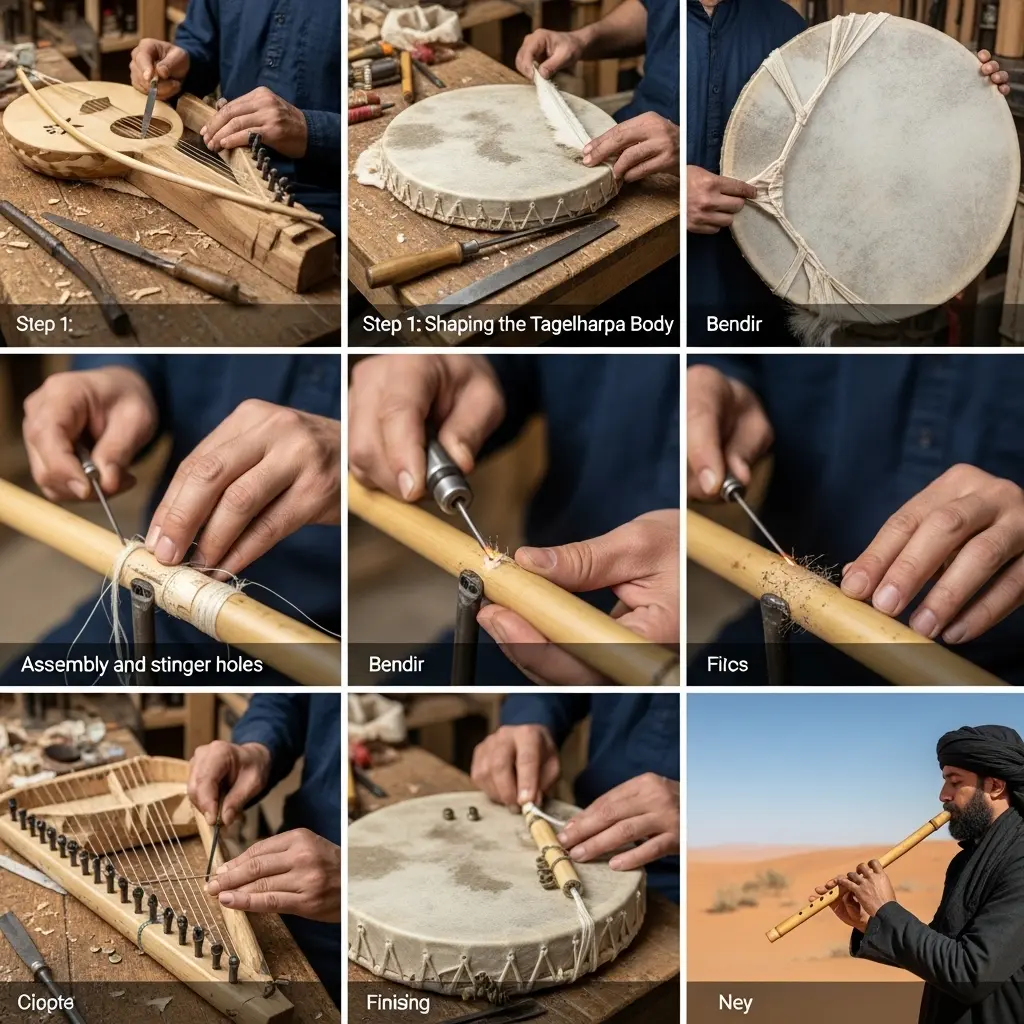
Frame Selection: Choosing a hardwood that won’t warp in the desert heat.
Skin Preparation: Cleaning and thinning the goatskin to the perfect transparency.
Stretching: Using high-tension ropes to pull the skin over the frame.
Curing: Allowing the drum to sit in a dry environment to set the tension.
Decoration: Applying henna or traditional carvings to the body of the drum.
Tuning: Using heat or mechanical pegs to reach the desired pitch.
The Global Appeal of Arabian Melodies
The influence of Desert Music Instruments can be heard in modern film scores and pop music across the globe. Composers often use the Oud or the Ney to add a sense of mystery and ancient history to their work.
This global demand has created a new market for makers of Desert Music Instruments. Artisans in Dubai and Cairo now ship their work to musicians in New York, London, and Tokyo. This cross-cultural exchange helps fund the preservation of the craft.
However, the best place to hear these Desert Music Instruments is still their home. There is a specific magic that happens when the sound of an Oud mixes with the crackle of a campfire and the smell of Arabic coffee. It is an experience that cannot be exported.
Understanding the Microtonal Scale
One of the most unique features of Desert Music Instruments is their ability to play “quarter tones.” Unlike the Western piano, which has 12 notes in an octave, Arabian music uses scales called “Maqamat” that include notes in between.
The fretless nature of the Oud and the Rababa makes them perfect for this. It allows the player to slide between notes, creating the “crying” sound that is so characteristic of Desert Music Instruments.
This complexity is what makes the training of a musician so long. It’s not just about hitting the right note; it’s about the “soul” of the slide. Mastering these nuances is the ultimate goal for any player of Desert Music Instruments.
Preservation of Rare Woods
As environmental concerns grow, makers of Desert Music Instruments are becoming more conscious of their materials. Some traditional woods are now protected or endangered, leading to a search for sustainable alternatives.
Rosewood and ebony, often used in Desert Music Instruments, are now being replaced by sustainably harvested local woods or treated bamboo. This ensures that the craft can continue without harming the planet’s biodiversity.
Conservation programs in the UAE are also encouraging the planting of indigenous trees that can be used for Desert Music Instruments in the future. This forward-thinking approach secures both the environment and the culture.
Conclusion: The Unending Song of the Sands
Desert Music Instruments are the bridge between the physical world of the dunes and the spiritual world of the imagination. They are a reminder that even in the harshest environments, humans will always find a way to create beauty.
The history of these instruments is a story of resilience. They have survived the shift from nomadic tents to modern skyscrapers, and they continue to inspire everyone who hears them. Through Desert Music Instruments, the voice of the desert remains loud and clear.
As you explore the desert, take a moment to listen. Whether it’s the simple beat of a drum or the complex trill of an Oud, remember the hands that made them. The legacy of Desert Music Instruments is a gift from the past that continues to enrich our present.
20 FAQs About Desert Music Instruments and Crafting
1. What is the most iconic of all Desert Music Instruments?
The Rababa is widely considered the most iconic of all Desert Music Instruments. Its simple, one-stringed design is perfectly suited for the nomadic Bedouin lifestyle. Historically, it was the primary instrument used by storytellers and poets to share tribal history and legends. Because it is lightweight and made from readily available desert materials like goatskin and horsehair, it became the “voice” of the Arabian desert.
2. How do Desert Music Instruments survive the extreme heat?
Desert Music Instruments are built using specific types of wood and natural adhesives that can withstand temperature fluctuations. Artisans use hardwoods like walnut and lemonwood that are less prone to warping. Furthermore, many instruments are fretless, which means that even if the wood shifts slightly, the player can adjust their finger placement to stay in tune. Regular maintenance, such as oiling the wood with natural resins, also helps protect them.
3. What materials are used for the strings of Desert Music Instruments?
Traditionally, strings for Desert Music Instruments were made from animal products. The Rababa uses horsehair for both the string and the bow. The Oud originally used silk or dried animal intestines (gut strings). In modern times, many musicians have switched to nylon or silver-plated copper for durability, but purists still prefer natural materials for their warmer, more authentic tone.
4. Why are most Desert Music Instruments fretless?
The absence of frets is a defining feature of Desert Music Instruments like the Oud and the Rababa. This design allows the player to perform “quarter tones” or microtones, which are essential to the Arabian “Maqam” system. Fretless necks give the musician the freedom to slide between notes, creating the expressive, vocal-like quality that defines Middle Eastern music.
5. How is the body of an Oud constructed?
The body of an Oud is made by steaming thin strips of wood and bending them over a mold to create a pear-shaped bowl. This “stave” construction makes the instrument incredibly light and resonant. In high-quality Desert Music Instruments, the back might be made of 15 to 25 individual strips of wood, glued together with natural resins to ensure the best possible sound projection.
6. What role does goatskin play in Desert Music Instruments?
Goatskin is used as a resonator for several Desert Music Instruments, including the Rababa and various drums like the Doumbek. The skin is cleaned, thinned, and stretched tightly over the frame while wet. As it dries, it shrinks and tightens, creating a surface that vibrates beautifully when struck or bowed. The thickness of the skin determines whether the instrument has a deep or sharp tone.
7. Are Desert Music Instruments still made by hand today?
Yes, a significant portion of Desert Music Instruments are still handcrafted by master luthier artisans. While factory-made versions exist for beginners, professional musicians and collectors seek out handmade pieces. These instruments are valued for their superior acoustics, intricate carvings, and the unique “soul” that the builder infuses into the wood.
8. What is a Ney and how is it made?
The Ney is an ancient flute and one of the oldest Desert Music Instruments still in use. It is made from a simple piece of hollow cane or reed. The maker selects a reed with nine joints and carves six holes on the front and one on the back. Despite its simple appearance, the Ney is one of the most difficult instruments to play, requiring a specific embouchure to produce its ethereal, breathy sound.
9. How do you tune a drum in the desert?
In the desert, percussionists tune their Desert Music Instruments using heat. If a drumhead becomes loose due to humidity, the player will hold it near a campfire or in the sun. The heat causes the skin to contract and tighten, raising the pitch. Conversely, if the skin is too tight, it can be slightly dampened. Modern drums sometimes use mechanical tuning lugs, but the traditional heat method is still common during desert safaris.
10. Can anyone learn to play these Desert Music Instruments?
Absolutely. While the microtonal scales of Desert Music Instruments can be challenging for those used to Western music, they are accessible to anyone with patience. Many cultural centers in the UAE offer workshops for beginners to learn the basics of the Oud or the Doumbek. It is a fantastic way to connect with the local culture on a deeper level.
11. What is the significance of the carvings on Desert Music Instruments?
The carvings, especially the rosettes on the Oud, are more than just decoration. They allow the sound to escape the body of the instrument. In Desert Music Instruments, these designs often feature Islamic geometric patterns or floral motifs. They are a source of pride for the artisan and can sometimes identify the region or the specific workshop where the instrument was created.
12. How long does it take to build a high-quality Oud?
A master builder may take anywhere from two months to a year to complete a single Oud. The process cannot be rushed, as the wood needs time to settle after being steamed and bent. Every stage of creating Desert Music Instruments, from selecting the timber to the final polishing, requires precision and attention to detail to ensure perfect intonation.
13. Are there different sizes of Desert Music Instruments?
Yes, instruments like the Oud come in different sizes to accommodate different playing styles and tunings. For example, the “Syrian Oud” is generally larger with a deeper sound, while the “Turkish Oud” is slightly smaller and tuned to a higher pitch. This variety within Desert Music Instruments allows musicians to choose the specific “voice” that fits their musical tradition.
14. How were Desert Music Instruments historically transported?
Nomadic tribes transported Desert Music Instruments in protective bags made of heavy woven fabric or leather. Because the Bedouin moved frequently by camel, the instruments had to be light. The durability of the materials—like the reinforced wood frames and tough animal skins—was specifically designed to survive the rigors of travel across the dunes.
15. What is the “Daff” and when is it used?
The Daff is a large frame drum and one of the most powerful Desert Music Instruments. It is often used in spiritual ceremonies and large celebrations. Some Daffs have metal rings attached to the inside of the frame, which create a jingling sound when the drum is hit. It provides the deep, thumping heartbeat that is central to Arabian folk dance.
16. Does the type of wood affect the sound of Desert Music Instruments?
Definitely. The choice of wood is the most important factor in the tone of Desert Music Instruments. For example, maple provides a bright, clear sound, while walnut offers a warmer, mellower tone. Artisans often mix different woods for the back and the soundboard to create a balanced acoustic profile that can carry across the open desert.
17. What are the “quarter tones” found in desert music?
Quarter tones are notes that fall halfway between the half-steps of a Western scale. Most Desert Music Instruments are designed to play these notes. This gives Arabian music its distinctive, “sliding” sound. It allows for a much wider range of emotional expression, which is why the music can feel so haunting and soulful to the listener.
18. Are there any rare Desert Music Instruments that are disappearing?
Some regional variations of the Rababa and certain types of desert flutes are becoming rarer as modern pop music dominates. However, there is a strong movement in the UAE to document and preserve these Desert Music Instruments. Cultural festivals and heritage centers are working hard to ensure that the knowledge of how to make and play them is passed to the next generation.
19. How do you maintain the skin on Desert Music Instruments?
The skin on Desert Music Instruments needs to be kept clean and occasionally treated with natural oils to prevent it from cracking. If a skin on a Rababa or drum breaks, it must be replaced by a professional who understands how to stretch the new skin to the correct tension. Proper storage in a climate-controlled case is the best way to ensure the skin lasts for many years.
20. Where can I buy authentic Desert Music Instruments?
Authentic Desert Music Instruments can be found in the traditional souks of Dubai or directly from artisan workshops. When buying, it is important to look for instruments made from solid wood rather than plywood. Visiting a site like https://royaldesertadventures.ae/ can also give you a chance to meet local musicians who can recommend the best builders in the region.