
Table of Contents
Desert Tent Symbolism: The Heartbeat of Nomadic Arabian Identity
Desert Tent Symbolism is the thread that weaves together the history, values, and survival of the Bedouin people. To an outsider, a tent might look like a simple piece of fabric stretched over poles. To those born of the sand, it is a fortress of honor and a sanctuary of generosity.
The concept of Desert Tent Symbolism begins with the very material it is made of. Known as “Bayt al-Shar” or the house of hair, these structures are crafted from goat and sheep wool. This organic choice is the first layer of meaning, representing the deep connection between the nomad and their livestock.
As we explore Desert Tent Symbolism, we find that the structure itself is a living metaphor for the tribe. It is flexible enough to withstand the fiercest sandstorms yet strong enough to protect the family. This balance of softness and strength defines the Arabian spirit.
The Sacred Pillar of Hospitality
The most powerful aspect of Desert Tent Symbolism is the concept of the open door. In the desert, a tent is never truly closed to a traveler. The front flap is often left open to signal that any passerby is welcome to seek shade, water, and food.
This element of Desert Tent Symbolism is a matter of survival. In the harsh environment, providing refuge to a stranger is not just a polite gesture; it is a moral law. The tent stands as a beacon of safety in an otherwise unpredictable landscape.
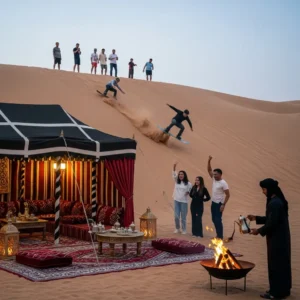
Inside the tent, Desert Tent Symbolism dictates a specific layout for guests. The “Majlis” or sitting area is the most prominent section. It is here that the fire is lit and the coffee is poured, reinforcing the tent’s role as a center for social and political life.
Gender and the Division of Space
In the world of Desert Tent Symbolism, the internal division of the shelter speaks volumes about social organization. Tents are traditionally divided by a woven curtain called a “Gata.” This creates separate spheres for men and women.
The men’s side, featured heavily in Desert Tent Symbolism, is where business is conducted and guests are received. It represents the tribe’s outward face to the world. It is a space of public discourse, storytelling, and tribal decision-making.
The women’s side represents the private heart of the family in Desert Tent Symbolism. It is where children are raised and the daily life of the household occurs. Far from being a place of exclusion, it is a space of significant internal power and family preservation.
Architectural Logic and Tribal Strength
The way a tent is pitched carries significant Desert Tent Symbolism. The number of poles often indicates the wealth and status of the family. A larger tent with more poles signifies a leader or a family with a large number of dependents.
Even the direction the tent faces is part of Desert Tent Symbolism. Tents are usually positioned to face away from the wind and toward the rising sun. This alignment with nature shows the Bedouin’s mastery over their environment rather than an attempt to fight it.
The portability of the structure is a key part of Desert Tent Symbolism. It represents the nomadic philosophy that nothing in this world is permanent. The ability to pack up an entire home in minutes reflects a spirit of detachment and readiness for change.
Comparison of Traditional and Modern Tents
| Feature | Traditional Bedouin Tent | Modern Safari Tent |
| Material | Hand-woven Goat Hair | Canvas or Synthetic Fabric |
| Purpose | Daily Survival and Living | Tourism and Leisure |
| Cooling | Natural breathability of weave | Air Conditioning Units |
| Portability | Packed on Camel Back | Permanent or Semi-permanent |
| Symbolism | Tribal Honor and Survival | Luxury and Heritage Display |
The Colors of the Sand and Sky
Colors play a subtle but vital role in Desert Tent Symbolism. Black is the most common color for the exterior, as goat hair is naturally dark. This dark shade provides the best protection against the harsh UV rays of the sun.
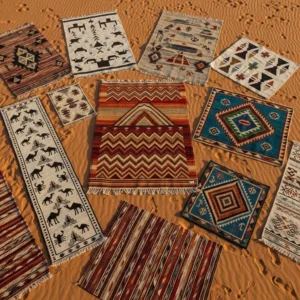
White and red patterns found in the interior represent Desert Tent Symbolism at its most artistic. These hand-woven designs, often created using the Sadu technique, tell stories of the tribe’s travels, their victories, and their lineage.
When a guest enters a tent, the richness of these Desert Textile Patterns (as seen in our previous discussions) serves as a visual greeting. The colors signify a family that takes pride in its craftsmanship and its history.
Survival Skills and Home Maintenance
The maintenance of the shelter is a continuous cycle in Desert Tent Symbolism. Every year, women must weave new sections of hair to replace those worn out by the wind. This act of renewal represents the continuity of the tribe across generations.
The scent of the tent is also part of Desert Tent Symbolism. The smell of goat hair, woodsmoke, and Arabic coffee creates a sensory map of home. It is a comforting presence that stays with a nomad even when they are far from the dunes.
In the modern era, Desert Tent Symbolism has transitioned into the urban landscape. Many houses in the UAE feature a “tent room” or a permanent tent in the garden. This is a way for families to stay connected to their roots in a world of glass and steel.
Protection Against the Unseen
Spiritual protection is a hidden layer of Desert Tent Symbolism. Various amulets or specific weaving patterns are used to ward off the “Evil Eye.” The tent is viewed as a vessel that must be kept pure and safe from negative energy.
The central pole often holds the most Desert Tent Symbolism. It is the spine of the home. If the central pole falls, the home is gone. This has led to the pole being used as a metaphor for the patriarch or the leader of the tribe.
Blessings are spoken whenever a tent is moved to a new location. This part of Desert Tent Symbolism ensures that the ground is sanctified and that the family will find prosperity in their new grazing lands. It is a ritual of hope and faith.
The Role of Tents in Desert Safaris
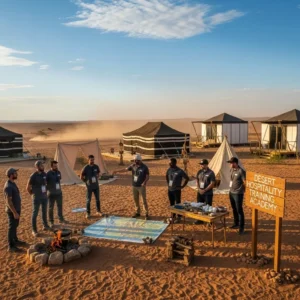
For travelers today, experiencing Desert Tent Symbolism is a highlight of any trip. Modern camps strive to replicate the feeling of a traditional Bedouin home. It allows guests to step back in time and feel the hospitality of the desert.
Many operators, such as https://royaldesertadventures.ae/, use traditional tent designs to create an authentic atmosphere. Sitting on floor cushions in a draped tent helps visitors understand the social dynamics of the desert.
Educational tours often focus on Desert Tent Symbolism to explain the history of the UAE. By showing how the Bedouin lived, guides can explain the values that still drive the nation today—hospitality, resilience, and community.
External Resources for Heritage Lovers
To see the architectural beauty associated with Desert Tent Symbolism, you can explore sites like https://dubaidesertsafarie.com/. They provide extensive galleries of traditional desert setups.
Another fantastic partner in preserving this history is https://htdesertsafari.com/. Their focus on authentic cultural interaction makes them a great resource for understanding the nuances of Bedouin life.
If you are looking for more information on the internal cultural standards we uphold, please visit our main platform at https://saharadesertsafaridubai.com to learn about our dedication to the Arabian legacy.
The Logistics of the Nomadic Move
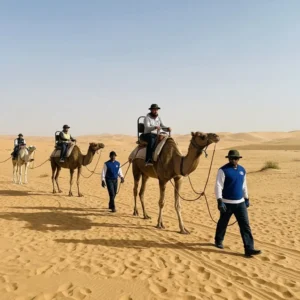
Moving the home is a major event in Desert Tent Symbolism. It is a choreographed effort involving the whole tribe. The men handle the camels, while the women manage the packing of the tent and the household goods.
This mobility is a core part of Desert Tent Symbolism. It shows a culture that is not tied to a single piece of land but to the spirit of the journey. The tent is the only constant in a life of constant movement.
The site selection for the new camp involves Desert Tent Symbolism. A site is chosen based on the height of the dunes and the proximity to water. The way the tents are arranged in the new location reflects the hierarchy and relationships within the tribe.
Coffee Culture and the Tent Hearth
The hearth, or “Dallah,” is the center of Desert Tent Symbolism. It is where the coffee is prepared. The sound of the pestle hitting the mortar is a call to the neighbors that fresh coffee is ready.
This auditory part of Desert Tent Symbolism is a signal of community. It says that the tent is active and that guests are welcome. The quality of the coffee and the way it is served are direct reflections of the family’s honor.
In the evening, the fire becomes the focus of Desert Tent Symbolism. It is a place of warmth and light where stories are shared. These storytelling sessions are how the history of the tribe is passed from the elderly to the young.
Resilience in the Face of Modernity
While many Bedouin have moved into modern housing, Desert Tent Symbolism remains a powerful force. During the winter months, thousands of families head back to the desert to set up tents for weeks at a time.
This “camping season” is a modern expression of Desert Tent Symbolism. It is a rejection of the noise of the city and a return to the simplicity of the sand. It shows that the tent is not just an object from the past, but a necessary part of the present.
The government of the UAE supports this through the creation of designated camping areas. This ensures that Desert Tent Symbolism can continue to thrive in a regulated and sustainable way, protecting the desert for future generations.
The Influence on Global Design
The principles of Desert Tent Symbolism have influenced architects around the world. The concept of “tensile architecture” draws directly from the Bedouin tent. High-tech stadiums and airport terminals often use fabric roofs that mimic the curves of a tent.
This global reach of Desert Tent Symbolism is a source of pride for the region. It shows that the solutions developed by nomads to survive the desert are now being used to build the cities of the future.
Fashion designers also look to Desert Tent Symbolism. The way the fabric drapes and the use of bold stripes and heavy weaves are common themes in “desert chic” collections. It is a style that is both ancient and incredibly modern.
Essential Elements of a Traditional Tent
Bayt al-Shar: The “House of Hair” made from goat and sheep wool.
Gata: The decorative curtain used to separate the men’s and women’s sections.
Amuda: The central poles that provide the structural integrity of the home.
Rawaq: The side flaps that can be lifted to allow for cross-ventilation.
Majlis: The guest area where coffee is served and business is discussed.
Dallah: The traditional coffee pot that serves as the centerpiece of the hearth.
The Psychology of Space in the Desert
There is a unique psychology behind Desert Tent Symbolism. In a land where everything is vast and open, the tent provides the only boundary. It is a psychological shield as much as a physical one.
This boundary is respected by all in Desert Tent Symbolism. To enter a person’s tent without permission is a grave insult. The sanctity of the home is the highest law of the desert, ensuring that every family has a place of peace.
The lack of permanent walls in Desert Tent Symbolism also encourages a different way of thinking. It promotes a life that is transparent and connected to the neighbors. You can hear the sounds of the camp and the animals, keeping everyone in sync with the rhythm of the tribe.
Sustainability and Traditional Knowledge
The Desert Tent Symbolism also extends to environmental wisdom. The materials used are completely biodegradable. When a tent is eventually discarded, it returns to the earth without leaving a trace.
This sustainability is a lesson for the modern world. Desert Tent Symbolism teaches us that we can create comfortable, beautiful homes using only what the land provides. It is the ultimate example of a low-carbon lifestyle.
Water management within the tent is also part of Desert Tent Symbolism. Every drop is valued. The practices developed in the tent for saving and reusing water are still relevant today as we face global water scarcity.
Conclusion: The Eternal Shelter of the Sands
Desert Tent Symbolism is a testament to the endurance of the human spirit. It is a story of how a simple piece of fabric became a symbol of a nation’s soul. From the first nomads to the modern explorers, the tent remains the ultimate icon of the desert.
When you stand before a tent in the Arabian dunes, remember the layers of Desert Tent Symbolism. You are looking at more than a shelter; you are looking at a history of hospitality, a system of honor, and a masterpiece of survival.
The dunes will always shift, but the spirit of the tent remains constant. It is an invitation to slow down, to share a cup of coffee, and to remember where we came from. Desert Tent Symbolism is the heart of the desert, and it beats as strongly today as it did thousands of years ago.
20 FAQs About Desert Tent Symbolism and Culture
1. What is the main meaning behind Desert Tent Symbolism?
The core of Desert Tent Symbolism is the value of hospitality and tribal honor. The tent is seen as a “House of Hair” that provides sanctuary to anyone in need. It represents the Bedouin’s resilience and their ability to create a thriving community in one of the most inhospitable places on Earth. Every part of the tent, from the open flap to the central pole, serves as a reminder of the nomad’s duty to their guests and their family.
2. Why are traditional tents black in Desert Tent Symbolism?
In Desert Tent Symbolism, the black color is a result of using natural goat hair. This is not just an aesthetic choice; it is a practical one. Dark colors provide superior protection against the sun’s intense UV rays. Furthermore, when the fabric gets wet from rare desert rain, the fibers swell, making the tent waterproof. This natural engineering is a key part of the survival logic inherent in the culture.
3. What does the central pole represent in Desert Tent Symbolism?
The central pole, or “Amuda,” is the most significant structural element in Desert Tent Symbolism. It represents the patriarch or the leader of the family. Just as the pole holds up the entire weight of the tent, the leader is responsible for the safety and well-being of the tribe. If the pole is removed, the home collapses, making it a powerful metaphor for social and family stability.
4. How does Desert Tent Symbolism address gender roles?
Desert Tent Symbolism uses a woven curtain called a “Gata” to divide the home into a public men’s section and a private women’s section. The men’s side is the face of the tribe, used for receiving guests and conducting business. The women’s side is the “heart” of the home, where the family’s daily life occurs. This division reflects the balance of public honor and private strength in Bedouin society.
5. Is the size of a tent important in Desert Tent Symbolism?
Yes, the size of a tent is a direct indicator of social status. In Desert Tent Symbolism, a tent with many poles (such as a “seven-pole tent”) indicates a person of great wealth and influence, often a Sheikh or a tribal leader. Larger tents were needed to host more guests, which in turn increased the owner’s prestige through the display of grand hospitality.
6. Why is the front of the tent left open in Desert Tent Symbolism?
An open tent flap is a universal sign of welcome. In Desert Tent Symbolism, it signifies that the host is ready and willing to receive guests. It is a visual invitation for any traveler to seek refuge. Closing the tent during the day would be seen as a sign of unfriendliness or a lack of resources to provide hospitality, which would bring shame upon the family.
7. How do modern Arabs stay connected to Desert Tent Symbolism?
Many families in the UAE maintain the tradition through “Winter Camping.” They leave their modern homes to live in tents for weeks at a time. This modern expression of Desert Tent Symbolism is a way to reconnect with their heritage and teach younger generations the values of the desert. Even in city villas, many people build a “Majlis” room designed to look like a traditional tent.
8. What role does coffee play in Desert Tent Symbolism?
Coffee is the lifeblood of the tent. In Desert Tent Symbolism, the act of roasting and serving coffee is a sacred ritual. It is the first thing offered to a guest and represents the host’s generosity. The fireplace, or hearth, where the coffee is made is the social center of the tent, acting as a place for gathering, news sharing, and storytelling.
9. Are there specific patterns used in Desert Tent Symbolism?
Yes, the interior of the tent is often decorated with Sadu weaving. These Desert Textile Patterns feature geometric shapes that have specific meanings, such as protection from the evil eye or the representation of local flora and fauna. These patterns turn the tent into a living history book of the tribe’s journey and artistic achievements.
10. How long does a traditional tent last?
A well-maintained tent can last for decades, but it requires constant care. As part of Desert Tent Symbolism, women regularly weave new sections of goat hair to replace parts that have been thinned by the desert wind. This cycle of repair and renewal represents the immortality of the tribe and the passing of skills from mother to daughter.
11. Can anyone enter a tent in Desert Tent Symbolism?
While hospitality is a law, there are strict rules of etiquette. In Desert Tent Symbolism, a guest should always approach the men’s section and announce their arrival. Entering the women’s section without permission is a major breach of desert law. These rules ensure that while the tent is a place of welcome, the privacy and honor of the family are always protected.
12. How has Desert Tent Symbolism influenced modern architecture?
The lightweight, tensile structures seen in modern Dubai, such as at Expo City or the various airport terminals, are inspired by the Bedouin tent. Desert Tent Symbolism taught architects how to create large, shaded spaces using minimal materials. This “nomadic logic” is now a cornerstone of sustainable and innovative design in the Middle East and beyond.
13. What happens to the tent during a sandstorm?
The design of the tent is perfectly suited for wind. In Desert Tent Symbolism, the flexibility of the poles and the hair-fabric allows the structure to “give” with the wind rather than break. The low profile and the ability to adjust the side flaps (Rawaq) mean that the family can hunker down and remain safe even in the most extreme weather conditions.
14. Is Desert Tent Symbolism present in Arabian literature?
Absolutely. Many classical Arabic poems use the tent as a metaphor for the beloved or for the soul’s journey. In Desert Tent Symbolism, the “house of hair” is often used to contrast with the “house of stone,” representing the freedom of the nomad versus the restrictions of settled life. It remains a powerful literary device to evoke nostalgia and national pride.
15. How do you pitch a tent according to Desert Tent Symbolism?
Pitching a tent is a skilled task. It must face away from the prevailing winds and be placed on slightly elevated ground to avoid flash floods. This practical knowledge is passed down through generations and is a key part of Desert Tent Symbolism, showing the Bedouin’s deep understanding of the desert’s geography and climate.
16. Are modern safari tents part of Desert Tent Symbolism?
While they are built for tourism, they serve as a bridge to Desert Tent Symbolism. They allow visitors to experience the “feeling” of the desert home. Reputable operators like https://royaldesertadventures.ae/ use these structures to educate people about the history and hospitality of the UAE, keeping the symbolic values alive for a global audience.
17. What is the spiritual side of Desert Tent Symbolism?
The tent is often seen as a blessed space. Prayers are offered when setting up a new camp, and specific symbols are woven into the fabric to protect the inhabitants from bad luck. This spiritual layer of Desert Tent Symbolism reinforces the idea that the home is a sanctuary where God’s protection is sought and honored.
18. Why is the scent of the tent important in Desert Tent Symbolism?
The smell of the goat hair, mixed with frankincense and woodsmoke, is the “smell of home” for a nomad. In Desert Tent Symbolism, these scents are deeply tied to memory and identity. Even today, many people use traditional incense in their modern homes to recreate the comforting atmosphere of the desert tent.
19. Does Desert Tent Symbolism vary by region?
Yes, there are subtle differences. Tents in the rocky northern areas might be smaller and more reinforced, while those in the vast dunes of the Empty Quarter are larger and more airy. However, the core Desert Tent Symbolism—hospitality, honor, and mobility—remains identical across the entire Arabian Peninsula.
20. Where can I see authentic Desert Tent Symbolism today?
The best places are heritage museums like the Shindagha Museum in Dubai or during the various desert festivals like the Liwa Date Festival. You can also experience it firsthand by visiting authentic desert camps like https://saharadesertsafaridubai.com, where the traditions are showcased for visitors in a respectful and educational manner.