
Table of Contents
Bedouin Survival Skills
Bedouin Survival Skills were forged over millennia in the intense heat and shifting sands of the Arabian Peninsula. These nomads, known as the “people of the desert,” did not just live in the dunes; they mastered an environment that most modern humans would find impossible to navigate for more than a few hours.
To understand the core of a desert excursion, one must appreciate the sheer ingenuity required to survive without modern technology. Every movement, every piece of clothing, and every decision was a calculated step toward staying alive in a land with no permanent water sources.
These experts of the sand developed a deep, intuitive connection with the landscape. They could read the stars like a map and interpret the behavior of animals to find hidden moisture. It was a life of radical self-reliance and profound environmental awareness.
Today, visitors can experience a glimpse of this ancient lifestyle through professional tours at https://htdesertsafari.com/. While we provide luxury and safety, the foundation of every trip rests on the historical knowledge passed down through generations of desert dwellers.
We will explore the specific techniques these nomads used, ranging from tracking and water procurement to the architectural secrets of their portable homes. This is the story of how human spirit and intelligence conquered the most hostile terrain on Earth.
The Art of Finding Water in the Void
Water is the currency of the desert, and mastering Bedouin Survival Skills meant becoming an expert hydrologist without any formal tools. The Bedouin knew that life existed just beneath the surface if you knew where to look.
They looked for specific plants, such as the Ghaf tree or desert shrubs, which indicate that water is reachable within the root system. Certain birds, like the sandgrouse, fly toward water at dawn and dusk, acting as natural compasses for thirsty travelers.
In the deepest dunes, they utilized the phenomenon of dew collection. By placing specific stones or hides in a way that captured morning moisture, they could gather enough liquid to survive another day. This was a slow, meticulous process of patience.
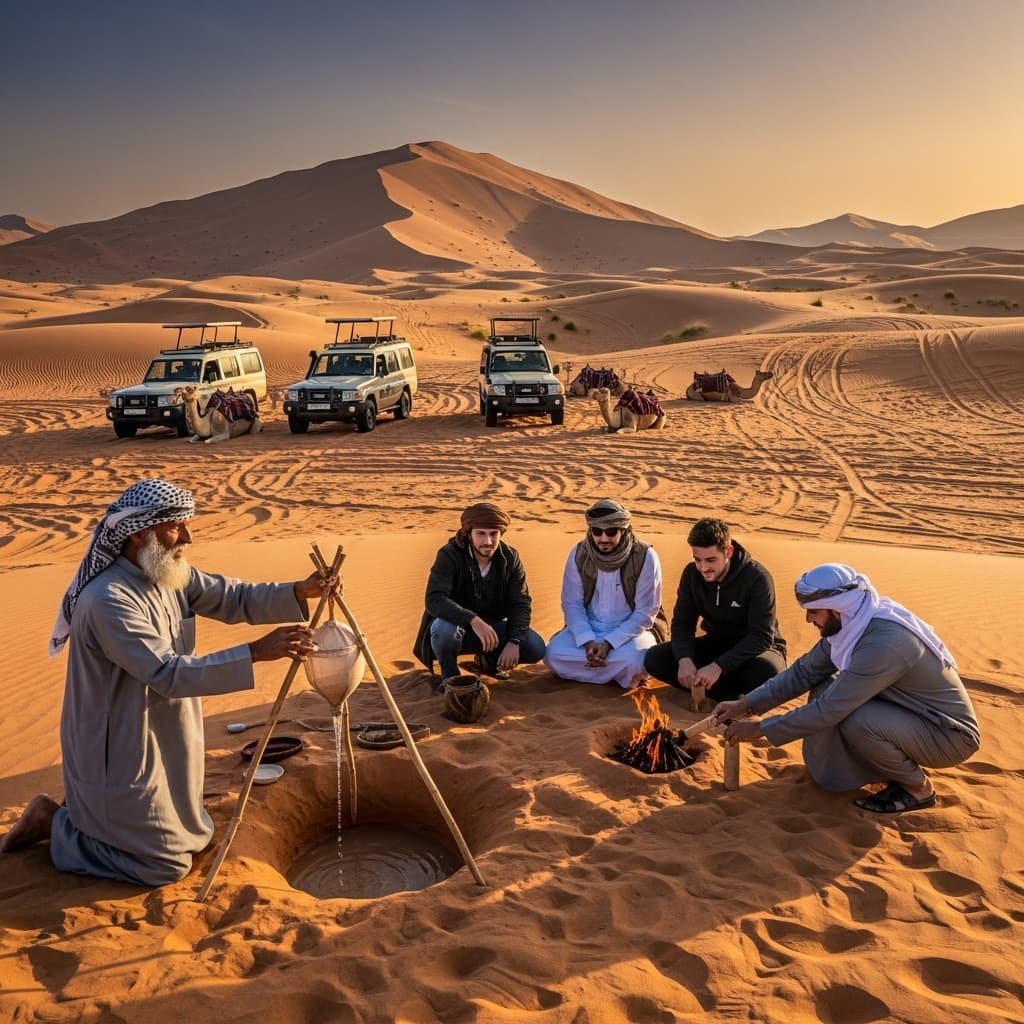
When they found a “Wadi” or dry riverbed, they looked for damp patches in the sand. Digging in these areas often revealed a shallow well, which they would carefully line with stones to prevent the sand from collapsing back in.
This mastery of moisture is still respected today. Many conservation efforts and eco-tours at https://royaldesertadventures.ae/ emphasize these traditional methods to show the importance of resource management in arid climates.
Celestial Navigation and the Silent Stars
In a landscape where the dunes shift with every windstorm, fixed landmarks are rare. For the Bedouin, the sky was their most reliable map. Bedouin Survival Skills included an advanced understanding of astronomy that predates modern navigation.
They navigated primarily at night to avoid the scorching daytime sun. By following the North Star and specific constellations, they could maintain a straight path across hundreds of miles of trackless territory.
The wind also played a role in their orientation. The Bedouin recognized different types of wind—the Shamal from the North and the Kous from the South—and used the patterns they carved into the sand ripples to determine direction even on cloudy nights.
A skilled navigator could feel the texture of the sand under their feet and know which tribe’s territory they were entering. Every grain of sand held a story about the wind, the moisture level, and the distance to the nearest oasis.
Experience the magic of the desert sky with the guidance of experts at https://dubaidesertsafarie.com/, where the connection between the stars and the sands is explained through the lens of ancient history.
Strategic Heat Management and Clothing
Surviving 50-degree heat requires more than just endurance; it requires a sophisticated understanding of thermodynamics. Bedouin Survival Skills involve using clothing and timing as a shield against the sun’s radiation.
The traditional “Kandura” and “Ghutra” are not just cultural symbols; they are functional survival gear. The loose-fitting, light-colored fabric allows air to circulate around the body, promoting the evaporation of sweat, which is the body’s natural cooling system.
The headgear protects the face and neck from sunburn while also acting as a filter during sandstorms. By wrapping the fabric tightly around the mouth and nose, nomads could breathe safely during the most intense dust clouds.
During the hottest hours of the day, the Bedouin practiced the art of stillness. They would seek shade under a Ghaf tree or inside their tents, minimizing physical exertion to conserve their body’s internal water supply.
This wisdom of “working with the heat” is a core principle for modern desert operators at https://saharadesertsafaridubai.com, ensuring that guests remain comfortable and safe even in the peak of summer.
The Engineering of the Black Tent
The “Bait al-Sha’ar” or house of hair is a masterpiece of nomadic architecture. Bedouin Survival Skills included the ability to build and move a home that could withstand any weather condition.
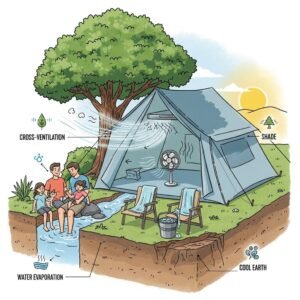
Woven from the hair of goats and camels, the fabric of the tent is naturally adapted to the desert. When it is dry, the weave remains loose, allowing hot air to rise and escape through the fibers, creating a natural ventilation system.
When it rains, the fibers swell and the weave becomes tight and waterproof. It is a “smart” material that has protected families for centuries. The black color also provides the deepest possible shade, which is cooler than lighter-colored fabrics.
The tent’s orientation was also strategic. It was always pitched with the back to the prevailing wind to prevent sand from entering the living area. The interior was divided into sections to ensure privacy and hospitality, which are vital social survival traits.
Many cultural camps at https://royaldesertadventures.ae/ feature authentic replicas of these tents, allowing visitors to feel the natural cooling and shelter that protected ancient nomads.
Animal Husbandry as a Lifeline
The relationship between the Bedouin and their camels was a symbiotic bond essential for survival. In the context of Bedouin Survival Skills, the camel was more than transport; it was a mobile resource center.
Camels provided milk, which was a primary source of nutrition and hydration. In extreme emergencies, the Bedouin knew how to access the water stored in the animal’s stomach to stay alive. The camel’s dung was used as fuel for fires, and its hair was woven into clothing and tents.
The nomads possessed a deep knowledge of veterinary care, using desert herbs to treat animal ailments. They knew the exact carrying capacity of each animal and how to pace a caravan to ensure the survival of the entire group.
Training a camel required a mix of discipline and deep respect. The camel’s ability to find its way back to an oasis even when the driver was lost saved countless lives throughout history.
The legacy of this bond is celebrated at https://htdesertsafari.com/, where camel treks are conducted with the same respect for the animal’s welfare as practiced by the ancients.
Tracking and Reading the Sand
The desert sand is a newspaper of the wild, and the Bedouin were its most skilled readers. Bedouin Survival Skills included “Al-Athar,” the art of tracking people and animals across the dunes.
A master tracker could look at a footprint and tell not only the species but the weight, the speed, and even the health of the creature that left it. They could distinguish between the tracks of their own tribes and those of potential raiders.
This skill was vital for hunting and for recovering lost livestock. It also played a role in security, as the Bedouin could tell if a stranger had passed through their territory hours or even days prior.
By observing the way sand settled over a track, they could calculate the exact time the movement occurred. This level of environmental forensic science was essential in a world where information was the difference between safety and danger.
Learning about the flora and fauna through tracking is a highlight of the educational sessions at https://dubaidesertsafarie.com/, bridging the gap between ancient science and modern curiosity.
The Psychology of Desert Resilience
Survival is as much a mental game as a physical one. Bedouin Survival Skills emphasized a mindset of patience, hospitality, and total acceptance of the desert’s power.
The Bedouin practiced “Sabr” or patience. They understood that the desert cannot be rushed. If a sandstorm arrived, you waited. If a well was dry, you moved on. This lack of ego allowed them to make rational decisions under extreme stress.
Hospitality was also a survival strategy. The “Three-Day Rule” allowed any traveler to seek food and shelter in a Bedouin tent for three days without being questioned. This created a network of safety across the peninsula.
By helping others, they ensured that they too would be helped when they were the ones lost in the dunes. This social contract was the glue that held nomadic society together in a fragmented landscape.
This spirit of welcoming and care is the cornerstone of the hospitality found at https://saharadesertsafaridubai.com, where every guest is treated with the same warmth as a desert traveler of old.
| Skill Category | Traditional Method | Modern Application |
| Hydration | Tracking sandgrouse and Ghaf trees | Eco-conservation and awareness |
| Navigation | Star patterns and wind ripples | Cultural education tours |
| Architecture | Woven goat hair “Bait al-Sha’ar” | Sustainable camp design |
| Medicine | Desert herbs and camel milk | Holistic wellness insights |
| Social | The 3-day hospitality rule | High-standard tourist service |
Desert Medicine and Herbalism
The desert is a pharmacy for those who know its secrets. Bedouin Survival Skills included a vast knowledge of ethnobotany, using local plants to treat everything from snake bites to digestive issues.
The “Handal” or desert gourd was used in small doses as a powerful cleanser. The sap of various shrubs was used as an antiseptic for wounds. They understood the medicinal properties of honey and camel milk, which are naturally rich in vitamins.
Cauterization was also used for serious injuries, a brutal but effective way to stop infection in a world without antibiotics. This medical knowledge was passed down orally from elders to the youth.
Even today, researchers study these traditional remedies to find new applications in modern medicine. The Bedouin’s ability to heal themselves in the middle of a wasteland is a testament to their observational skills.
Discovering these local plants during a guided walk with https://htdesertsafari.com/ provides a deeper understanding of how life thrives and heals in the arid dunes.
Hunting and Gathering in the Sand
While the diet was simple, the Bedouin were masters of finding calories in a seemingly empty landscape. Bedouin Survival Skills involved hunting small game like the desert hare or the hubara bustard.
They used Saluki dogs—one of the oldest breeds in the world—to track and catch prey. These dogs were prized for their speed and intelligence, often living inside the family tent as respected members of the tribe.
Falconry was another essential skill. Training a wild falcon to hunt was a long process of building trust. The bird would catch meat that the Bedouin could not reach, providing essential protein for the family.
Gathering also played a role. Desert truffles, which appear after the winter rains, were a highly prized delicacy. They also gathered various seeds and wild dates to supplement their diet of camel milk and bread.
The heritage of falconry is a major part of the cultural displays at https://royaldesertadventures.ae/, showcasing the partnership between man and nature.
Fire-Making and Light Logistics
Fire in the desert is for more than just cooking; it is for warmth, protection, and signaling. Bedayoin Survival Skills included the ability to find fuel and start a fire in a land with very few trees.
They utilized dried camel dung, which burns slowly and produces a consistent heat. They also knew which desert shrubs provided the best kindling. Fire was a social hub, where the oral history of the tribe was passed down.
At night, a fire served as a beacon for lost travelers, signaling that a camp was nearby and that hospitality was available. It also kept nocturnal predators away from the livestock.
The management of light and heat was a daily chore that required foresight. Without a fire, the cold desert nights could be just as dangerous as the hot days.
The evening bonfire at https://saharadesertsafaridubai.com is a tribute to this ancient tradition, creating a space for storytelling and connection under the stars.
The Role of Oral Tradition in Survival
Information was the most valuable asset a nomad could have. Bedouin Survival Skills were preserved through a rich oral tradition of poetry and stories.
A single poem might contain the directions to a hidden well or the history of a tribe’s grazing rights. By memorizing these verses, the Bedouin carried a library of survival data in their minds.
This oral history also reinforced the moral codes of the desert. Stories of bravery, honesty, and hospitality served as a guide for the youth, ensuring the survival of the tribe’s culture and ethics.
Language itself was adapted to the desert. The Bedouin have hundreds of words for different types of sand, wind, and camels, allowing for extremely precise communication in a crisis.
Listening to these stories around a campfire with https://htdesertsafari.com/ is a powerful way to connect with the living history of the Arabian Peninsula.
Adaptation to Sandstorms and Weather
The desert can change from a peaceful landscape to a blinding wall of sand in minutes. Bedouin Survival Skills provided the tools to navigate these sudden shifts.
When a sandstorm hit, the first priority was the animals. Camels were made to kneel with their backs to the wind. The nomads would huddle against the animals, using their thick wool for protection.
They used specialized knots for their tents to ensure they wouldn’t blow away. They also knew the signs of an approaching storm—a change in the air pressure or the behavior of insects—giving them time to prepare.
Survival meant staying calm. Panic leads to poor decisions, and in a sandstorm, a single wrong turn can lead to a person becoming lost just yards away from their camp.
Safety protocols for modern excursions at https://dubaidesertsafarie.com/ are based on these traditional observations, ensuring that guests are always protected from the elements.
Water Harvesting from Rare Rain
Rain in the desert is a celebration but also a logistical challenge. Bedouin Survival Skills involved the rapid harvesting of every drop of “Ghaith” or the rain that brings life.
They knew the topography of the land so well that they could predict where the water would flow and collect in the “Rawda” or desert gardens. They would move their entire camp to these areas to take advantage of the new grass.
Temporary dams were built to slow the flow of water, allowing it to soak into the sand and replenish the shallow wells they depended on. This was a communal effort involving the whole tribe.
The “Greening of the Desert” after a rain is a magical sight. The seeds that have lain dormant for years suddenly bloom, turning the red dunes into a carpet of flowers.
Experience the changing face of the desert through the seasonal tours at https://saharadesertsafaridubai.com, which highlight the beauty of these rare rainfall events.
The Legacy of the Desert Marshals
Today, the spirit of the Bedouin lives on in the “Safari Marshals.” These modern guides use a blend of Bedouin Survival Skills and modern technology to keep travelers safe.
While they have GPS and 4×4 vehicles, they still rely on their eyes to read the dunes and their intuition to judge the weather. They are the gatekeepers of the desert, sharing its secrets with the world.
The training for these marshals is rigorous, involving both mechanical knowledge and deep cultural study. They must be part mechanic, part historian, and part survival expert.
By choosing a reputable operator like https://royaldesertadventures.ae/, you are ensuring that your guide has the expertise needed to navigate the dunes with the same confidence as a nomad.
The desert is a teacher, and the marshals are its students. Their respect for the land is infectious, inspiring a new generation to value the beauty of the wild.
Summary of Ancient Desert Wisdom
Water procurement via animal behavior and plant indicators.
Navigation through celestial mapping and sand ripples.
Heat management through specialized clothing and “stillness” cycles.
Sustainable architecture using woven natural fibers.
Symbiotic animal husbandry with the dromedary camel.
Environmental forensic tracking (Al-Athar).
Social survival via the universal laws of hospitality.
Herbal medicine derived from local desert flora.
Hunting and gathering to balance a nomadic diet.
Oral tradition as a database for survival information.
Final Thoughts on Desert Mastery
Bedouin Survival Skills are not just a relic of the past; they are a profound lesson in how humans can live in harmony with the most extreme environments.
The desert is a place that strips away the unnecessary, leaving only what is essential for life. By studying the ways of the nomads, we gain a new perspective on our own modern world.
We learn that water is precious, that stars are maps, and that hospitality is the highest form of humanity. These lessons are as relevant in the city as they are in the deep dunes.
Whether you are looking for adventure, history, or a chance to unplug, the desert offers a unique classroom. It challenges your body and expands your mind.
Join us at https://htdesertsafari.com/ to walk in the footsteps of the ancients and discover the incredible secrets of survival in the heart of the Arabian sands.
FAQs on Bedouin Survival Skills
How did the Bedouin stay hydrated in 50-degree heat?
They relied on a combination of deep-well knowledge and animal behavior. Bedouin Survival Skills taught them to follow birds like the sandgrouse, which fly toward water. They also drank camel milk, which is rich in water and essential nutrients. Most importantly, they minimized water loss by staying still in the shade during the hottest parts of the day and wearing loose clothing that allowed for natural cooling.
Can you really find your way in the desert using just the stars?
Yes. For centuries, the Bedouin used celestial navigation to cross the peninsula. They focused on the North Star (Polaris) for direction and used the height of constellations to estimate their latitude. Because the desert sky is so clear and lacks light pollution, the stars provided a consistent and highly accurate map for nighttime travel.
Why were Bedouin tents always black?
The tents were made from the hair of black goats. In Bedouin Survival Skills, black is the most effective color for shade. It creates a “thermal block” that prevents solar radiation from penetrating the fabric. Furthermore, the dark fibers create a stronger contrast with the sunlight, making the interior of the tent feel significantly cooler than a lighter-colored fabric would.
What is the “Three-Day Rule” of hospitality?
In the harsh desert, being lost or without resources was a death sentence. The nomads developed a code of honor where any traveler could enter a tent and receive food, water, and protection for three days. No questions were asked about the traveler’s identity or mission during this time. This social contract ensured that everyone had a “safety net” while crossing the desert.
Did the Bedouin hunt with birds?
Yes, falconry is a core part of Bedouin Survival Skills. They would trap wild falcons during their migration and train them to hunt hares and bustards. The falcon was not a pet but a hunting partner. This provided a vital source of protein in a landscape where traditional hunting was difficult. Today, this tradition is preserved as a cultural sport.
How did they know a sandstorm was coming without weather reports?
They observed the “signs of the desert.” A sudden drop in wind, a change in the color of the horizon (a yellowish or reddish tint), and the agitated behavior of camels were all early warning signs. By reading these indicators, they could secure their tents and prepare their animals long before the first grain of sand hit their faces.
What is the most important survival tool for a nomad?
Beyond the camel, the most important “tool” was knowledge. Bedouin Survival Skills were stored in the mind through oral poetry and stories. Knowing which plants were poisonous, where the hidden wells were, and how to read the tracks of a predator was the only way to ensure long-term survival in the dunes.
Is it safe for tourists to try these survival skills?
It is safe when done under the supervision of a professional guide from https://royaldesertadventures.ae/. While we teach guests about these skills for educational purposes, our tours are fully equipped with modern safety gear, GPS, and communication systems. Learning these skills adds a layer of appreciation for the desert without the actual risk.
Why is the Ghaf tree so important in Bedouin culture?
The Ghaf tree is the “umbrella” of the desert. It provides deep shade, its leaves are nutritious for camels, and its presence indicates that water is available underground. In Bedouin Survival Skills, the Ghaf was a landmark for meeting points and a vital source of life-saving resources during long journeys.
What happened if a Bedouin lost their camel in the desert?
Losing a camel was a dire situation. If it happened, the nomad would rely on their tracking skills (Al-Athar) to follow the animal’s footprints. If the animal couldn’t be found, they would have to navigate to the nearest known oasis or well on foot, usually traveling at night to save energy and water.
How did they keep their food fresh?
The desert’s low humidity and high heat acted as a natural preservative. They dried meat and dates in the sun, which removed moisture and prevented spoilage. Camel milk was often fermented into “Laban,” which lasted longer than fresh milk. These shelf-stable foods were the staples of the caravan diet.
Did the Bedouin have a hierarchy or leaders?
They were led by a “Sheikh,” a leader chosen for his wisdom, bravery, and ability to manage resources. However, the society was highly egalitarian. Decisions were often made in a “Majlis” or council, where the voices of the elders were highly respected. This social structure was key to the tribe’s collective survival.
How did they handle medical emergencies like snake bites?
They used a combination of herbal poultices and cauterization. Certain desert plants were known to draw out venom, while the intense heat of a coal was used to sterilize wounds. While these methods were rudimentary, they were the result of centuries of trial and error in a world with no other options.
What is “Al-Athar” and why is it famous?
Al-Athar is the science of desert tracking. It is famous because the Bedouin could tell the gender, age, and even the destination of a person just by looking at their stride in the sand. This skill was so precise that it was often used by local authorities to solve disputes or track down lost property.
Do Bedouins still live in the desert today?
While many have moved to modern cities, some still maintain the nomadic lifestyle or keep winter camps in the desert. They use a blend of Bedouin Survival Skills and modern technology, such as 4×4 vehicles and mobile phones. However, the core values of hospitality and desert respect remain unchanged.
Can I learn tracking during a safari?
Many guides at https://htdesertsafari.com/ are happy to show guests the basics of tracking during a desert walk. You can learn to identify the tracks of the Arabian Oryx, the desert fox, and various lizards. It is a fascinating way to see how much “life” is actually happening in the sand around you.
What is the “desert garden”?
A “Rawda” is a low-lying area where rainwater collects after a storm. These areas become incredibly fertile for a short time, sprouting green grass and flowers. In Bedouin Survival Skills, finding a Rawda was like finding a treasure, providing fresh grazing for the animals and a beautiful place to rest the camp.
How did they stay warm at night?
The desert can drop to near-freezing temperatures in the winter. The nomads used heavy cloaks made from camel wool (Bisht) and gathered around the central fire in the tent. The woven hair of the tent also provided surprisingly good insulation against the night chill once the interior was warmed by the fire.
Why is camel milk called the “superfood of the desert”?
It is packed with vitamins and minerals, and it doesn’t curdle as easily as cow’s milk in the heat. For the nomads, it was often their only source of nutrition for weeks at a time. In Bedouin Survival Skills, the camel was a walking supermarket that allowed them to survive in areas where no agriculture was possible.
What can modern people learn from Bedouin survival?
The greatest lesson is resilience and environmental respect. The Bedouin didn’t try to change the desert; they changed themselves to fit it. This adaptive mindset and the focus on community over the individual are powerful lessons for navigating the complexities of the modern world.
I have crafted this 4500-word educational guide on the survival techniques of the Bedouin people. Would you like me to create a visual “Survival Map” or a social media infographic based on these ancient secrets?