Table of Contents
Desert Safari and Geological Time Scale: Exploring the Ancient Secrets of the Arabian Sands
Geological Time Scale is the silent storyteller that narrates how the vast, golden landscapes of Dubai were sculpted over millions of years. When you embark on a desert safari, you are not just riding over sand; you are traversing layers of history that date back to eras long before humans existed.
Understanding the connection between a Desert Safari and Geological Time Scale adds a profound dimension to your adventure. The shifting dunes and rugged rock formations are the results of tectonic shifts, climate changes, and ancient oceans that once covered this region.
In this extensive guide, we will dive deep into the geological journey of the Arabian Peninsula. We will see how the Desert Safari and Geological Time Scale intersect to reveal the secrets of the sands you tread upon today in 2026.
The Foundation of the Arabian Plate
The story of the Desert Safari and Geological Time Scale begins with the Arabian Plate. This massive piece of the Earth’s crust was once part of the African continent. Millions of years ago, it began its journey, slowly separating to form the Red Sea and pushing against the Eurasian Plate.
This tectonic movement is a critical chapter in the Geological Time Scale of the region. As the plate moved, it created the dramatic mountains and the deep basins that eventually filled with the sand we see during a safari.
The Proterozoic Eon and Early Formations
During the earliest parts of the Geological Time Scale, the foundation of the UAE was being laid. Rocks from the Proterozoic Eon form the deep “basement” of the Arabian Peninsula. While these are buried deep under the sand, they provide the stability for the entire desert ecosystem.
These ancient rocks are the silent witnesses to the beginning of the Desert Safari and Geological Time Scale saga. They have survived billions of years of pressure and heat to support the modern dunes of Dubai.
The Paleozoic Era: Ancient Sediments
Moving further along the Geological Time Scale, the Paleozoic Era saw the deposition of massive layers of limestone and sandstone. At this time, the region was often submerged under shallow seas. These sediments are the ancestors of the desert dust.
When you see rock outcroppings during a Desert Safari and Geological Time Scale tour, you might be looking at compressed sea beds. The history of the earth is written in these stone layers, waiting for a curious explorer to notice them.
Key Eras in the Arabian Geological History
| Era | Millions of Years Ago | Major Event in UAE |
| Proterozoic | 2500 – 541 | Formation of the crystalline basement rocks |
| Mesozoic | 252 – 66 | The era of the Tethys Ocean and limestone |
| Cenozoic | 66 – Present | Uplift of mountains and desertification |
| Quaternary | 2.5 – Present | Formation of the current shifting sand dunes |
The Tethys Ocean: When Dubai Was Underwater
A significant portion of the Desert Safari and Geological Time Scale narrative involves the Tethys Ocean. During the Mesozoic Era, the area we now call Dubai was at the bottom of a warm, tropical sea. This ocean teemed with prehistoric life.
This is a shocking revelation for many on a Desert Safari and Geological Time Scale adventure. The very sand under your 4×4 tires is partly composed of the crushed remains of ancient shells and coral reefs from this lost ocean.
Limestone and the Cretaceous Period
The Cretaceous period of the Geological Time Scale was a time of massive carbonate deposition. The limestone that makes up the Hajar Mountains was formed during this time. These mountains are often visited as part of extended safari tours.
The Hajar Mountains represent a unique peak in the Desert Safari and Geological Time Scale experience. Here, you can see the results of oceanic crust being pushed onto the land—a rare geological event known as an ophiolite.
Fossils in the Desert
If you look closely during your Desert Safari and Geological Time Scale exploration, you might find fossils. Marine fossils are commonly found in the rocks surrounding the dunes. These are the physical evidence of the Tethys Ocean.
Finding a fossilized shell in the middle of a dry desert is a powerful reminder of the Geological Time Scale. It shows that our current environment is just one temporary phase in the Earth’s long and changing history.
The Uplift of the Hajar Mountains
As the Arabian Plate continued its northward trek, it collided with Eurasia. This collision was a turning point in the Desert Safari and Geological Time Scale. It caused the crust to buckle and rise, creating the Hajar Mountains.
These mountains act as a barrier for the Desert Safari and Geological Time Scale climate. They influence the wind patterns that shape the dunes. Without this mountain range, the desert we know today would look completely different.
Ophiolites: The Earth’s Deep Secrets
The Hajar Mountains are famous among geologists for their ophiolites. These are sections of the Earth’s mantle that have been thrust onto the surface. In the context of the Desert Safari and Geological Time Scale, this is like seeing the “insides” of our planet.
Exploring these mountains during a Desert Safari and Geological Time Scale trip offers a view of the oceanic lithosphere. It is a rare opportunity to touch rocks that usually exist miles beneath the ocean floor.
Erosion and the Birth of Sand
The mountains are not just stationary giants; they are the source of the sand. Over millions of years on the Geological Time Scale, wind and rain have eroded these peaks. The broken-down minerals wash down into the plains.
This erosion is the engine of the Desert Safari and Geological Time Scale. The fine grains of quartz and feldspar that make up the Dubai dunes are the “children” of the mountains, carried by ancient rivers that have long since dried up.
External Resources for Geological Study
To understand more about the professional side of desert formations, check out these 2026 resources:
Learn about Arabian plate movements at https://dubaidesertsafarie.com/.
Discover rock layers and fossil sites at https://royaldesertadventures.ae/.
Explore the mineralogy of sand at https://htdesertsafari.com/.
The Cenozoic Era: The Age of Aridity
The current phase of the Desert Safari and Geological Time Scale began in the Cenozoic Era. As the global climate cooled and the plates reached their current positions, the lush greenery of the region began to vanish.
This era of the Geological Time Scale saw the birth of the “Arid Belt.” The forests were replaced by scrubland, and eventually, the vast sand seas known as “Ergs” began to form across the Arabian Peninsula.
The Eocene and Oligocene Shifts
During these specific epochs of the Geological Time Scale, sea levels dropped. This exposed more land and allowed the wind to start moving sediments across the surface. This was the true beginning of the Desert Safari and Geological Time Scale landscape as we recognize it.
The wind became the primary architect. It began to sort the sand grains by size and weight, creating the first primitive dune patterns that would eventually evolve into the massive ridges of today.
The Pleistocene Glaciations
Believe it or not, the Ice Ages had a major impact on the Desert Safari and Geological Time Scale. While the UAE was not covered in ice, the global drop in sea level exposed the Persian Gulf floor. This dry basin became a massive source of sand.
The wind blew this “Gulf sand” into the interior, creating the “Red Dunes” of Dubai. This specific chapter of the Geological Time Scale explains why the sand in different parts of the UAE has different colors and textures.
The Quaternary Period: Shifting Sands
We are currently living in the Quaternary period of the Geological Time Scale. This is the era of the “Modern Desert.” The dunes you see on your safari are dynamic, constantly moving and changing shape due to the wind.
This period of the Geological Time Scale shows that the desert is alive. A Desert Safari and Geological Time Scale experience teaches us that the landscape is not a finished product, but a work in progress that continues to evolve every day.
Wind Patterns and Dune Formation
The “Shamal” winds are the modern drivers of the Desert Safari and Geological Time Scale. These winds transport sand from the northwest to the southeast. They create the transverse and longitudinal dunes that provide the thrill for dune bashing.
The physics of sand movement is a fascinating sub-topic of the Geological Time Scale. It involves saltation, where sand grains “bounce” along the surface, gradually building the massive structures we admire today.
The Role of Ground Water
Even in a dry desert, water plays a role in the Desert Safari and Geological Time Scale. Underground aquifers are the remnants of ancient rains from thousands of years ago. These “fossil waters” support the oases that humans have used for centuries.
This hidden water is a bridge between the ancient Geological Time Scale and modern survival. It allowed the Bedouin tribes to cross the desert and eventually led to the settlement of the coastal cities.
Internal Linking for Further Discovery
For more information on the best locations to see these rock formations, visit https://saharadesertsafaridubai.com/ for specialized geological tour guides. You can also learn about private mountain safaris at https://royaldesertadventures.ae/.
The Mineralogy of Dubai Sand
When you hold a handful of sand during your Desert Safari and Geological Time Scale tour, you are holding a mix of minerals. Most of it is quartz, but there are also traces of iron, feldspar, and carbonate.
The color of the sand is a clue to its place in the Geological Time Scale. The red sand has a thin coating of iron oxide (rust). This indicates that the sand has been exposed to the atmosphere for a very long time, allowing it to “age” and change color.
Why Some Sand is Red and Some is White
The “Red Dunes” are older in the Geological Time Scale than the white coastal sands. The white sand is often composed of crushed seashells and is much “younger.” The older sand has had more time to be polished by the wind and oxidized by the sun.
This color contrast is one of the visual highlights of a Desert Safari and Geological Time Scale trip. It shows the different “generations” of sand that have accumulated in the region over the millennia.
The Impact of Humidity on Sand Texture
In the modern Geological Time Scale, humidity affects how sand behaves. Near the coast, the dampness can make the sand stick together, forming “Sabkhas” or salt flats. These are unique geological features that are often visited during specialized safaris.
Sabkhas are a distinct part of the Desert Safari and Geological Time Scale landscape. They are perfectly flat and often covered in a crust of salt. Driving on them is a completely different experience than driving on the soft dunes of the interior.
Human Interaction with the Geological Landscape
Humans are the newest addition to the Desert Safari and Geological Time Scale. Our impact, while brief in geological terms, has been significant. We have built cities on these ancient sands and developed technologies to explore them.
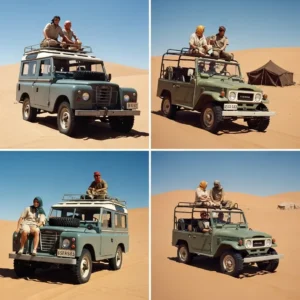
The transition from Bedouin camel caravans to high-powered 4×4 vehicles is a tiny blip on the Geological Time Scale. However, it has changed how we perceive and interact with the desert environment.
Archaeology in the Sands
Buried beneath the dunes are the remains of ancient civilizations. Archaeological sites like Saruq Al-Hadid show that humans have lived here for thousands of years. These sites provide a human context to the Geological Time Scale.
Discovering ancient iron-working tools in the middle of the desert connects us to the people who first mastered this environment. It is a reminder that the Desert Safari and Geological Time Scale story is also a human story.
Conservation of the Geological Heritage
As we explore the desert in 2026, conservation is more important than ever. The dunes and rock formations are part of a global heritage. Protecting these sites ensures that the Desert Safari and Geological Time Scale narrative remains intact for future generations.
Responsible tourism practices help preserve the delicate patterns of the sand. When we follow established tracks, we are respecting the millions of years of work that the wind and sun have put into creating this landscape.
The Future of the Dubai Desert
The Geological Time Scale does not stop. The Arabian Plate is still moving, and the wind is still blowing. In another million years, the Desert Safari and Geological Time Scale map will look completely different.
Perhaps the mountains will be higher, or the sea will return to reclaim the land. The beauty of the Geological Time Scale is its unpredictability. For now, we are lucky to witness this specific moment in the Earth’s history.
Climate Change and Shifting Dunes
Modern climate shifts are affecting the Desert Safari and Geological Time Scale balance. Changes in wind speed and rainfall can alter the rate of dune migration. Scientists are closely monitoring these changes to understand the future of the desert.
Adapting to these changes is part of the ongoing Desert Safari and Geological Time Scale journey. It reminds us that even the most “timeless” landscapes are subject to the laws of nature and time.
Space Exploration and Desert Analogues
The Dubai desert is often used as a stand-in for other planets in the Geological Time Scale. The red dunes of Al Lahbab are very similar to the surface of Mars. Scientists use this environment to test rovers and plan for future missions.
This connects the Desert Safari and Geological Time Scale to the future of space exploration. The lessons we learn from the sands of Dubai might one day help us understand the geology of other worlds in the universe.
Preparing for Your Geological Safari
To truly appreciate the Desert Safari and Geological Time Scale, you need to come prepared. Bring a magnifying glass and a camera with a good zoom. Look for the small details in the rocks and the sand grains.
Ask your guide about the history of the land. Many guides are trained in the basics of the Geological Time Scale and can point out interesting features that most people miss. Your safari is a classroom without walls.
What to Look for in the Rocks
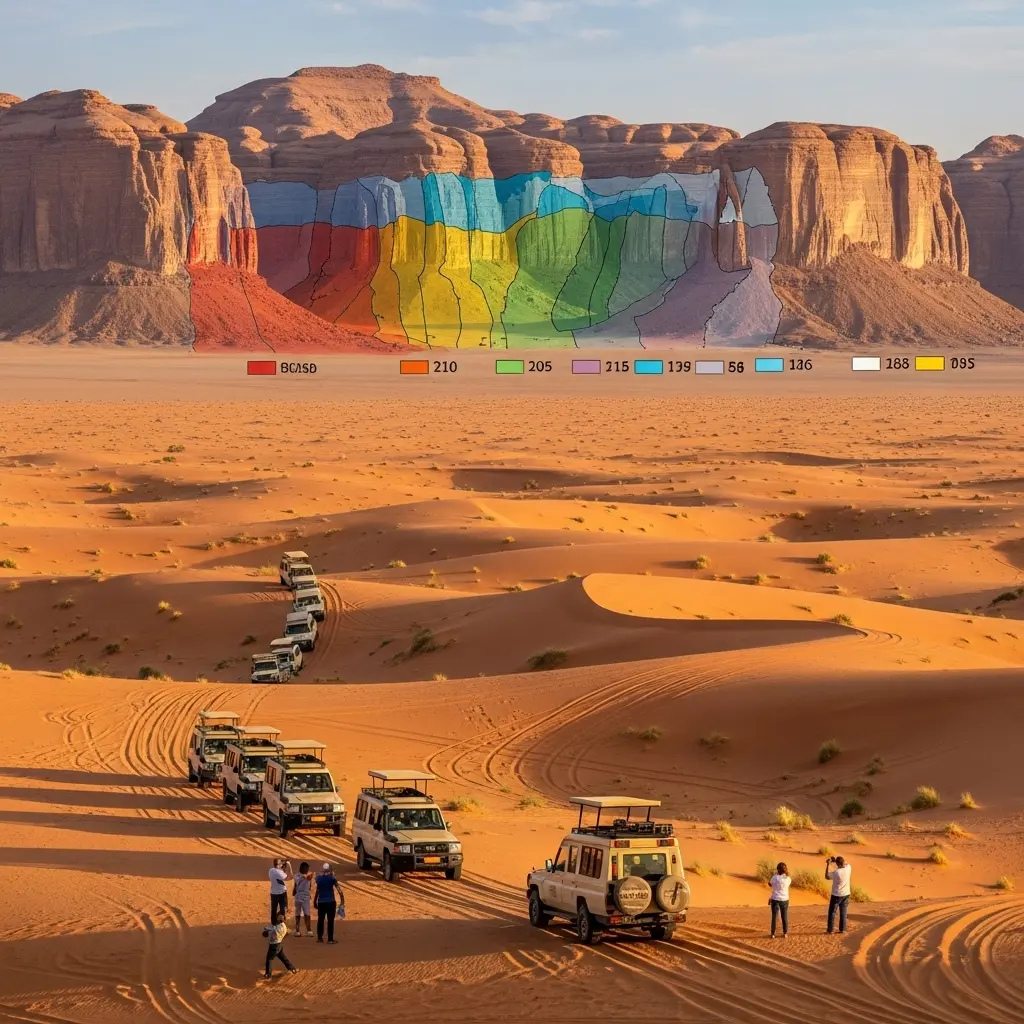
Keep an eye out for layers. These are called “strata.” In the Geological Time Scale, each layer represents a different period of time or a different environmental condition. They are like the pages of a book.
You might also see “cross-bedding” in the sandstone. This is evidence of ancient sand dunes that were turned into rock millions of years ago. It is a Desert Safari and Geological Time Scale “Inception” moment—a desert within a rock within a desert.
The Best Time for Geological Photography
The “Golden Hour” is the best time to photograph the Desert Safari and Geological Time Scale features. The low sun creates deep shadows that highlight the textures of the dunes and the ridges of the mountains.
During this time, the Geological Time Scale seems to come alive. The ancient red of the sand glows, and the harsh edges of the rocks are softened. It is the perfect moment to reflect on the millions of years that led to this one beautiful afternoon.
Conclusion: A Journey Through Time
The Desert Safari and Geological Time Scale is a journey that takes you far beyond the city lights of Dubai. It is an invitation to witness the grandeur of the Earth’s history and the power of natural forces.
From the ancient Tethys Ocean to the modern shifting dunes, the story of the desert is a masterpiece of the Geological Time Scale. So, next time you are out in the sands, take a moment to stop and listen. The Earth is telling you its story, one sand grain at a time.
Enjoy your adventure, respect the land, and keep exploring the fascinating connection between the Desert Safari and Geological Time Scale. The secrets of the sands are waiting for you.
20 FAQs about Desert Safari and Geological Time Scale
How old is the sand in the Dubai desert?
The sand we see today is relatively young in the Geological Time Scale, mostly from the Quaternary period (the last 2.5 million years). However, the minerals that make up the sand, like quartz, are much older, having been eroded from mountains that formed tens of millions of years ago. The color of the sand, particularly the red, is a sign of its “age” in terms of how long it has been exposed to the air.
Was Dubai really at the bottom of the ocean?
Yes, during the Mesozoic Era of the Geological Time Scale, the entire Arabian Peninsula was submerged under the Tethys Ocean. This is why you can find marine fossils like sea shells and coral fragments in the limestone of the Hajar Mountains. A Desert Safari and Geological Time Scale tour often highlights these surprising oceanic origins.
What are the Hajar Mountains made of?
The Hajar Mountains are primarily composed of limestone and ophiolite. According to the Geological Time Scale, these formed during the Cretaceous period. The ophiolites are particularly special because they are sections of the Earth’s oceanic crust and mantle that were pushed up onto the land during tectonic collisions.
Why is the sand in Al Lahbab red?
The red color is due to iron oxide. In the context of the Desert Safari and Geological Time Scale, this means the sand has been in a desert environment for a very long time. The iron within the sand grains has “rusted” or oxidized due to long-term exposure to oxygen and sunlight, creating that iconic deep orange and red hue.
Can you find fossils during a desert safari?
Yes, especially if your safari goes near the mountain foothills or rocky outcroppings. In the Geological Time Scale, these rocks are rich in marine fossils from the Tethys Ocean. You can often find fossilized gastropods, bivalves, and even ancient sea urchins if you look closely at the sedimentary rock layers.
How do sand dunes move?
Dunes move through a process called saltation. The wind picks up sand grains and “bounces” them along the surface. In the modern Geological Time Scale, the “Shamal” winds are the primary drivers. A dune can migrate several meters in a year, constantly reshaping the Desert Safari and Geological Time Scale landscape.
What is the difference between an Erg and a Sabkha?
An Erg is a large sea of shifting sand dunes, which is what most people expect on a safari. A Sabkha, according to the Geological Time Scale, is a salt flat formed in low-lying areas where water evaporates and leaves behind minerals. Both are important and distinct features of the Desert Safari and Geological Time Scale environment.
Is there water under the desert?
Yes, there are massive aquifers of “fossil water” deep underground. These are remnants of a time in the Geological Time Scale when the region had a much wetter climate with heavy rainfall. This ancient water supports the natural oases and is a vital link between the past and present in the desert.
Are the dunes in Dubai the biggest in the world?
While the dunes in Dubai are impressive, the tallest dunes in the UAE are found in the Liwa Oasis, part of the Empty Quarter (Rub’ al Khali). In the Geological Time Scale, these are some of the largest sand structures on Earth, with some reaching heights of over 300 meters.
How does the wind shape the dunes?
The wind direction and strength are the primary architects. Consistent winds from one direction create transverse dunes, while variable winds can create complex star dunes. This interaction is a dynamic part of the Desert Safari and Geological Time Scale, showing that the desert is always in a state of flux.
What minerals are found in Dubai’s sand?
The sand is mostly quartz (silica), but it also contains feldspar, carbonate, and iron-bearing minerals. The variety of minerals is a result of the erosion of different rock types in the mountains over millions of years on the Geological Time Scale.
Are the mountains still growing?
Technically, yes. The Arabian Plate is still moving north and colliding with the Eurasian Plate. While we can’t see it happen, in the Geological Time Scale, this tectonic pressure continues to shape and slowly uplift the mountain ranges of the region.
What is the “Basement” rock of the UAE?
The basement rocks are ancient igneous and metamorphic rocks from the Proterozoic Eon. They are the oldest part of the Geological Time Scale in the region, forming the deep foundation upon which all the younger sedimentary layers and sand dunes rest.
Why are there no volcanoes in Dubai?
Dubai is located in the middle of the Arabian Plate, away from the active volcanic boundaries. While there are ancient volcanic rocks (ophiolites) in the mountains, these were pushed up from the ocean floor rather than erupting from a local volcano in the recent Geological Time Scale.
How does humidity affect the geology of the desert?
Humidity can lead to the formation of “Gypcrete” or “Calcrete,” where minerals like gypsum or calcium carbonate cement the sand grains together. This creates a hard crust that affects how the wind erodes the land in the current Geological Time Scale.
What is “Cross-Bedding” in sandstone?
Cross-bedding is a pattern of diagonal lines in rock layers. It shows where ancient sand dunes were once moving before they were buried and turned into stone. It’s a fascinating look at the “Ancient Desert” within the Geological Time Scale.
Can the desert turn back into an ocean?
In the long-term Geological Time Scale, yes. Sea levels have risen and fallen many times in the past. If the global climate shifts or tectonic plates move significantly, the desert could eventually be submerged again, starting a new cycle of oceanic deposition.
What is an Ophiolite?
An ophiolite is a piece of the Earth’s ocean crust and the underlying upper mantle that has been uplifted and exposed above sea level. The Hajar Mountains contain one of the best-exposed ophiolite complexes in the world, making them a “superstar” of the Geological Time Scale.
How long does it take for a sand dune to form?
A small ripple can form in minutes, but a large dune can take decades or even centuries to grow. In the Geological Time Scale, the massive sand seas we see today have been accumulating and shifting for thousands of years since the last major climate shift.
How can I be a “Geological Tourist” on a safari?
The best way is to choose a tour that emphasizes nature and heritage. Ask your guide to point out rock formations, explain the sand color, and look for fossils. Engaging with the Desert Safari and Geological Time Scale makes your trip much more than just a ride—it becomes a journey through time.
Would you like me to research the specific locations in the Dubai desert where the oldest fossils have been discovered?