Table of Contents
Desert Safari Dubai Weather 12 Months Guide to the Perfect Tour
Desert Safari Dubai Weather is the single most important factor that will determine whether your trip to the dunes is a cool, breezy dream or a sweltering endurance test. The Arabian desert is a land of massive seasonal shifts, where the landscape stays the same but the atmosphere transforms completely every few weeks.
Travelers often assume that Dubai is just “hot” all year round, but the reality is much more nuanced. From the chilly nights of January to the humid intensity of August, the timing of your visit dictates what you wear, what you see, and how much you enjoy the experience.
If you are booking through https://htdesertsafari.com/ you can expect professional service regardless of the month. However, being an informed traveler means knowing exactly what the sky has in store for you. This guide breaks down the meteorological heart of the desert so you can plan your 2026 adventure with total confidence.
January: The Peak of Desert Comfort
January is widely considered the gold standard for Desert Safari Dubai Weather. With average daytime temperatures hovering around 24°C, it is the perfect time for long sessions of dune bashing and outdoor camel trekking. The air is crisp, and the sun feels like a gentle warmth rather than a burning weight.
Nighttime in the desert during January can be surprisingly cold. Temperatures often dip to 14°C or even lower in the open dunes away from city heat. If you are staying for the evening BBQ dinner, a jacket is not just recommended—it is essential.
This is also the peak of the tourism season. While the weather is flawless, the camps will be at their busiest. You should book your tours well in advance to secure a spot in the prime sunset windows.
February: Cool Breezes and Rare Rain
February follows the same pleasant pattern as January but with a slightly higher chance of rain. While rain is rare in the UAE, February is the month most likely to see a quick, refreshing downpour. These showers are usually short and help settle the dust, making the desert air incredibly clear for photography.
The Desert Safari Dubai Weather in February remains mild, with highs of 25°C. The humidity remains low, making it ideal for physical activities like sandboarding. You won’t find yourself breaking a sweat just standing in the sun, which is a luxury in this part of the world.
For external resources on how to handle occasional rain during your trip, check out https://dubaidesertsafarie.com/. They provide excellent updates on how tours are managed if a rare thunderstorm rolls across the dunes.
March: The Arrival of Spring Warmth
As March begins, you can feel the transition in the Desert Safari Dubai Weather. The temperatures start to climb toward the 28°C mark. It is still very comfortable for most tourists, especially those arriving from colder climates in Europe or North America.
The evenings are no longer “chilly” but rather “refreshingly cool.” You might find you can leave the heavy jacket at home and opt for a light pashmina or sweater instead. March is also a fantastic month for wildlife spotting, as the gazelles and oryx are often more active in the mild spring air.
This is the last month of the “perfect” window before the heat starts to become a significant factor in your daily planning. It is the best time for those who want warm days and pleasant nights without the bite of the mid-winter cold.
April: The Sweet Spot of Transition
April is a month of change. The Desert Safari Dubai Weather starts to hit the 32°C range during the afternoon. While this sounds hot, the low humidity makes it feel much more manageable than a humid summer day in other parts of the world.
Morning safaris become very popular in April. By starting at 8:00 AM, you can enjoy all the high-energy activities before the sun reaches its peak at 2:00 PM. The sand is not yet too hot to walk on, making it a great time for photography enthusiasts to get those iconic barefoot shots on the dunes.
If you are looking for luxury options that offer air-conditioned comfort during this warming month, https://royaldesertadventures.ae/ has excellent premium packages that bridge the gap between outdoor adventure and indoor luxury.
May: Feeling the First Heat Waves
May is when the desert truly begins to show its power. The Desert Safari Dubai Weather regularly reaches 37°C. This is the month where sun protection moves from “recommended” to “mandatory.” The UV index is extremely high, and the sand begins to hold heat throughout the day.
Despite the rising temperatures, the evenings in May are spectacular. The transition from a hot afternoon to a balmy 25°C evening is one of the most romantic experiences the desert offers. The heat dissipates quickly once the sun sets, leaving a warm breeze that is perfect for outdoor dining.
Travelers in May should prioritize hydration. Drink twice as much water as you think you need. Most reputable safari companies will provide unlimited cold water, but having your own insulated bottle is a smart move to keep your drinks ice-cold.
June: Navigating the Summer Intensity
June marks the official start of the extreme summer. The Desert Safari Dubai Weather climbs to 40°C and stays there. This is a time for smart planning rather than avoiding the desert altogether. Many travelers prefer June because the crowds are smaller and prices are often lower.
During June, the focus shifts to evening and overnight safaris. The midday sun is too intense for most people to enjoy dune bashing comfortably. However, the late afternoon tours, starting around 4:00 PM, allow you to catch the sunset when the air has already begun to cool slightly.
For cultural insights on how to enjoy the desert during these hotter months, visit https://saharadesertsafaridubai.com. They offer great tips on traditional ways to stay cool and the best times to visit the Bedouin camps to avoid the worst of the heat.
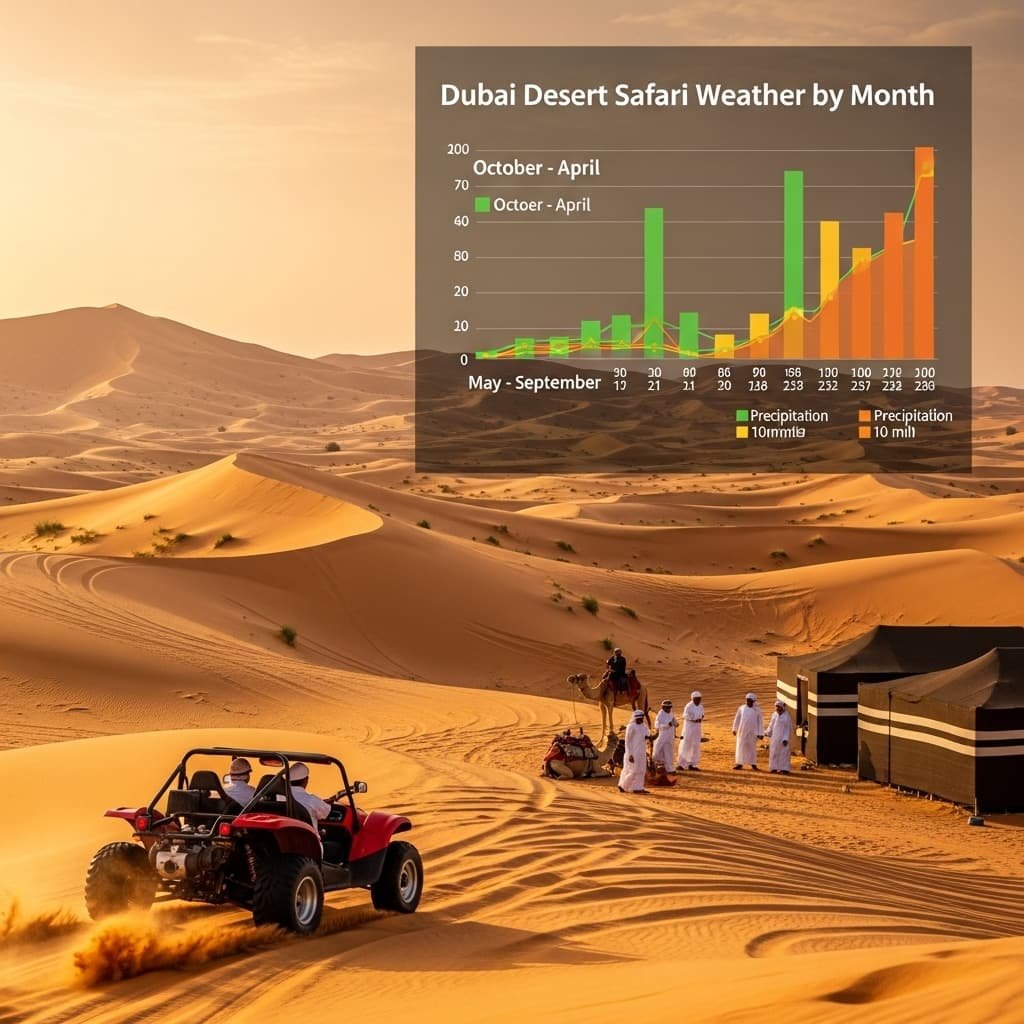
| Month | Avg High (°C) | Avg Low (°C) | Rain (mm) |
| January | 24 | 14 | 10 |
| February | 25 | 15 | 35 |
| March | 28 | 18 | 10 |
| April | 32 | 22 | 8 |
| May | 37 | 26 | 1 |
| June | 40 | 28 | 0 |
July and August: The Peak of the Heat
These are the hottest months for Desert Safari Dubai Weather. Temperatures can soar to 43°C, and humidity levels begin to rise, particularly in the late evening. While these conditions are intense, the desert is still accessible for those who choose the right tours.
Many safari operators use “closed” camps during this time or provide high-powered misting fans to keep guests cool. The dune bashing vehicles are all equipped with powerful air conditioning, ensuring the most active part of your trip is spent in a climate-controlled environment.
August is also the month of the clearest skies. If you are interested in stargazing or astrophotography, the lack of clouds and the heat-haze-free nights can provide some of the best views of the Milky Way you will ever see. Just be prepared for the “sauna-like” feel of the air.
September: Waiting for the Cool Down
September feels very similar to June. The extreme peaks of August start to fade, but the Desert Safari Dubai Weather remains firmly in the high 30s. The main difference in September is the humidity, which can make the air feel thicker than in the dry spring months.
This is the “shoulder season” for desert tourism. You can often find fantastic deals on private tours during this month. It is a great time for adventurous travelers who don’t mind the heat and want to experience the dunes without the massive winter crowds.
As the month progresses, the evenings become noticeably more comfortable. By the end of September, the brutal summer heat starts to break, signaling the return of the prime trekking season.
October: The Return of the Crowds
October is widely seen as the beginning of the “Good Weather” season. The Desert Safari Dubai Weather drops back into the 35°C range, but the real change is in the mornings and evenings. The humidity drops, and the air starts to feel light and fresh again.
This is the month when all desert activities return to full operation. Overnight safaris, which can be a bit too warm in August, become highly popular again. It is the perfect balance for travelers who want to enjoy the sun and the pool during the day but want a comfortable, cool desert experience at night.
If you are planning an October trip, this is the time to start looking at internal links like https://htdesertsafari.com/ to compare packages. The transition in weather means more options become available, including longer camel treks and more elaborate camp setups.
November: The Tourist’s Favorite Month
Many frequent visitors to the UAE swear that November is the absolute best month for Desert Safari Dubai Weather. The highs are a perfect 30°C, and the lows are a comfortable 19°C. It is the first month where you can spend the entire day outdoors without feeling the need to retreat to air conditioning.
The desert landscape in November is often beautiful, with the winter sun casting long, soft shadows over the dunes. This “soft light” is a photographer’s dream, providing the perfect conditions for capturing the red and orange hues of the sand without the harsh glare of the summer.
Because the weather is so ideal, November is very busy. You will find a lively atmosphere at the desert camps, with travelers from all over the world sharing the BBQ dinner and watching the tanoura dance performances.
December: Winter Wonderland in the Sand
December brings the true winter to the desert. The Desert Safari Dubai Weather settles at a high of 26°C and a low of 16°C. It is the month of festivities, and the desert camps often have a special atmosphere during the holiday season.
The days are short but beautiful. You will want to be in the desert by 3:30 PM to ensure you get the full “Golden Hour” experience before the sun sets around 5:30 PM. The rapid drop in temperature after sunset is very noticeable in December, so packing layers is vital.
It is a magical time to be in the dunes. The cool air makes every activity—from quad biking to falconry—feel effortless. It is the quintessential Dubai experience that most people envision when they book their flight.
Summary of Yearly Rainfall and Humidity
While we focus on temperature, humidity and rain play supporting roles in Desert Safari Dubai Weather. The desert is generally dry, which is why the heat is more tolerable than in tropical climates. However, the coastal proximity of Dubai means humidity can spike, especially in late summer.
Rain is a rare treat. On average, Dubai gets about 100mm of rain per year. Most of this falls in short, sharp bursts during January and February. If you are lucky enough to see rain in the desert, you will witness a rare sight: the sand turning a deep, dark red and the dormant desert plants turning green almost overnight.
| Period | Humidity Level | Rainfall Chance |
| Dec – Mar | Low (40-50%) | Moderate (for a desert) |
| Apr – June | Very Low (20-30%) | Very Low |
| July – Sept | High (60-80%) | Almost Zero |
| Oct – Nov | Moderate (50-60%) | Low |
Frequently Asked Questions
1. What is the best month for Desert Safari Dubai Weather?
The best months are generally November and March. During these periods, the temperature is warm enough to feel like a holiday but cool enough to enjoy all activities without discomfort. November specifically offers a great balance of low humidity and clear skies, making it the top choice for most international travelers.
2. Does it ever get too cold in the Dubai desert?
“Too cold” is subjective, but in January and December, temperatures can drop to 12°C at night. For many, this feels very cold because of the wind and the lack of shelter in the open dunes. Always bring a jacket if you are doing an evening or overnight safari during the winter months.
3. Is it safe to do a safari in the August heat?
Yes, it is safe as long as you choose a reputable operator. Vehicles are air-conditioned, and the activities are timed to avoid the peak heat. However, if you are sensitive to high temperatures or traveling with very young children, you might find the 40°C+ heat of August quite challenging.
4. When is the most humid time for a desert safari?
Humidity usually peaks in August and September. During these months, the air can feel very heavy, especially after sunset. While the desert is usually drier than the city, the humidity can still reach levels that make you feel quite “sticky” during the evening camp dinner.
5. How does the weather affect dune bashing?
Temperature affects sand consistency. In the very hot summer months, the sand can become very soft and “loose,” which makes dune bashing more challenging for the drivers. In the cooler winter months, the sand is often firmer, allowing for a more aggressive and thrilling ride.
6. Should I pack an umbrella for a February safari?
While February is the wettest month, you likely won’t need an umbrella. Rainfall is usually very brief. A light, water-resistant jacket is a better choice as it protects you from both the rare raindrops and the cool evening breeze.
7. What time should I book a morning safari in the summer?
In the summer (June-August), you should aim for the earliest possible start, usually 7:00 AM. This allows you to finish your dune bashing and camel riding by 10:00 AM, before the sun becomes truly punishing.
8. Are the desert camps air-conditioned?
Most traditional camps are open-air to provide an authentic experience. However, during the peak summer months, many premium operators offer “VIP” tents that are fully air-conditioned, or they use massive cooling fans in the seating areas.
9. What color clothing is best for Desert Safari Dubai Weather?
Light colors like white, beige, and light grey are best as they reflect the sun’s rays. Avoid black or dark blue, as these colors absorb heat and will make you feel much hotter during the afternoon activities.
10. How long does the sunset last in the desert?
In the winter, the “Golden Hour” lasts about 40 minutes. In the summer, the sun sets more quickly and the light is harsher. If photography is your priority, the winter months provide a much longer window of beautiful, soft light.
11. Is the weather different in the morning vs evening?
Massively. In the summer, the temperature can drop 10 degrees between 2:00 PM and 8:00 PM. In the winter, the drop is even more significant. Always check both the high and low temperatures for the day of your tour.
12. Can sandstorms affect my safari?
Yes, occasional dust storms (Shamal winds) can occur, most commonly in the transition months like April or September. If the winds are too high, dune bashing may be canceled for safety, but this is a relatively rare occurrence.
13. Does the moon affect the desert weather?
Not the weather, but it affects the “feel.” A full moon can make the desert nights feel brighter and slightly cooler, while a new moon offers the best conditions for stargazing as the sky is much darker.
14. Are there mosquitoes in the desert during winter?
It is very rare. The desert is too dry for most insects. However, near some of the luxury camps with artificial lakes or heavy vegetation, you might encounter a few bugs in the evening, so a small bottle of repellent is a safe addition to your bag.
15. What should I wear for an overnight safari in January?
Thermal wear or thick layers are a must. Sleeping in a tent in the desert in January is much colder than people expect. You will need a heavy hoodie, long pants, and warm socks to be comfortable through the night.
16. Is the weather at the Al Marmoom desert different from Lehbab?
Generally, no. The entire Dubai emirate shares a similar climate. However, Lehbab (famous for red dunes) can feel slightly hotter during the day because the red sand absorbs more heat than the lighter-colored sand in other regions.
17. How often does the weather forecast change in Dubai?
The weather is very predictable. Unlike tropical or temperate zones, Dubai’s weather stays consistent for weeks at a time. If the forecast says 35°C and sunny, it is almost a 100% certainty that it will be 35°C and sunny.
18. Do the safari vehicles have heaters for winter?
Yes, all modern 4x4s have climate control systems that can provide heat during the cold winter morning pickups or late-night drop-offs. You will be very comfortable during the transit parts of your tour.
19. Is the UV index always high in the desert?
Yes. Even on “cool” days in January, the UV index is high because of the lack of cloud cover and the reflection from the sand. You should wear sunscreen year-round, regardless of the temperature.
20. What is the most pleasant time for a camel ride?
Sunset is the most pleasant time. The air is cooling down, the light is beautiful for photos, and the animals are usually more relaxed as the day’s heat fades away.
Final Planning Tips for Your Safari
Understanding the Desert Safari Dubai Weather is the first step toward a perfect holiday. Whether you crave the crisp winter air of January or the bargain prices and quiet dunes of the summer, there is a perfect time for everyone.
The desert is a place of extreme beauty and extreme conditions. By respecting the climate and planning your wardrobe and activities accordingly, you ensure that your memories of the Dubai dunes are filled with wonder rather than discomfort.
Ready to book your 2026 adventure? Take one last look at the monthly temperature chart, grab your sunscreen or your jacket, and get ready to experience the most iconic landscape in the Middle East.
Would you like me to help you create a custom packing list based on the specific month you plan to visit?