Table of Contents
Desert Zoning Secrets: Mastering the Blueprint of Arabian Adventure
Desert Zoning Secrets are the invisible lines drawn across the vast, rolling dunes of the Middle East. While travelers see only a boundless ocean of sand, the reality is a highly organized grid of regulated zones. These regulations are designed to balance the thrill of adventure with the absolute necessity of environmental preservation.
The logic behind Desert Zoning Secrets is rooted in the rapid growth of the United Arab Emirates. As Dubai transformed from a small trading port into a global tourism hub, the pressure on its natural landscapes increased. Authorities realized that without strict land-use rules, the very beauty people came to see would vanish under the weight of tire tracks and construction.
Today, Desert Zoning Secrets ensure that every safari camp, every dune bashing route, and every conservation reserve exists in a specific place for a specific reason. This is not just about bureaucracy; it is about survival. It is about making sure the Arabian Oryx has a quiet place to graze while the thrill-seeker has a safe place to ride.
The Foundation of Regional Land Management
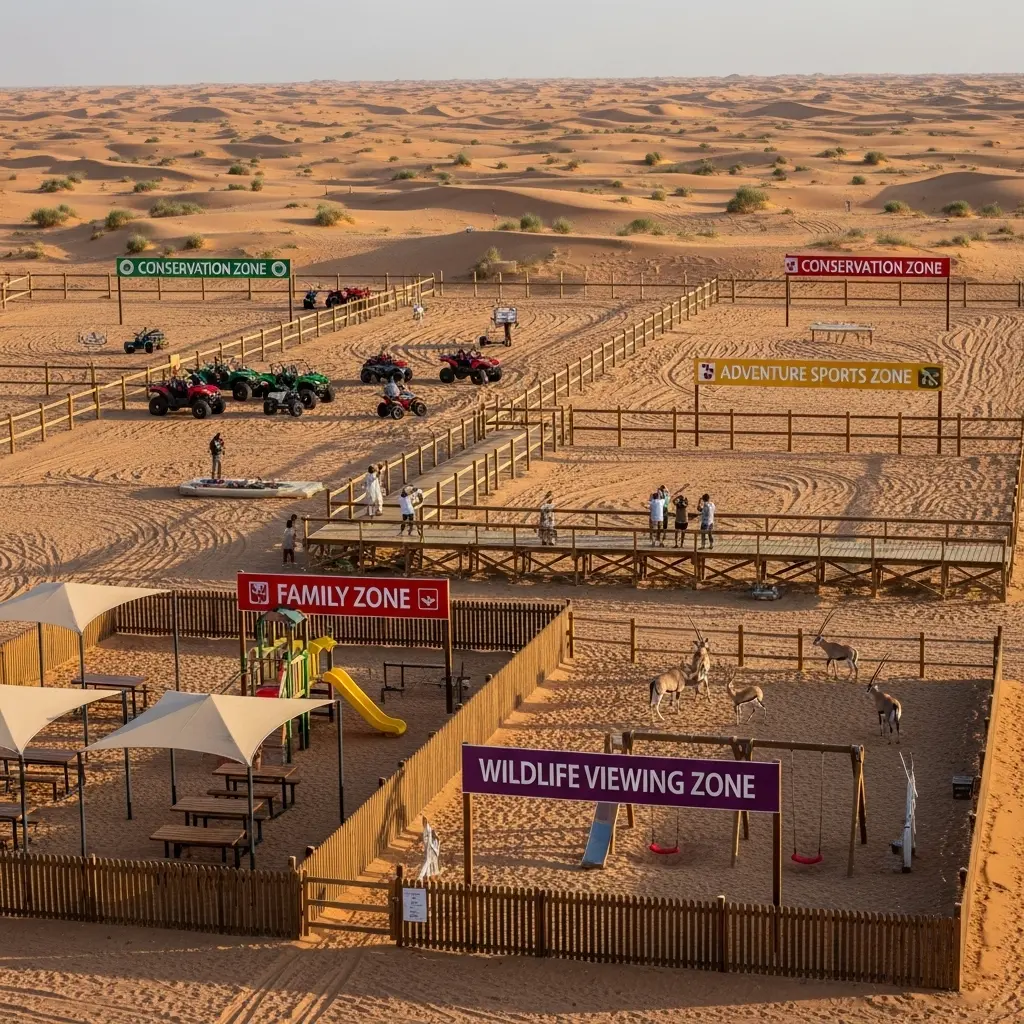
The first of the Desert Zoning Secrets involves the classification of land into three primary categories. These are the active tourism zones, the semi-protected buffer zones, and the strictly protected reserves. Each area has its own set of operating hours, vehicle limits, and noise restrictions.
In the active tourism zones, Desert Zoning Secrets allow for high-intensity activities. This is where the famous dune bashing takes place. These areas are selected because they are geographically resilient and lack sensitive underground water sources.
Conversely, the protected reserves are the crown jewels of Desert Zoning Secrets. In these areas, such as the Dubai Desert Conservation Reserve, only a handful of licensed operators are allowed entry. The goal here is total immersion in nature with minimal human footprint.
Buffer Zones and Ecological Barriers
Buffer zones are perhaps the most misunderstood of the Desert Zoning Secrets. These act as a transition area between the chaotic fun of the safari camps and the silence of the wildlife reserves. They prevent the noise and light from the camps from bleeding into the habitats of nocturnal desert creatures.
Within these buffer areas, Desert Zoning Secrets often restrict the speed of vehicles. This reduces the amount of dust kicked into the air, which can settle on desert plants and inhibit photosynthesis. It is a subtle but vital rule that maintains the health of the local flora.
The width of these zones is determined by scientific study. Desert Zoning Secrets utilize data from ecologists who track the movements of sand gazelles. If a migration path is detected, the zoning is adjusted to ensure the animals are never cut off from their water sources.
Licensing and the Legal Framework
One of the most critical Desert Zoning Secrets is the permit system managed by the Department of Economy and Tourism. An operator cannot simply pick a dune and set up a tent. They must apply for a specific plot within the designated tourism zone.
These plots are governed by Desert Zoning Secrets that dictate the maximum number of guests allowed per square meter. This prevents overcrowding, which is the primary cause of environmental degradation in global tourism sites. It also ensures that the “desert silence” remains part of the guest experience.
Furthermore, Desert Zoning Secrets mandate that all structures must be semi-permanent. This means they must be capable of being dismantled without leaving a permanent scar on the land. It is a “leave no trace” policy written into the legal code of the city.
Comparison of Desert Land Classifications
| Zone Type | Primary Activity | Access Level | Desert Zoning Secrets Focus |
| Active Tourism | Dune Bashing / Camps | High Public Access | Safety & Logistics |
| Buffer Zone | Camel Treks / Nature | Restricted Access | Noise & Dust Control |
| Strict Reserve | Wildlife Study / Eco | Permit Only | Total Conservation |
| Rehabilitation | None (Recovery) | Closed to All | Soil & Plant Health |
| Utility Zone | Solar / Water Hubs | Staff Only | Infrastructure Efficiency |
Vehicle Flow and Path Consistency
The movement of 4×4 vehicles is governed by Desert Zoning Secrets to prevent “dune scarring.” If every driver took a different path, the entire landscape would become a mess of crisscrossing tracks. Instead, drivers are encouraged to follow established “paths of least resistance.”
These paths are monitored as part of the Desert Zoning Secrets to see how the sand reacts. If a specific dune is losing its shape due to over-use, that section of the zone is closed for a “fallow period.” This allows the wind to naturally reshape and clean the dune.
Night driving is another area where Desert Zoning Secrets are very strict. Most tourism zones have a “lights out” policy for vehicles after a certain hour. This protects the drivers from getting lost and protects the desert wildlife that becomes active after the sun sets.
Sustainable Camp Construction Rules
Building a camp in the middle of nowhere requires following deep Desert Zoning Secrets. These rules specify the materials that can be used. Natural wood, stone, and traditional fabrics are preferred over concrete and steel.
Waste management is a core part of Desert Collection Secrets within the zoning laws. Every camp must have a dedicated waste-out plan. This means everything that comes in must go out, including greywater and organic waste. No landfills are allowed within the desert zones.
Energy sources are also regulated by Desert Zoning Secrets. There is a massive push for solar-powered camps. In some zones, the use of diesel generators is being phased out entirely to eliminate noise and air pollution, keeping the desert air as crisp as possible.
The Role of Heritage in Zoning
Zoning is not just about the environment; it is also about culture. Desert Zoning Secrets ensure that heritage sites, such as ancient wells or Bedouin graveyard sites, are protected from tourism traffic. These areas are marked as “Off-Limits” on every safari GPS.
By integrating cultural landmarks into Desert Zoning Secrets, the government ensures that the history of the land is not erased by progress. It allows tourists to appreciate the history from a distance without physically damaging the sites.
Local tribes often consult on these Desert Zoning Secrets. Their ancestral knowledge of the land helps authorities decide which areas are sacred and which are suitable for the public. This collaborative approach is what makes the UAE’s zoning system so successful.
Water Resource Management in Zones
Water is the most valuable commodity in the dunes. Desert Zoning Secrets dictate that any water extraction from underground aquifers must be strictly metered. Most camps are actually prohibited from digging their own wells to prevent the depletion of the water table.
Instead, Desert Zoning Secrets encourage the trucking of water in and out, or the use of atmospheric water generators. By keeping the camp’s water cycle separate from the desert’s natural water cycle, the zoning laws protect the oases that are vital for wildlife.
Auditing these water systems is a regular part of the Desert Zoning Secrets enforcement. If an operator is found to be wasting water or dumping greywater improperly, they face massive fines and the loss of their zoning permit.
External Resources and Industry Standards
To see how these rules are applied by professional teams, it is important to follow the leaders in the field. You can explore the operations of highly regulated camps at https://royaldesertadventures.ae/ which operates under strict environmental guidelines.
For a broader look at how the desert is protected through legislation, https://dubaidesertsafarie.com/ provides excellent resources on the various conservation reserves and their entry requirements.
Another partner in the mission of sustainable zoning is https://htdesertsafari.com/. They focus on educating guests about why these Desert Zoning Secrets exist and how they can help by following the rules of the camp.
For more internal insights on our specific compliance with these laws and our dedication to the dunes, please visit https://saharadesertsafaridubai.com to read about our vision for a regulated and beautiful desert.
Understanding the Setback Requirements
A “setback” is a specific distance that must be maintained between different camps. Desert Zoning Secrets require a minimum distance of several kilometers between major safari sites. This ensures that one camp cannot see or hear the other.
This setback rule in Desert Zoning Secrets is vital for the “isolated” feeling that travelers pay for. If you could see another camp’s lights, the magic of the wilderness would be lost. It is a zoning rule that directly protects the economic value of the desert experience.
Setbacks also apply to roads and highways. Desert Zoning Secrets ensure that no camp is built too close to a major road, preventing the noise of modern traffic from interrupting the sounds of the Arabian night. It is about creating a total sensory bubble for the guest.
Wildlife Corridors and Movement Paths
The desert is not empty; it is a highway for animals. Desert Zoning Secrets identify “wildlife corridors” that must remain completely free of any human activity. These paths connect different oases and feeding grounds.
If a camp were built in the middle of a corridor, it would act like a dam, cutting off animals from their resources. Desert Zoning Secrets use satellite tracking of animals to map these routes before any zoning permits are issued to tour operators.
Respecting these corridors is one of the most strictly enforced Desert Zoning Secrets. Rangers patrol these areas frequently to ensure that no unauthorized vehicles are taking shortcuts through the animals’ private highways.
The Economic Impact of Restricted Zoning
While some might see Desert Zoning Secrets as a limitation, they actually create value. By making the desert “exclusive” and “protected,” the government increases its desirability. A regulated desert is a high-value product.
In the world of Desert Zoning Secrets, quality is always preferred over quantity. High-end, low-impact camps can charge a premium because they offer a pristine environment. This economic logic ensures that operators have a financial reason to be good stewards of the land.
Investment in the desert is also safer because of Desert Zoning Secrets. An operator knows that a rival camp won’t be built right next door next year. The zoning provides a stable business environment where long-term sustainability is rewarded.
Training for Staff and Drivers
Every person working in the desert must be aware of the Desert Zoning Secrets. Drivers are given specialized training on how to read GPS maps that highlight the “No-Go” zones. This prevents accidental trespassing into protected areas.
Staff training (as we have explored in our other guides) includes modules on the Desert Zoning Secrets related to noise and light. Understanding that a loud speaker or a bright spotlight can violate zoning laws is essential for camp managers.
By making Desert Zoning Secrets a part of the staff culture, the industry ensures that compliance happens from the ground up. It is not just about avoiding fines; it is about taking pride in the professionalism of the Arabian safari industry.
The Future of Smart Zoning
As technology advances, Desert Zoning Secrets are becoming digital. We are moving toward “Geofencing.” This is a system where a vehicle’s engine might automatically slow down or send an alert if it enters a restricted zone.
This high-tech version of Desert Zoning Secrets will make enforcement much easier. It will allow for “Dynamic Zoning,” where certain areas could be closed instantly if a rare bird is spotted nesting or if a dune is showing signs of extreme erosion.
The integration of AI into Desert Zoning Secrets will help predict which areas are becoming over-stressed before the damage is visible. This proactive management is the next frontier in making Dubai the world leader in sustainable desert tourism.
The Role of the Guest in Zoning
Travelers play a part in Desert Zoning Secrets too. When a guest chooses an operator that follows the rules, they are voting for the protection of the desert. Guests should never pressure their drivers to “go off-road” into restricted areas.
Educational briefings at the start of a safari often explain the Desert Zoning Secrets. By understanding that they are in a sensitive zone, guests are more likely to stay on the paths and respect the silence of the dunes.
Your feedback matters. If you see an operator violating Desert Zoning Secrets, reporting it to the authorities helps protect the desert for everyone. It is a collective effort that starts with the individual traveler.
Conclusion: The Silent Guardians of the Sand
Desert Zoning Secrets are the silent guardians of the Arabian wilderness. They ensure that the progress of the city does not come at the cost of the soul of the land. It is a masterpiece of modern land management.
When you look out over the dunes tonight, remember the lines you cannot see. These lines are what keep the desert beautiful, safe, and wild. They are the reason you can experience a sunset in total peace, miles away from the noise of the world.
We invite you to experience the magic of a perfectly zoned desert. Choose a safari that respects the Desert Zoning Secrets. Together, we can ensure that the golden sands of Dubai remain an epic destination for generations to come.
20 FAQs About Desert Zoning Secrets and Land Use
1. What are the main Desert Zoning Secrets for Dubai safaris?
The main Desert Zoning Secrets involve the strict separation of land into three tiers: active tourism zones, buffer zones, and protected reserves. Active zones are for dune bashing and large camps, while buffer zones act as quiet transitions. Reserves are strictly for conservation and high-end, low-impact nature tours. These rules ensure that the desert can support both a massive tourism industry and a fragile ecosystem simultaneously.
2. How do these zoning rules protect the environment?
Desert Zoning Secrets protect the environment by limiting the “human footprint” in sensitive areas. By restricting vehicle traffic to specific paths and designated zones, the rules prevent soil erosion and protect the root systems of desert plants. They also regulate noise and light pollution, which is essential for the survival of nocturnal animals that depend on the darkness to hunt and mate.
3. Can any company set up a camp in the desert?
No. Under the Desert Zoning Secrets, only companies with a valid tourism license and a specific plot permit can operate a camp. These plots are auctioned or leased by the government within designated zones. The number of permits is strictly limited to prevent overcrowding, ensuring that each camp has enough “setback” distance from its neighbors to maintain a sense of isolation.
4. What is a “buffer zone” in Desert Zoning Secrets?
A buffer zone is a geographical “no-man’s land” between a high-activity tourism area and a protected wildlife reserve. According to Desert Zoning Secrets, these areas have very low speed limits and no permanent structures. They prevent the sounds and lights of the camps from disturbing the animals in the reserve, acting as a filter that protects the core of the wilderness.
5. Are Desert Zoning Secrets different for morning and evening safaris?
The zoning boundaries remain the same, but the rules within the zones can change based on the time of day. For example, Desert Zoning Secrets often prohibit high-speed dune bashing after dark to prevent accidents and to reduce the disturbance to nocturnal wildlife. Some zones are only open during daylight hours to ensure that the desert remains quiet and undisturbed at night.
6. How are Desert Zoning Secrets enforced in remote areas?
Enforcement of Desert Zoning Secrets is a high-tech operation. The Dubai Municipality and environmental rangers use satellite imagery, drones, and GPS tracking on safari vehicles to monitor movement. If a vehicle enters a “No-Go” zone, the authorities are alerted in real-time. Fines for violating these boundaries are extremely high to discourage illegal off-roading.
7. Why are there “fallow periods” in Desert Zoning Secrets?
A fallow period is a time when a specific dune or area is closed to all traffic. Desert Zoning Secrets use these periods to allow the wind to naturally “heal” the sand. Over-use can flatten dunes and kill the microscopic life in the top layer of the sand. Closing the area for a few months allows the natural desert cycles to restore the landscape to its pristine state.
8. Do Desert Zoning Secrets apply to private individuals?
Yes. While tourists usually visit with an operator, private citizens driving their own 4x4s must also follow the Desert Zoning Secrets. Certain areas of the desert are open to the public for camping and driving, while others are strictly off-limits. Entering a protected reserve without a permit, even in a private vehicle, can result in vehicle impoundment and heavy fines.
9. How does zoning affect the price of a desert safari?
Desert Zoning Secrets create a tiered pricing model. Safaris in active tourism zones are often more affordable because they can host more guests. Conversely, tours into the protected reserves or “Exclusive Zones” are more expensive because the government limits the number of visitors to a very small number. This “exclusivity tax” helps fund the conservation efforts within those zones.
10. What is the “setback” rule in Desert Zoning Secrets?
The setback rule is a requirement that camps must be a certain distance (often several kilometers) away from each other and from major roads. This is one of the most important Desert Zoning Secrets for maintaining the guest experience. It ensures that when you are at your camp, you feel like you are the only people in the desert, with no visible lights or sounds from other groups.
11. Are there specific zones for renewable energy in the desert?
Yes, Desert Zoning Secrets now include “Utility Zones” where large-scale solar arrays are located. These zones are positioned to provide power to nearby camps while minimizing the visual impact on the landscape. By centralizing the energy infrastructure, the zoning laws keep the “wild” areas free of industrial equipment and power lines.
12. How do Desert Zoning Secrets protect cultural heritage?
The zoning maps used in Desert Zoning Secrets include “Heritage Overlays.” These are areas where ancient Bedouin wells, fossils, or historical sites have been discovered. These spots are strictly off-limits to vehicles and construction. The zoning ensures that the history of the land is preserved even as the tourism industry around it grows.
13. What is “Geofencing” in the world of Desert Zoning Secrets?
Geofencing is a modern tool used to enforce Desert Zoning Secrets. It uses a digital “fence” around a protected area. If a safari vehicle crosses this line, its GPS system sends an instant alert to the company’s headquarters and the government regulators. In the future, this technology might even be used to automatically limit the speed of vehicles in sensitive areas.
14. Can the zoning rules change over time?
Yes, Desert Zoning Secrets are “dynamic.” This means they are reviewed every year based on ecological data. If a specific species of bird starts nesting in a tourism zone, that area might be temporarily rezoned as a “Protected Area” until the nesting season is over. This flexibility is what makes the UAE’s land management so effective.
15. Why can’t I build a permanent house in the desert tourism zone?
Desert Zoning Secrets strictly forbid permanent residential construction in the primary safari zones. All structures must be “semi-permanent” or “modular.” This is to ensure that if the zoning changes or if the land needs to be restored to its natural state, the structures can be removed without leaving concrete foundations or rubble behind.
16. How do Desert Zoning Secrets manage waste?
Under the zoning laws, every camp must have a certified waste-removal contract. Desert Zoning Secrets mandate a “Zero-Landfill” policy for the desert. All trash, food waste, and greywater must be transported out of the zone to municipal treatment facilities. This keeps the desert soil pure and prevents the attraction of pests and scavengers to the camps.
17. What is the role of the Arabian Oryx in Desert Zoning Secrets?
The Arabian Oryx is a primary driver of Desert Zoning Secrets. Large areas of the desert are zoned specifically as “Oryx Reserves” where no tourism is allowed. These areas provide the quiet and space needed for the breeding and reintroduction of this iconic species. The zoning ensures that the recovery of the Oryx is never compromised by tourism.
18. Do Desert Zoning Secrets affect the types of activities allowed?
Yes. High-impact activities like dune bashing and quad biking are restricted to specific “High-Intensity Zones.” In more sensitive “Eco-Zones,” only low-impact activities like camel trekking, falconry, and stargazing are allowed. This part of Desert Zoning Secrets ensures that there is a variety of experiences available without damaging the most fragile parts of the dunes.
19. How do I know if my safari operator follows Desert Zoning Secrets?
A reputable operator will be happy to show you their desert permit and explain which zone you will be visiting. You can also check for official government “Green” certifications. Operators who mention Desert Zoning Secrets on their websites, like https://saharadesertsafaridubai.com, are usually more aware of their legal and environmental responsibilities.
20. Why should I care about Desert Zoning Secrets as a tourist?
When you respect Desert Zoning Secrets, you are helping to save the desert. Following the rules ensures that the wildlife stays safe, the dunes stay beautiful, and the experience remains authentic for the people who come after you. It is about being a responsible traveler who values the preservation of the destination as much as the adventure itself.