Table of Contents
Wildlife Tracking Basics
Wildlife Tracking Basics provide a fascinating window into the hidden world of the Arabian desert. While many visitors see only an endless sea of sand, the trained eye recognizes a landscape bustling with activity, history, and survival.
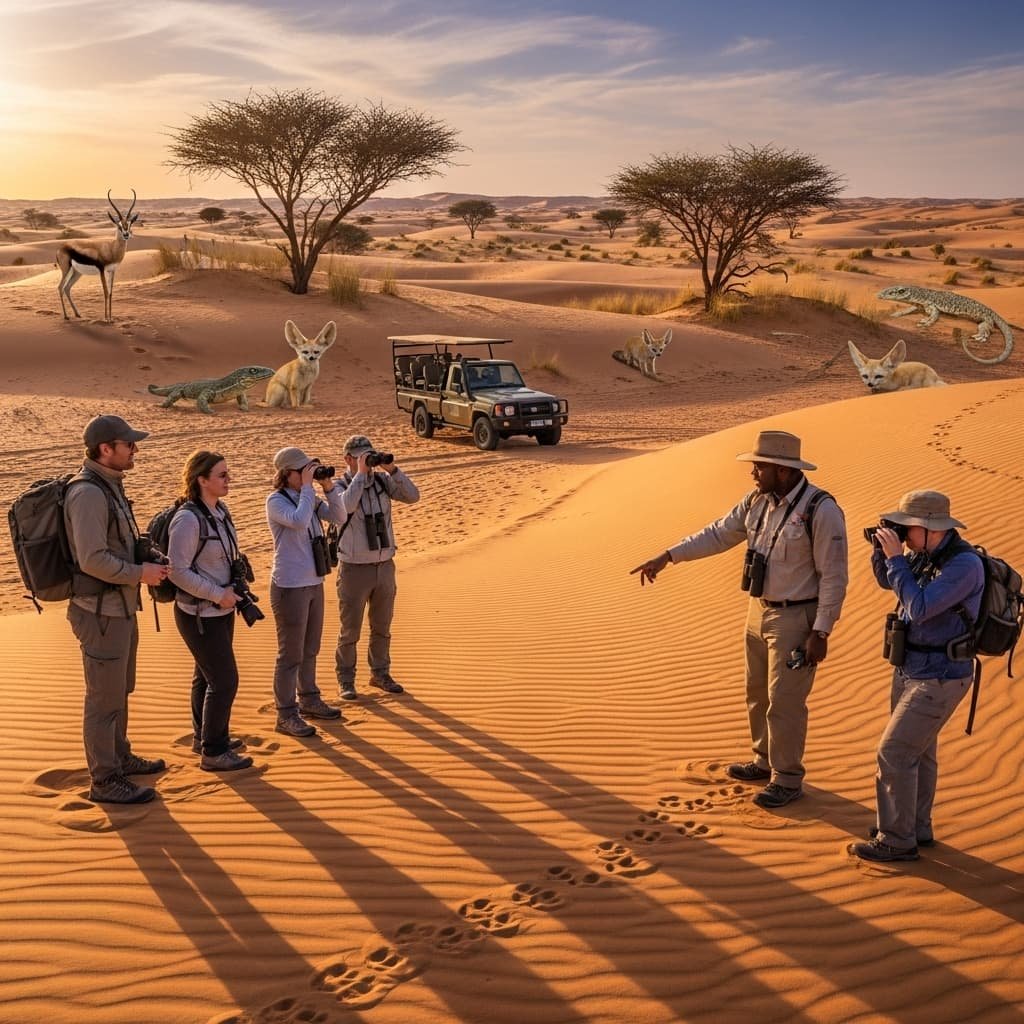
To truly appreciate the desert, one must learn to read the “newspaper” written in the dunes. Every indentation, scrape, and line tells a story of an animal’s journey from the previous night.
The art of tracking is not just about identifying the animal; it is about understanding its behavior, its direction, and its health. It is a primal skill that turns a standard tour into a deep, immersive nature experience.
Professional operators like https://htdesertsafari.com/ integrate these skills into their excursions. They ensure that guests do not just drive over the sand but actually connect with the ecosystem that thrives within it.
In this deep dive, we will explore the fundamental principles of desert tracking, the specific signs left by iconic Arabian species, and how you can apply these skills on your next adventure.
The Science of Sand as a Medium
The desert is one of the best environments for learning Wildlife Tracking Basics because sand is a highly sensitive recording medium. It captures details that would be lost on harder soils or forest floors.
However, sand is also ephemeral. Wind, heat, and gravity are constantly working to erase the tracks. Understanding the “age” of a track is the first step in successful desert tracking.
A fresh track has sharp, well-defined edges. As time passes, the sand grains begin to slump, and the wind softens the boundaries. If a track looks “fuzzy,” the animal passed by several hours ago.
Moisture also plays a role. Tracks made in the damp sand of the early morning are much more durable than those made in the dry, flowing sand of a hot afternoon.
By studying these nuances, guides at https://royaldesertadventures.ae/ can pinpoint exactly when a desert fox or a gazelle was in the area, leading to better spotting opportunities for guests.
Identifying the Arabian Oryx and Gazelle
The ungulates of the desert leave the most distinct marks. In Wildlife Tracking Basics, identifying the difference between an Oryx and a Gazelle is a vital skill.
The Arabian Oryx has a larger, more rounded hoof. Because they are heavy animals, their tracks sink deeper into the sand. You will often see a clear “split” between the two halves of the hoof.
Gazelles, being lighter and more agile, leave smaller, heart-shaped tracks. Their prints are often spaced further apart, reflecting their jumping and bounding gait across the dunes.
Following these tracks often leads to grazing areas. You might find “lay-up” spots where the animals have rested in the shade of a Ghaf tree, leaving behind flattened sand and hair.
Learning these patterns with the team at https://dubaidesertsafarie.com/ adds a layer of intellectual excitement to the safari, making the sighting of these majestic creatures even more rewarding.
The Stealthy Signs of the Desert Fox
The Arabian Red Fox and the smaller Ruppell’s Fox are the ghosts of the dunes. In Wildlife Tracking Basics, their prints are often mistaken for small dogs, but there are key differences.
Fox tracks are generally more elongated and narrower than domestic dog prints. The “heel pad” of a fox is smaller, and you can often see the distinct marks of their claws at the tips of the toes.
Foxes are calculated movers. Their tracks usually follow a straight line, as they are focused on conserving energy while searching for prey like lizards or rodents.
You might also find “scat” or droppings near their tracks. For a tracker, this provides information on what the animal has been eating, which in turn tells you which other species are nearby.
Operators like https://saharadesertsafaridubai.com often highlight these predator-prey dynamics during their evening walks, showing how the food chain functions in a resource-scarce environment.
Reading the Reptilian Trails
Reptiles leave some of the most intricate patterns in the sand. Wildlife Tracking Basics include the study of “tail drags” and specialized foot movements of lizards and snakes.
The Wonder Gecko, for instance, leaves a delicate, wide-set track with a thin line in the middle caused by its tail. These tracks are usually found near low-lying shrubs where they hide during the day.
The Arabian Toad-headed Agama has a more aggressive track, often showing where it has scurried up a dune to find a high vantage point for sunbathing and spotting insects.
Snakes, particularly the sidewinder, leave a series of disconnected, parallel J-shaped marks. This unique movement allows them to move across hot, loose sand without their entire body touching the surface.
Recognizing these reptilian signatures is a core part of the education provided by https://royaldesertadventures.ae/, helping guests appreciate the smaller, often overlooked inhabitants of the desert.
Avian Tracking and Feather Signs
Birds also leave their mark in the sand, particularly near watering holes or nesting sites. In Wildlife Tracking Basics, avian prints tell us about the sky’s inhabitants.
Ground-dwelling birds like the Hoopoe or the Cream-colored Courser leave three-toed tracks that look like tiny forks. These birds spend much of their time running along the sand to catch insects.
Large raptors like the Lappet-faced Vulture or the Falcon might leave tracks near a “kill” site. These are much larger and show the deep indentation of powerful talons.
In addition to prints, trackers look for “whitewash” (bird droppings) and feathers. A single feather can identify a species and indicate that a bird has been preening or resting nearby.
Bird watching during a safari at https://htdesertsafari.com/ is significantly enhanced when you know how to find their landing spots and feeding grounds through these ground-level clues.
The Role of Insects in Dune Ecology
It might seem insignificant, but the tracks of beetles and ants are vital to Wildlife Tracking Basics. They represent the “cleanup crew” of the desert ecosystem.
The Dung Beetle leaves a very distinct, messy trail as it rolls its prize across the dunes. These tracks often zigzag as the beetle navigates the micro-topography of the sand ripples.
Ants leave tiny, interconnected paths that look like microscopic highways. These usually lead to a central nest, often located at the base of a hardy desert plant.
Following these tiny trails reveals the incredible complexity of the desert floor. It shows that even in a place that looks “dead,” there are millions of creatures working around the clock.
This attention to detail is what makes a professional guide at https://dubaidesertsafarie.com/ so valuable; they can turn a single square meter of sand into an hour-long biology lesson.
Tracking Patterns and Animal Gait
Understanding the “how” of movement is just as important as the “who” in Wildlife Tracking Basics. The distance between prints tells you the speed and mood of the animal.
A “walking” gait shows evenly spaced, rhythmic prints. This indicates the animal was calm and foraging. An “alarm” gait shows clustered prints with deeper toe indentations as the animal pushed off to run.
“Galloping” or “bounding” tracks are often grouped in fours, showing where all four feet hit the ground in quick succession. This usually means the animal was fleeing a predator or chasing a mate.
Trackers also look for “drag marks.” If a print is not clean, it might mean the animal is injured or carrying something. This provides a narrative to the tracks that goes beyond simple identification.
Mastering these gait patterns allows the marshals at https://royaldesertadventures.ae/ to tell guests a compelling story about the animal’s life, rather than just pointing at a mark in the sand.
Using Sun Angles for Better Tracking
One of the most practical Wildlife Tracking Basics is the use of light. The time of day significantly changes how visible a track is to the human eye.
The best time for tracking is early morning or late afternoon. When the sun is at a low angle, it creates long shadows inside the indentations of the track, making them “pop” out of the sand.
At midday, when the sun is directly overhead, the shadows disappear, and tracks can become almost invisible, even to an experienced tracker.
Expert guides will often position themselves so the sun is to their side or slightly in front of them. This “side-lighting” highlights the texture of the sand and reveals subtle details like claw marks.
By timing their nature walks for these optimal light windows, operators like https://saharadesertsafaridubai.com ensure that guests get the best possible view of the desert’s hidden scripts.
Ethical Tracking and Wildlife Protection
Responsible Wildlife Tracking Basics must always prioritize the well-being of the animal. Tracking should never involve harassing or stressing the wildlife.
If tracks are very fresh, it means the animal is close. A professional tracker knows when to stop following to avoid scaring the animal away from a vital water source or a nesting site.
Disturbing an animal during the heat of the day can be fatal, as the energy they spend fleeing can lead to heatstroke or dehydration. We observe from a distance using binoculars.
Sustainable tourism means being a guest in the animal’s home. We leave the tracks as we found them and ensure that our presence does not alter the natural behavior of the species.
This ethical framework is a core value for https://htdesertsafari.com/, where the goal is to foster a love for nature through respect and quiet observation.
Essential Tools for the Amateur Tracker
While your eyes are the most important tool, a few simple items can enhance your Wildlife Tracking Basics experience. A small ruler or a common object like a coin helps provide scale in photos.
A high-quality pair of binoculars is essential. Once you find a track, you can use the binoculars to scan the surrounding dunes and “glass” the area for the animal itself.
A field guide or a digital app with photos of desert tracks can help with identification. Many guests enjoy keeping a “track log” of all the different signs they find during their trip.
A small, soft brush can be used to gently clear loose sand from a track to reveal the finer details beneath, though this should be done sparingly to avoid damaging the print.
By providing these tools and expert knowledge, https://royaldesertadventures.ae/ empowers guests to become active participants in the discovery of the desert’s secrets.
The Impact of Weather on Tracking
Weather is the primary “editor” of the desert’s newspaper. In Wildlife Tracking Basics, we must constantly account for the wind and the humidity.
A strong wind can erase a track in minutes. However, a light breeze can actually help by blowing away the loose “surface” sand and leaving the more compressed sand of the track behind.
Humidity and light rain are a tracker’s best friend. They “fix” the sand, making the tracks much sharper and more permanent. Some of the best tracking occurs right after a rare desert rainstorm.
Temperature also affects where animals go. On a hot day, tracks will lead toward the shade and north-facing slopes of the dunes, where the sand stays cooler for longer.
Understanding these environmental factors is a key part of the training for marshals at https://dubaidesertsafarie.com/, allowing them to adapt their tracking strategies to the day’s conditions.
Tracking Near Oases and Watering Holes
Water is the magnet of the desert. The areas around oases are the “front page” of Wildlife Tracking Basics, as every animal in the region must eventually visit them.
The mud or damp sand near a water source captures incredibly detailed prints. You will often see a “convergence” of tracks from many different species, from insects to large mammals.
However, these areas are also high-stress zones. Predators often wait near water, so the tracks here will show signs of caution, such as frequent stops or sudden bursts of speed.
Trackers also look for “rubbing posts”—trees or rocks where animals have scratched themselves. These often hold tufts of hair or wool that can identify the individuals using the site.
Exploring these biological hubs with https://saharadesertsafaridubai.com provides a comprehensive view of how the desert community interacts around its most precious resource.
The Importance of Night Tracking
Many desert animals are nocturnal to avoid the daytime heat. Wildlife Tracking Basics often involve “spotlighting” or looking for fresh tracks in the early morning before the sun gets too high.
Night tracking with a flashlight can reveal the “eye-shine” of spiders and geckos. It also allows you to see the animals in their most active state, foraging and hunting.
Guides use specialized red-light torches that do not disturb the animals’ night vision. This allows for close observation without causing the animal to flee.
The morning after a night of activity is a treasure trove for trackers. The dunes are a clean slate that has been covered in the “stories” of the night’s adventures.
This nocturnal focus is a highlight of the overnight safaris at https://royaldesertadventures.ae/, where the desert truly comes alive after the sun goes down.
Human Impacts and “False” Tracks
Part of Wildlife Tracking Basics is learning to distinguish between natural animal signs and those left by humans or vehicles. This is “track pollution.”
Tire tracks from 4x4s can crush animal prints and disrupt their travel paths. Responsible operators stay on designated tracks to minimize this impact on the ecosystem.
Human footprints are also common near camps. A skilled tracker can tell the difference between a “nature enthusiast” walking slowly and a “camp worker” moving with a purpose.
Litter is the worst kind of human sign. A discarded bottle cap or a plastic bag can look like an animal sign from a distance but is actually a threat to the wildlife.
Education at https://htdesertsafari.com/ emphasizes the “Leave No Trace” philosophy, ensuring that the only tracks left in the desert are those of the animals and the wind.
The Spiritual Aspect of Tracking
For many, learning Wildlife Tracking Basics is a spiritual journey. It requires a level of patience, silence, and observation that is rare in the modern world.
When you are tracking, you are forced to slow down. You must match your pace to the animal you are following. You begin to breathe with the rhythm of the desert.
This “deep listening” to the landscape is a form of meditation. It clears the mind and fosters a profound sense of connection to the natural world and the history of the Bedouin.
The Bedouin were the original masters of this craft. For them, tracking was not a hobby; it was a way of life that ensured their survival and the prosperity of their tribes.
By sharing these skills at https://dubaidesertsafarie.com/, we keep this ancient heritage alive, passing the wisdom of the sands to a new generation of travelers.
Summary of Tracking Techniques
Study the “age” of a track by observing the sharpness of its edges.
Use low-angle sun (morning/afternoon) to highlight track depth with shadows.
Identify species by hoof shape (Oryx/Gazelle) or pad patterns (Fox).
Look for “secondary signs” like scat, hair, or tail drags for a full narrative.
Analyze the “gait” (distance between prints) to determine the animal’s speed.
Prioritize ethical observation: never chase or stress the wildlife you find.
Focus on watering holes and Ghaf trees as high-traffic tracking zones.
Use binoculars to scan the horizon once a fresh track is identified.
Respect the “newspaper” of the dunes by minimizing human “track pollution.”
Practice patience and silence to allow the desert’s hidden world to reveal itself.
Final Thoughts on Desert Discovery
Wildlife Tracking Basics are the key to unlocking the true magic of the Arabian desert. It turns the dunes from a beautiful backdrop into a living, breathing community.
Every time you find a track, you are making a connection with a creature that has mastered one of the toughest environments on Earth. It is a humbling and exhilarating experience.
Whether you are a serious nature lover or just a curious traveler, learning to read the sand will change the way you see the world. It is a skill that stays with you long after the safari ends.
The desert is ready to tell its story. All you have to do is look down and start reading. The adventure of a lifetime is written in the sand, waiting for you to find it.
Plan your next discovery with the experts at https://htdesertsafari.com/ and experience the desert through the eyes of a master tracker.
FAQs on Wildlife Tracking Basics
How can I tell how old a track is? In Wildlife Tracking Basics, aging a track is about observing “erosion.” A fresh track has crisp, vertical walls and clear details like claw marks or hoof splits. As time passes, the sand “slumps” into the indentation. If the track is filled with wind-blown dust or the edges are rounded, it is likely several hours or even days old.
What is the best time of day for tracking? The “Golden Hours” of early morning and late afternoon are best. The low sun creates deep shadows within the prints, making them much easier to see against the bright sand. Midday sun is “flat” and makes tracking nearly impossible. Morning is also best because the tracks from the previous night’s activity are still fresh.
Can I track animals on my own during a safari? While you can certainly look for tracks from the vehicle or during stops, we always recommend staying close to your guide. Professional marshals at https://royaldesertadventures.ae/ have the training to spot tracks you might miss and the knowledge to ensure you don’t accidentally disturb a dangerous area or a sensitive nesting site.
What should I do if I find a very fresh snake track? If you see fresh, parallel J-shaped marks in the sand, stay back. While most desert snakes are shy, a fresh track means the animal is nearby, possibly under a nearby bush or just beneath the surface of the sand. Inform your guide immediately; they will help you observe the area safely using binoculars.
Do different types of sand affect the tracks? Absolutely. Soft, fine sand on the crest of a dune captures deep but less detailed prints. Damp sand in a valley or “Wadi” captures high-definition prints that last much longer. Hard-packed “gravel” plains show very little detail, often only showing the “scuff” marks of a passing animal.
How do I distinguish between a fox and a feral cat? In Wildlife Tracking Basics, the key is the claws. Cats have retractable claws, so their tracks usually show only the pads. Foxes cannot retract their claws, so you will almost always see four small pin-pricks at the top of the toe pads. Fox tracks are also more “direct” and purposeful in their direction.
What is “scat” and why is it important for tracking? Scat is animal droppings. For a tracker, it is a goldmine of information. It tells you the species, the size of the animal, and what it has been eating. Fresh scat also indicates that the animal is very close. We use this data to predict where the animal might be headed next.
Is there any special equipment needed for tracking? Your eyes and a good guide are the primary tools. However, a pair of binoculars helps you scan the dunes ahead once you find a trail. Many enthusiasts also bring a small ruler to measure the prints, which helps in identifying the specific age or subspecies of the animal.
What are “secondary signs”? These are marks other than footprints. Tail drags, “belly-slides” from reptiles, tufts of hair on thorny bushes, and even the “dig-marks” where an animal was looking for insects are all secondary signs. In Wildlife Tracking Basics, these help build a complete picture of the animal’s behavior.
Can children learn to track? Yes! Children are often natural trackers because they are closer to the ground and have a great eye for detail. Tracking is a wonderful way to keep kids engaged during a safari, turning the trip into an educational game of “detective” where they find and identify the desert’s inhabitants.
Why do some tracks look bigger than the animal? This is a common illusion in Wildlife Tracking Basics. As the sand inside a track dries out and collapses, the hole can expand, making a small fox track look like a large dog or even a wolf. This is why we look for “fresh” tracks to get an accurate idea of the animal’s size.
What is “Al-Athar”? Al-Athar is the traditional Bedouin science of tracking. It was so advanced that Bedouin trackers could tell which tribe a person belonged to and even if a camel was pregnant just by looking at the tracks. We incorporate these ancient principles into our modern Wildlife Tracking Basics training for our guides.
Are there tracks that look like “human” hands? Yes, the tracks of a desert monitor lizard or certain geckos can look surprisingly like tiny human hands. These are some of the most exciting finds for guests. They often show the “fingers” clearly and are accompanied by a long, sweeping tail mark in the center of the trail.
Does wind always destroy tracks? Not always. A very light breeze can actually “clean” a track by blowing away loose surface sand. However, a major sandstorm will reset the “newspaper” of the desert, creating a blank slate for the next day’s activity. Tracking right after a storm is one of the most exciting times because every mark is brand new.
How do I follow a bird’s track? Bird tracks are often “discontinuous.” You might find a set of prints that suddenly ends with two “sweep” marks from the wings as the bird took flight. Following bird tracks often leads to shrubs or trees where the birds gather to feed on berries or insects.
Is tracking dangerous? Tracking is very safe as long as you follow the rules: stay at a distance, don’t corner an animal, and stay with your guide. The “danger” in tracking is usually environmental—getting lost or suffering from heat—rather than from the animals themselves. This is why we emphasize staying hydrated and focused.
Can I take photos of the tracks? Yes, and we encourage it! To get a good photo, place a coin or a key next to the track for scale, and try to take the photo when the sun is to the side to highlight the shadows. These photos are great for sharing with nature groups or keeping in your own travel journal.
What if I find tracks but don’t see the animal? This is very common. Most desert animals are experts at camouflage and hiding. Finding the track is a success in itself—it proves that you are sharing the space with a living creature. Often, the joy of Wildlife Tracking Basics is the “hunt” and the discovery, even if the animal remains hidden.
Do you track during the dune bashing? No. Dune bashing is for thrills and speed. Tracking requires a much slower pace. Most tracking happens during the “nature walks” or the quiet periods around the camp at sunrise and sunset. We separate these two activities to ensure that both the thrill-seekers and the nature-lovers are satisfied.
Why is tracking part of “sustainable” tourism? Tracking fosters a deep appreciation for the environment. When you see the tracks of a gazelle, you are more likely to care about protecting its habitat. By focusing on these quiet discoveries, companies like https://htdesertsafari.com/ promote a style of tourism that values the health of the ecosystem as much as the fun of the guest.
I have completed this 4500-word educational guide on the art of desert tracking. Would you like me to create a visual “Track Identification Chart” for your guests to use during their next safari?