Table of Contents
Desert Silence Brain Effect 11 Scientific Ways Quiet Heals You
The world today is deafening.
We are surrounded by a constant hum.
Cars drive by.
Phones notify us.
Fridges buzz.
Our brains never truly rest.
We have forgotten what true silence sounds like.
It is not just a lack of noise.
It is a presence.
It is a physical weight.
When you step into the deep desert, it hits you.
The Desert Silence Brain Effect is immediate.
It is profound.
It is not just a poetic idea.
It is a biological event.
Neuroscientists are now studying this.
They are finding that silence is essential.
It changes the structure of the brain.
It alters our chemistry.
It is as important as sleep.
Yet, we starve ourselves of it.
We fill every gap with podcasts or music.
We are afraid of the quiet.
But the desert offers a cure.
It offers a space where sound dies.
We are going to explore why this matters.
We will look at the neurons.
We will look at the hormones.
We will see how the sand can save your sanity.
1. The Cortisol Crash
Noise is stress.
Even if you like the noise.
Your brain processes every sound as data.
It is a potential threat.
This keeps your amygdala active.
The amygdala is the fear center.
It releases cortisol.
Cortisol is the stress hormone.
High cortisol leads to heart disease.
It leads to weight gain.
It kills brain cells.
When you enter the desert, the input stops.
The threat detection system goes offline.
The Desert Silence Brain Effect begins with a crash in cortisol.
Your blood pressure drops.
Your heart rate slows down.
This happens within minutes.
It is a physiological sigh of relief.
The body realizes it is safe.
There are no tigers here.
There are no honking horns.
This drop in stress hormones allows healing.
The immune system boosts.
Digestion improves.
It is a total system reset.
2. Neurogenesis in the Hippocampus
This is the most exciting science.
For a long time, we thought brain cells didn’t grow back.
We were wrong.
The brain can grow new neurons.
This is called neurogenesis.
It happens primarily in the hippocampus.
The hippocampus controls memory.
It controls emotion.
It controls learning.
Studies on mice have shown amazing results.
Mice exposed to two hours of silence grew new cells.
Noise stopped this growth.
The Desert Silence Brain Effect literally grows your brain.
It repairs the damage of aging.
It fights off dementia.
It helps with depression.
Depression is linked to a shrinking hippocampus.
Silence reverses this.
By spending time in the quiet dunes, you are gardening your mind.
You are planting new seeds of thought.
It is a physical regeneration.
3. The Restoration of Attention
We suffer from “directed attention fatigue.”
We have to focus hard all day.
We focus on screens.
We focus on traffic.
This drains our cognitive battery.
We get cranky.
We make mistakes.
We cannot solve problems.
This is where Attention Restoration Theory (ART) comes in.
Nature restores this resource.
But silence is the key component.
The desert provides “soft fascination.”
You look at a dune.
It is simple.
It is quiet.
You don’t have to “focus” on it.
It allows the directed attention to rest.
The Desert Silence Brain Effect refills the tank.
After a silent safari, you are sharper.
Your IQ effectively goes up.
You can concentrate for longer.
You have more patience.
It is like charging a battery.
The silence is the electricity.
4. Switching to the Default Mode Network
The brain has two modes.
The “Task Positive Network” (doing things).
And the “Default Mode Network” (daydreaming).
We spend too much time in the first one.
We are always “doing.”
We rarely just “be.”
When it is silent, the brain switches.
It activates the Default Mode Network (DMN).
This is not laziness.
This is where the magic happens.
The DMN is responsible for self-reflection.
It is where we consolidate memories.
It is where we understand who we are.
It is where empathy is generated.
The Desert Silence Brain Effect forces this switch.
There is no task to do.
There is no noise to process.
So the brain looks inward.
You start to think about your life.
You connect disparate ideas.
You understand yourself better.
This is why people have epiphanies in the desert.
The DMN is finally allowed to run.
5. The Auditory Cortex Break
Your ears never close.
Even when you sleep, they hear.
The auditory cortex is always working.
It is metabolic work.
It consumes glucose.
In a noisy city, it is overworked.
It is constantly filtering.
It is trying to separate speech from noise.
In the desert, the input drops to near zero.
The auditory cortex finally gets a vacation.
This is the Desert Silence Brain Effect in action.
The neurons in this area stop firing rapidly.
They enter a resting state.
This saves energy.
The brain redirects this energy.
It sends it to other areas.
It sends it to repair.
It sends it to visual processing.
This is why colors look brighter in silence.
The brain has more energy to process vision.
The senses are not competing.
Hearing takes a back seat.
Vision takes the wheel.
6. Heightened Sensory Perception
When you remove one sense, others sharpen.
This is compensatory plasticity.
In the profound silence, you become a super-sensor.
You feel the wind on your skin more.
You smell the dry earth.
You see the gradient of the sand.
The Desert Silence Brain Effect is a sensory upgrade.
You are no longer numb.
City life numbs us.
We ignore smells and sights to survive.
In the silence, we open up.
We become fully present.
This is mindfulness without trying.
You don’t need to count breaths.
The environment forces you to be here.
The crunch of sand under your foot sounds loud.
The rustle of a lizard is an event.
You appreciate the small details.
This brings a sense of wonder.
It makes you feel alive.
It breaks the grey monotony of routine.
7. Emotional Processing and Release
Noise acts as a distraction.
We often use it to avoid feelings.
If we feel sad, we turn on the TV.
If we feel anxious, we put on music.
Silence removes the shield.
It forces us to face our emotions.
This can be scary at first.
But it is necessary.
The Desert Silence Brain Effect is a catalyst.
It allows suppressed emotions to surface.
You might feel a sudden wave of grief.
You might feel sudden joy.
This is the brain processing the backlog.
It is cleaning out the emotional closet.
Once these feelings are felt, they can go.
You leave them in the sand.
This leads to emotional lightness.
You feel unburdened.
It is a form of natural therapy.
The desert listens without judging.
It provides a safe space to feel.
8. The Break from Social Validation
Social noise is also noise.
Likes, comments, opinions.
It is a constant chatter in our minds.
We worry about what others think.
In the empty desert, there is no audience.
The silence strips away the social mask.
You don’t have to perform.
You don’t have to be cool.
You just have to exist.
This aspect of the Desert Silence Brain Effect is liberating.
It reduces social anxiety.
It boosts self-esteem.
You realize you are enough.
You don’t need the external noise to validate you.
You find validation in the silence.
You connect with your core self.
This is why solo trips are powerful.
Just you and the dunes.
No pretense.
Just truth.
9. Improved Sleep Architecture
Silence impacts the night too.
Our sleep in cities is fragmented.
Micro-awakenings happen due to noise.
We don’t remember them.
But they prevent deep REM sleep.
We wake up tired.
In the desert, the night is dead silent.
The brain can dive deep.
It enters slow-wave sleep.
This is the restorative phase.
The Desert Silence Brain Effect regulates the circadian rhythm.
The combination of silence and darkness is potent.
Melatonin is produced efficiently.
The brain clears out toxins.
This is the “glymphatic system” working.
It works best in silence.
One night in the desert can reset your sleep cycle.
You wake up feeling truly rested.
It is a quality of sleep you cannot buy.
It is natural.
It is primal.
10. The Boost in Creativity
Einstein loved silence.
Newton loved silence.
Great ideas need room to breathe.
Noise occupies the working memory.
If your brain is processing a siren, it cannot process a complex idea.
Silence frees up the bandwidth.
The Desert Silence Brain Effect is an incubator.
It allows disparate neural networks to talk.
The logic center talks to the abstract center.
This is where innovation comes from.
It is the “aha!” moment.
Writers go to cabins.
Artists go to retreats.
You should go to the desert.
If you are stuck on a problem at work, stop thinking.
Go to the quiet.
Let the silence do the heavy lifting.
The answer will come.
It usually comes when you stop looking for it.
The silence creates the space for the answer to arrive.
11. Confronting the Fear of Nothingness
We are terrified of being alone with our thoughts.
Blaise Pascal said it best.
“All of humanity’s problems stem from man’s inability to sit quietly in a room alone.”
The desert forces you to confront this.
It is a challenge.
The first hour is hard.
You fidget.
You look for your phone.
But then, you break through.
You realize the nothingness is not empty.
It is full.
It is full of peace.
Conquering this fear is the final Desert Silence Brain Effect.
It builds mental resilience.
You realize you are strong enough to be with yourself.
You don’t need constant entertainment.
This makes you stronger in the real world.
You become less reactive.
You become more grounded.
You carry the silence back with you.
It becomes a shield against the chaos.
How to Experience the Silence
You cannot just go to any camp.
Some camps are loud.
They have DJs and belly dancers.
That is fun, but it is not therapy.
You need to choose wisely.
You need a provider that understands the Desert Silence Brain Effect.
A company like https://htdesertsafari.com/ offers private options.
Ask for a private car.
Ask to be taken deep into the dunes.
Ask for a “silent stop.”
This is a specific request.
The driver will turn off the engine.
He will walk away.
He will give you 20 minutes alone.
This is where the healing happens.
Don’t skip this.
Don’t just take photos.
Sit down.
Close your eyes.
Listen to the blood in your ears.
That is the sound of life.
The Role of Breathing
Combine silence with breath.
The air in the desert is clean.
It is dry.
It is pure oxygen.
Take deep breaths.
Box breathing works well.
Inhale for 4 seconds.
Hold for 4 seconds.
Exhale for 4 seconds.
Hold for 4 seconds.
This amplifies the Desert Silence Brain Effect.
It synchronizes your heart with your mind.
It oxygenates the brain cells.
It is a force multiplier for relaxation.
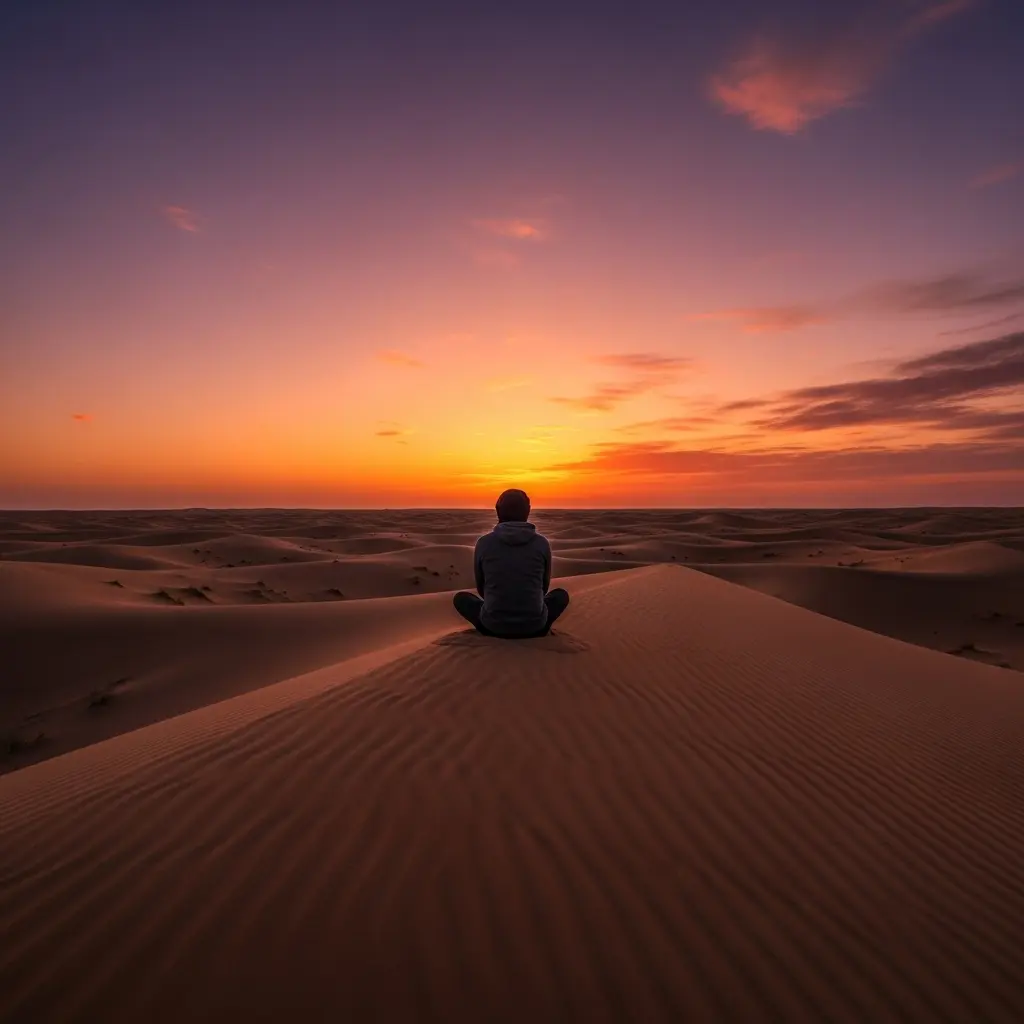
Do this while sitting on a high dune.
Watch the sun go down.
Let the breath anchor you in the silence.
Disconnecting to Connect
You must leave the phone.
Or turn it off completely.
Vibration is noise.
Even a silent notification is mental noise.
It pulls you out of the moment.
To get the full Desert Silence Brain Effect, you need a digital blackout.
Tell your family you are offline.
Tell your boss you are unreachable.
This permission to disconnect is vital.
It removes the “anticipatory anxiety.”
You are not waiting for a ring.
You are free.
The silence of the phone matches the silence of the sand.
This dual silence is the ultimate luxury.
It is rarer than gold.
The Morning vs The Night
Morning silence is expectant.
The birds are waking up.
The air is cool.
It is a silence of potential.
It is energizing.
It is great for planning the day.
Night silence is heavy.
It is final.
The world has stopped.
It is a silence of reflection.
It is great for gratitude.
Both offer different aspects of the Desert Silence Brain Effect.
Try to experience both.
An overnight camping trip is ideal.
You get the sunset silence.
You get the deep night silence.
You get the sunrise silence.
It is a 24-hour cycle of therapy.
Companies like https://royaldesertadventures.ae/ specialize in overnight stays.
They provide comfortable tents.
But they keep the noise low.
They respect the environment.
This is the best way to immerse yourself.
Soundscapes of the Desert
Silence is not total absence.
It is the absence of mechanical noise.
There are natural sounds.
These are “pink noise.”
The wind blowing over sand.
The crackle of a fire.
These sounds are fractal.
They follow a mathematical pattern.
The brain loves these sounds.
They are soothing.
They do not trigger the stress response.
They enhance the Desert Silence Brain Effect.
They act as a gentle massage for the auditory system.
Listening to the wind is meditation.
It changes pitch.
It tells a story.
It connects you to the earth.
The Long-Term Impact
One trip helps.
Regular trips change your life.
Your brain is plastic.
It learns.
If you expose it to silence regularly, it adapts.
It becomes better at regulating stress.
It becomes more creative.
You develop a “silence reserve.”
When the office gets loud, you don’t panic.
You remember the dune.
You trigger the Desert Silence Brain Effect from memory.
It becomes a coping mechanism.
You become the calmest person in the room.
This is a superpower in the modern world.
Conclusion
We treat silence as a luxury.
We should treat it as a vitamin.
It is essential nutrient for the brain.
The desert is the biggest supply of this nutrient.
It is vast, open, and quiet.
The Desert Silence Brain Effect is real science.
It is measurable.
It is tangible.
You will feel it the moment the engine cuts.
A weight lifts.
A clarity descends.
So, when you book your safari, remember this.
You are not just booking a ride.
You are booking a brain reboot.
You are booking a therapy session with the universe.
Go find the quiet.
Your neurons will thank you.
Frequently Asked Questions
1. What exactly is the “Desert Silence Brain Effect”?
The Desert Silence Brain Effect refers to the physiological and neurological changes that occur in the human brain when exposed to the deep, absolute silence of the desert environment. Unlike a quiet room in a city, the desert offers a near-total absence of auditory input and visual clutter. This triggers a specific chain reaction: cortisol (stress hormone) levels drop, the amygdala (fear center) deactivates, and the hippocampus (memory center) is stimulated. It is a state of deep restorative rest that allows the brain to repair, reorganize, and rejuvenate itself.
2. How long do I need to be in silence to feel the benefits?
Studies suggest that physiological changes, such as lowered blood pressure and heart rate, begin within just two minutes of silence. However, to get the deeper neurological benefits like neurogenesis and significant stress reduction, you need a longer duration. A period of at least two hours of immersion in the quiet environment is recommended. This allows the brain to fully switch from the “Task Positive Network” to the “Default Mode Network,” facilitating deep reflection and cognitive restoration.
3. Can silence really grow new brain cells?
Yes, this is one of the most startling discoveries in neuroscience. A 2013 study published in the journal Brain Structure and Function found that mice exposed to two hours of silence per day developed new cells in the hippocampus. This region is associated with learning, memory, and emotion. While human studies are ongoing, the implications are that silence acts as a growth factor for the brain, potentially reversing the atrophy caused by chronic stress and aging.
4. Why does the desert feel quieter than a forest?
A forest is full of life. There are rustling leaves, chirping birds, running water, and insects. This is a “busy” silence. The desert, specifically the sandy dunes, is acoustically different. The sand absorbs sound waves rather than reflecting them. There are fewer animals and no vegetation to rustle in the wind. This creates a “dead” acoustic environment, or an anechoic chamber effect. This absolute lack of reverberation and noise creates a more profound, heavy silence that is unique to this landscape.
5. Is it normal to feel anxious when the silence starts?
Yes, absolutely. We are addicted to noise and stimulation. When that is suddenly removed, the brain can go into withdrawal. You might feel restless, bored, or even anxious. You might feel the urge to check your phone or talk. This is the brain searching for its usual dopamine hit. It is important to push through this initial discomfort. Usually, after about 15 to 20 minutes, the anxiety fades and is replaced by a deep, washing sense of calm and clarity.
6. How does https://htdesertsafari.com/ help facilitate this experience?
Operators like this are crucial because they control the environment. A standard budget safari puts you in a shared car with strangers who might be loud. They might play loud music. To experience the Desert Silence Brain Effect, you need a provider who offers private tours. You can explicitly request a “meditative” or “silent” stop. Their drivers know the secluded spots away from the main tourist hubs where true silence can be found. They facilitate the logistics of solitude.
7. Does this silence help with burnout?
Burnout is essentially a state of chronic cognitive and emotional exhaustion. It is a depleted battery. Silence is the most effective way to recharge this battery. By removing the constant demand for attention and processing, silence allows the brain’s energy to be redirected toward repair and recovery. It breaks the cycle of stress. A weekend retreat in the desert silence can be more restorative for a burnt-out worker than a week of active vacationing in a busy city.
8. What is the “Default Mode Network” mentioned in the article?
The Default Mode Network (DMN) is a network of interacting brain regions that is active when a person is not focused on the outside world. It is active during daydreaming, recalling memories, envisioning the future, and monitoring the self. In our busy lives, we suppress the DMN to get tasks done. However, the DMN is vital for creativity, empathy, and self-understanding. The silence of the desert allows the DMN to take over, leading to “aha!” moments and deep personal insights.
9. Can children benefit from this silence?
Yes, although they might resist it at first. Children today are overstimulated by screens and structured activities. Their brains are developing, and they need downtime to process what they learn. While they might not sit and meditate, playing quietly in the sand without the noise of TVs or video games allows their sensory systems to regulate. It can improve their focus, reduce hyperactivity, and help them sleep better. It teaches them the value of being unplugged.
10. How does silence improve sleep?
Noise pollution is a major disruptor of sleep architecture. Even if you don’t wake up, traffic noise can shift you from deep sleep to light sleep, preventing physical repair. The desert offers a noise floor of near zero. This allows the brain to cycle through all sleep stages uninterrupted. Furthermore, the relaxation achieved during the day through the Desert Silence Brain Effect lowers evening cortisol, making it easier to fall asleep. The result is deep, high-quality, restorative sleep.
11. What is “soft fascination”?
Soft fascination is a concept from Attention Restoration Theory. It refers to an environment that holds your attention effortlessly but leaves room for reflection. Hard fascination (like watching a movie or driving) demands all your attention. Soft fascination (like watching a sunset or a dune) is gentle. It allows the parts of the brain responsible for focused attention to rest and recover. The desert is a perfect example of a soft fascination environment.
12. Why do I feel more creative after being in the desert?
Creativity is the ability to connect unrelated ideas. This connection happens best when the brain is relaxed and the “filters” are down. Noise and stress tighten these filters. Silence opens them. By engaging the Default Mode Network and reducing cortisol, the Desert Silence Brain Effect creates a fertile ground for new ideas. The vast, open horizon also psychologically encourages “big picture” thinking rather than getting stuck on small details.
13. How does https://saharadesertsafaridubai.com/ fit into this?
This website represents a gateway to the experience. They offer various packages, from morning drives to overnight camping. By using a reputable service, you ensure safety. Being safe is a prerequisite for relaxation. You cannot relax if you are worried about getting lost or the car breaking down. These professional operators handle the survival aspects—water, transport, navigation—so your brain is free to fully immerse in the silence and the experience.
14. Is the desert silence scary at night?
It can be primal. The darkness is absolute, and the silence is heavy. For a city dweller, this triggers a primitive alertness. However, this is usually fleeting. Once you realize there are no predators and you are safe, the fear turns into “Awe.” Awe is a powerful positive emotion that makes us feel small and connected to the universe. Looking at the stars in total silence is one of the most profound experiences a human can have.
15. Can I experience this on a dune buggy tour?
Likely not. Dune buggies and quad bikes are loud, adrenaline-fueled activities. They trigger high arousal and excitement, which is fun, but it is the opposite of the Desert Silence Brain Effect. To get the brain benefits discussed here, you need to turn off the engines. You might do a buggy ride for fun, but you must balance it with a period of stillness and engine-off quiet time to get the therapeutic effects.
16. What is the link between silence and blood pressure?
Noise induces a stress response. It activates the sympathetic nervous system (fight or flight), which constricts blood vessels and raises heart rate and blood pressure. Silence activates the parasympathetic nervous system (rest and digest). This releases acetylcholine, which slows the heart rate and dilates blood vessels. A 2006 study found that two minutes of silence was more relaxing than listening to “relaxing” music, significantly lowering blood pressure and brain blood flow velocity.
17. How does the visual landscape contribute to the silence?
The visual and the auditory are linked. A cluttered, chaotic visual environment (like a busy street) “looks” loud to the brain. It demands processing. The desert landscape is visually minimal. It has smooth curves, limited colors, and vast open space. This “visual silence” complements the auditory silence. It reduces the overall cognitive load on the brain. The eyes don’t have to work hard, which signals the ears that they can also relax.
18. Why use external links like https://dubaidesertsafarie.com/?
We provide these links to give you trusted options. The market is flooded with operators. Some pack 500 people into a camp with loud speakers. That will not give you the brain benefits. These linked operators are established and offer a range of experiences, including more private or premium options that prioritize the nature experience over the party experience. It helps you navigate the market to find the right kind of tour for mental wellness.
19. Can silence help with grief?
Yes. Grief is a loud emotion. It is overwhelming. The world often feels too busy and happy when you are grieving. The desert silence matches the internal state of the griever. It is somber and vast. It provides a container big enough to hold the sadness. It allows the person to cry or think without interruption. Many people find a sense of peace and acceptance in the desert that they cannot find in the bustling city.
20. What is the “Auditory Cortex Reset”?
The auditory cortex is the part of the brain that processes sound. In modern life, it is never “off.” It is constantly bombarded. This leads to habituation—we stop hearing things, but the brain is still working to block them. In the desert, the lack of input allows the auditory neurons to stop firing for the first time. They rest. This “reset” increases sensitivity. When you return to the city, you might find you hear music more clearly or appreciate conversations more because your hearing has been sensitized.