
Table of Contents
Desert Wildlife Protection: A Grand Mission to Save the Arabian Wilderness
Desert Wildlife Protection is the silent force that keeps the golden sands of the Arabian Peninsula alive. While many people view the desert as a vast, empty space, it is actually a delicate ecosystem teeming with life. From the iconic Arabian Oryx to the tiny sand gecko, every creature plays a vital role in maintaining the balance of this harsh environment.
The journey of Desert Wildlife Protection has evolved from simple observation to high-tech conservation. In the past, the rapid expansion of cities and hunting led to a decline in native populations. Today, the focus has shifted toward creating massive protected reserves where these animals can thrive without fear of human interference.
When we speak of Desert Wildlife Protection, we are discussing a commitment that goes beyond business. It is about ensuring that future generations can witness the majesty of a gazelle leaping across a dune. It is about respecting the land that has sustained the people of this region for thousands of years.
The Success Story of the Arabian Oryx
The Arabian Oryx is perhaps the greatest symbol of Desert Wildlife Protection success. Once declared extinct in the wild, this magnificent antelope was brought back through a rigorous breeding program. It is a testament to what happens when governments and safari operators prioritize the environment.
In the early stages of Desert Wildlife Protection, a few remaining individuals were gathered into “The World Herd.” From there, they were carefully reintroduced into protected areas. Now, thousands of Oryx roam the dunes, a direct result of the dedication found in modern conservation strategies.
Observing an Oryx during a safari is a reminder of why Desert Wildlife Protection matters. Their white coats and long, straight horns are a masterpiece of evolution. They are built to survive extreme heat, reflecting the resilience of the desert itself.
The Role of Safari Nature Reserves
One of the most effective tools for Desert Wildlife Protection is the establishment of dedicated nature reserves. These areas, like the Dubai Desert Conservation Reserve, act as a sanctuary. Here, only a few licensed operators are allowed, ensuring that the animals are not stressed by too many vehicles.
Within these reserves, Desert Wildlife Protection involves strict rules. Drivers must follow designated tracks to avoid crushing the burrows of nocturnal animals. Speed limits are enforced to prevent collisions with wildlife that may suddenly cross the path.
The management of these reserves is a core part of Desert Wildlife Protection. It involves constant patrolling by rangers who monitor the health of the herds and look for signs of poaching or illegal dumping. This high level of oversight is what makes these sanctuaries so successful.
Tracking and Monitoring Endangered Species
Modern technology has revolutionized Desert Wildlife Protection. We no longer guess where the animals are. GPS collars and satellite tracking allow scientists to follow the movements of Arabian Gazelles and Oryx in real-time.
This data is vital for Desert Wildlife Protection as it helps identify migration patterns and preferred grazing grounds. If an animal stops moving for an extended period, a team can be dispatched immediately to check for injury or illness. It is a 24-hour surveillance system for the wild.
Furthermore, Desert Wildlife Protection includes the use of hidden motion-sensor cameras. These “camera traps” capture images of shy animals like the Gordon’s Wildcat or the Sand Fox. Seeing these rare creatures allows researchers to count their numbers and ensure their habitats remain safe.
Habitat Restoration and Native Flora
Protecting the animals is only half the battle; Desert Wildlife Protection must also protect the plants. The Ghaf tree and the Sidr tree are the skyscrapers of the desert. They provide shade, food, and nesting sites for hundreds of species.
In areas where the landscape has been damaged, Desert Wildlife Protection involves massive replanting efforts. Native trees are grown in nurseries and then moved to the desert. These trees are drought-resistant and once established, they create a mini-oasis that supports a variety of life.
Removing invasive species is another task of Desert Wildlife Protection. Non-native plants can take over water sources and crowd out the local vegetation. By keeping the desert “pure,” we ensure that the native animals have the specific food they need to survive the summer heat.
Comparison of Conservation Strategies
| Strategy Type | Traditional Method | Modern Desert Wildlife Protection |
| Monitoring | Visual sightings by guides | GPS Satellite Tracking & Drones |
| Habitat | Unregulated open land | Managed Nature Reserves |
| Water | Natural Oasis only | Solar-powered drinking stations |
| Breeding | Natural wild growth | Managed Reintroduction Programs |
| Education | Simple camp stories | Interactive Ecological Briefings |
The Impact of Noise and Light Pollution
Desert Wildlife Protection also tackles the invisible threats of noise and light. Many desert animals are nocturnal. They rely on the cover of darkness and the silence of the night to hunt and find mates.
Excessive light from safari camps can disorient these creatures. As part of Desert Wildlife Protection, many camps have switched to “warm-spectrum” lighting that points downward. This prevents light from spilling into the dunes and disturbing the natural rhythms of the wild.
Noise control is equally important in Desert Wildlife Protection. Loud music or shouting can cause animals to flee their territory, leaving behind their young. Strict noise regulations in protected zones ensure that the only thing you hear at night is the wind and the call of the desert owl.
Water Security in Arid Regions
In the desert, water is the most precious resource. Desert Wildlife Protection involves the maintenance of hidden water stations. These are often powered by solar energy and are designed to mimic natural springs.
During the peak of the summer, these stations are a lifeline for Desert Wildlife Protection. They allow the animals to stay hydrated when the natural oases have dried up. This prevents mass die-offs during particularly harsh drought years.
The water quality at these stations is monitored as part of Desert Wildlife Protection. It is important to ensure that the water is free from bacteria or contaminants that could spread through a herd. It is a high-tech way of supporting the ancient cycles of life.
Collaborative Efforts with International Bodies
Desert Wildlife Protection is a global effort. Local organizations work closely with international groups like the IUCN. These partnerships allow for the exchange of knowledge and the implementation of best practices from around the world.
By participating in global networks, Desert Wildlife Protection in the UAE contributes to the world’s understanding of arid-land ecology. What we learn here about saving the Oryx can be applied to other endangered species in Africa or Central Asia.
These collaborations also help secure funding for Desert Wildlife Protection. Private donors and corporate sponsors are more likely to support programs that are verified by international standards. It is a way to prove that the work being done is real and effective.
The Role of the Ethical Safari Operator
The most visible part of Desert Wildlife Protection is the safari operator. Companies that prioritize the environment act as the first line of defense. They educate their guests and ensure that the rules of the reserve are followed perfectly.
Operators like https://royaldesertadventures.ae/ are leaders in this field. They integrate conservation into every trip, showing guests that the desert is a place to be respected. By choosing an ethical operator, you are directly supporting Desert Wildlife Protection.
For a deeper look at the landscape being saved, https://dubaidesertsafarie.com/ provides excellent resources on the history and ecology of the region. They explain how the dunes are managed to prevent erosion and support life.
Another champion of the environment is https://htdesertsafari.com/. They focus on the educational side of the safari, teaching guests how to spot animal tracks and understand the behaviors of the local species.
For internal insights on how we manage our conservation goals, please visit https://saharadesertsafaridubai.com to read about our specific protocols for protecting the Arabian wilderness.
Understanding the Biodiversity of the Sand
Desert Wildlife Protection covers more than just the large mammals. The biodiversity of the sand includes incredible insects, birds, and reptiles. Each one is a marvel of adaptation.
The Sand Fish, for example, is a lizard that “swims” through the dunes. Desert Wildlife Protection ensures that the sand is not contaminated by oil or chemicals from vehicles, keeping the home of these unique lizards safe.
Birds like the Houbara Bustard are also a focus of Desert Wildlife Protection. These birds are highly sensitive to human presence. Protecting their nesting sites during the breeding season is a non-negotiable rule in every managed desert zone.
The Economics of Sustainable Conservation
Many people ask how Desert Wildlife Protection is paid for. The answer lies in sustainable tourism. A portion of every safari ticket usually goes toward a conservation fund. This means that by visiting the desert, you are actually helping to save it.
This financial model for Desert Wildlife Protection is highly effective. It gives the land a monetary value as a nature reserve that is higher than its value for industrial development. When nature pays for itself, it is much easier to protect.
Auditing these funds is a part of Desert Wildlife Protection. It ensures that the money is spent on what matters: buying trackers, planting trees, and paying for rangers. Transparency is key to maintaining the trust of the global traveling public.
Staff Training and Wildlife Etiquette
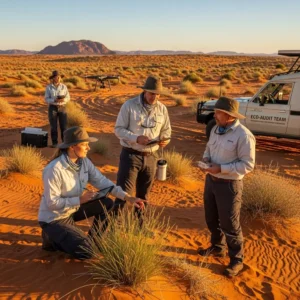
A safari guide is more than a driver; they are a guardian. Desert Wildlife Protection requires all staff to undergo intensive training on animal behavior. They must know how close they can get to an Oryx without making it run.
This “wildlife etiquette” is a core part of Desert Wildlife Protection. It teaches staff that the animal’s comfort always comes before a guest’s photo opportunity. A well-trained guide can explain this to the guests, turning a potential conflict into a lesson in respect.
Regular workshops on Desert Wildlife Protection keep the staff updated on the latest conservation news. If a new calf is born in the herd, the guides are the first to know, and they adjust their routes to give the mother and her young the space they need.
Combating Illegal Hunting and Poaching
In the past, over-hunting was the biggest threat to the desert. Today, Desert Wildlife Protection includes a zero-tolerance policy for poaching. Rangers use night-vision and drones to patrol the borders of the reserves.
The legal framework for Desert Wildlife Protection in the UAE is very strong. There are heavy fines and even prison sentences for anyone caught harming the protected wildlife. This “stick” approach is essential for deterring those who do not respect the “carrot” of education.
Reporting suspicious activity is part of the Desert Wildlife Protection culture. Safari drivers act as the “eyes and ears” of the rangers. If they see an unauthorized vehicle or someone behaving strangely, they report it immediately via radio.
The Future of Desert Conservation
Looking ahead, the future of Desert Wildlife Protection is even more high-tech. We are seeing the introduction of AI-driven sensors that can identify different species by their sounds alone. This will allow for even more precise monitoring of bird and insect populations.
The goal of Desert Wildlife Protection is “Rewilding.” This means returning the desert to its most natural state, where the animal populations are self-sustaining and require less human intervention. It is the ultimate dream of every conservationist.
Community involvement is also growing in Desert Wildlife Protection. Local schools are being brought into the desert to learn about their heritage. When children grow up loving the Oryx, the future of Desert Wildlife Protection is secure.
How You Can Support Conservation
As a traveler, you have power. You can support Desert Wildlife Protection by choosing operators that have a proven record of sustainability. Look for “Green” certifications and read about their conservation projects.
Follow the rules when you are in the dunes. Desert Wildlife Protection relies on everyone doing their part. Don’t throw trash, stay on the tracks, and keep your voice down when you see an animal. Small actions lead to big results.
Finally, spread the word. Tell your friends and family about the importance of Desert Wildlife Protection. The more people care about the Arabian desert, the more resources will be available to save it. The animals cannot speak for themselves; we must be their voice.
Essential Wildlife Protection Rules for Safaris
Maintain Distance: Never approach an animal closer than 50 meters to avoid stress.
Stay on Tracks: Driving off-path destroys the burrows of small desert creatures.
No Littering: Trash can be fatal to animals that mistake it for food.
Quiet Observation: Keep noise to a minimum so you don’t scare the wildlife away.
No Feeding: Human food disrupts the natural diet and behavior of desert animals.
Flash-Free Photos: Use natural light to avoid blinding nocturnal species.
The Symbiosis of Tourism and Nature
The relationship between a safari and Desert Wildlife Protection is a circle. Without the beautiful wildlife, the safari would lose its magic. Without the revenue from the safari, the wildlife would lose its protection.
This symbiosis is the heart of Desert Wildlife Protection. It proves that humans and nature can live together if there is a plan. In Dubai, this plan is one of the most successful in the world, turning a barren landscape into a thriving sanctuary.
As you sit in your 4×4, watching the sunset over a dune, remember the work that goes into Desert Wildlife Protection. You are not just a spectator; you are a participant in a grand effort to save the soul of the desert.
Managing the Carbon Footprint of Conservation
Protecting nature also means protecting the climate. Desert Wildlife Protection includes a move toward hybrid and electric vehicles for safari tours. Reducing emissions helps prevent the extreme heatwaves that can kill desert wildlife.
Solar-powered camps are another win for Desert Wildlife Protection. By reducing the reliance on diesel generators, we reduce the noise and air pollution that can affect the animals. It is a holistic approach to environmental health.
Auditing the carbon footprint of every safari is becoming a standard part of Desert Wildlife Protection. The goal is a “Carbon-Neutral” adventure, where every gram of CO2 emitted is offset by planting trees or investing in renewable energy.
The Spiritual Connection to the Land
For the people of the UAE, Desert Wildlife Protection is a spiritual duty. The desert is where their ancestors lived and survived. The animals are seen as a blessing that must be passed down to the next generation.
This deep cultural link is the strongest driver of Desert Wildlife Protection. It is more than just a law; it is a point of national pride. When an Emirati sees an Oryx, they see their own history, and that is why they will never stop protecting it.
Museums and cultural centers often highlight this link. They show how the Bedouin used their knowledge of nature to survive, and how that same knowledge is now being used for Desert Wildlife Protection. It is a beautiful story of a people staying true to their roots.
Conclusion: A Legacy of Preservation
Desert Wildlife Protection is a never-ending journey. It requires constant work, funding, and education. But when you see a herd of gazelles running free across the red dunes, you know it is all worth it.
The desert is a place of wonder, and its animals are the keepers of its secrets. Through the power of Desert Wildlife Protection, we can ensure that these secrets are kept safe for another thousand years.
We invite you to experience the desert with a heart of respect. Support the people who lead the way in Desert Wildlife Protection. Together, we can keep the Arabian wilderness wild, beautiful, and alive.
20 FAQs About Desert Wildlife Protection and Conservation
1. What is the main goal of Desert Wildlife Protection?
The primary goal of Desert Wildlife Protection is to preserve the natural biodiversity of the Arabian desert. This involves protecting endangered species, restoring their natural habitats, and ensuring that human activity—such as tourism and urban expansion—does not lead to the extinction of native animals and plants. It is a balanced approach to keeping the desert ecosystem healthy and vibrant for future generations.
2. Which species are the focus of Desert Wildlife Protection in the UAE?
The main species protected under Desert Wildlife Protection include the Arabian Oryx, the Sand Gazelle, the Arabian Gazelle, and the Gordon’s Wildcat. Additionally, birds like the Houbara Bustard and various reptiles such as the spiny-tailed lizard (Dhabb) are also major priorities. Each of these animals is a key part of the desert’s ecological chain and requires specific conservation strategies to survive.
3. How does a desert safari help with Desert Wildlife Protection?
Sustainable safaris are a major source of funding for Desert Wildlife Protection. A portion of the fees paid by tourists goes directly into conservation funds. These funds pay for rangers, wildlife tracking technology, and habitat restoration. Furthermore, safaris act as an educational platform, teaching thousands of visitors every year about the importance of protecting the desert environment.
4. Is the Arabian Oryx still endangered?
Thanks to Desert Wildlife Protection, the Arabian Oryx has been moved from “Extinct in the Wild” to “Vulnerable.” While their numbers have increased significantly, they still require protection within managed reserves to ensure they are not hunted or lost to habitat destruction. It is one of the most successful reintroduction stories in the history of global conservation.
5. What are “Nature Reserves” in the context of Desert Wildlife Protection?
Nature Reserves are protected areas where development and unregulated tourism are prohibited. In these zones, Desert Wildlife Protection is the top priority. Only a few licensed safari companies can enter, and they must follow strict rules regarding speed, noise, and waste. These reserves provide a safe space for animals to breed and live without the stress of constant human presence.
6. How do rangers monitor animals for Desert Wildlife Protection?
Rangers use a combination of GPS collars, satellite imaging, and motion-sensor camera traps. As part of Desert Wildlife Protection, these tools allow for real-time tracking of herds. If an animal is injured or a mother has given birth, the rangers know exactly where they are and can provide help or extra protection if needed.
7. Does Desert Wildlife Protection include plants?
Yes, flora is a vital part of Desert Wildlife Protection. Native trees like the Ghaf and Sidr are protected because they provide the primary food and shade for desert animals. Replanting programs are used to restore areas that have been overgrazed or damaged by human activity, ensuring that the animals always have a natural source of sustenance.
8. How do safari vehicles impact Desert Wildlife Protection?
If not managed, vehicles can be a threat. However, under the rules of Desert Wildlife Protection, safari drivers must stay on established tracks. This prevents the crushing of vegetation and the destruction of burrows for small animals like lizards and rodents. Speed limits are also strictly enforced within reserves to prevent accidental collisions with larger wildlife.
9. What can I do as a tourist to support Desert Wildlife Protection?
The best way is to choose an eco-certified safari operator that supports Desert Wildlife Protection. During your tour, follow the rules: don’t litter, stay quiet when near animals, and never try to feed or touch the wildlife. Your respect for the environment is the most important contribution you can make to the conservation of the desert.
10. Why is light pollution a concern for Desert Wildlife Protection?
Many desert animals, such as the Sand Fox and the Desert Owl, are nocturnal. Excessive artificial light from camps can disrupt their hunting and mating patterns. As part of Desert Wildlife Protection, many camps now use “dark-sky” lighting—fixtures that are low-lumen and point toward the ground—to keep the desert night as natural as possible.
11. Is hunting allowed in the desert?
No, hunting of native wildlife is strictly illegal in the UAE and is a major violation of Desert Wildlife Protection laws. There are heavy penalties, including large fines and jail time, for poaching. These laws have been essential in allowing species like the gazelle and oryx to recover their populations in the wild.
12. How does Desert Wildlife Protection handle water scarcity?
During dry periods, Desert Wildlife Protection includes the maintenance of solar-powered water stations. These provide a reliable source of hydration for the animals when natural water holes have dried up. This prevents mass mortality during the extreme heat of the summer months, ensuring the survival of the herds year-round.
13. What is the Gordon’s Wildcat and is it being protected?
The Gordon’s Wildcat is a rare, desert-adapted feline. It is a major focus of Desert Wildlife Protection because it is often threatened by interbreeding with domestic cats and habitat loss. Conservation programs work to identify their territories and protect the specific scrublands where they hunt, ensuring this elusive predator remains part of the Arabian ecosystem.
14. Are there any birds protected by Desert Wildlife Protection?
Yes, many migratory and resident birds are protected. The Houbara Bustard is the most famous example. Desert Wildlife Protection involves protecting their nesting grounds and banning any activity that could disturb them during the spring breeding season. The UAE is also a leader in Houbara breeding and reintroduction programs.
15. How do you stop illegal dumping in the desert?
Surveillance is key. Rangers and safari guides act as the eyes of Desert Wildlife Protection. Anyone caught dumping trash or chemicals in the dunes faces severe legal action. By keeping the sand clean, we ensure that the animals do not ingest plastic or toxins, which is a major part of maintaining a healthy habitat.
16. Does Desert Wildlife Protection involve the local community?
Absolutely. Education is a pillar of Desert Wildlife Protection. Programs in schools and local communities teach people about the value of their natural heritage. When people take pride in their local animals, they are more likely to support conservation laws and report illegal activities.
17. What is “Rewilding” in Desert Wildlife Protection?
Rewilding is the process of returning an area to its natural, wild state. In Desert Wildlife Protection, this means removing man-made structures and reintroducing native species. The goal is to create a self-sustaining ecosystem where the animals can live and breed without needing constant human support or supplemental feeding.
18. How do you choose a safari operator that supports Desert Wildlife Protection?
Look for operators that have partnership agreements with conservation reserves. They should explicitly mention Desert Wildlife Protection on their websites and have clear environmental policies. Sites like https://royaldesertadventures.ae/ and https://saharadesertsafaridubai.com are good examples of companies that prioritize nature over profit.
19. Are there any reptiles protected under these rules?
Yes, the Spiny-tailed Lizard, or “Dhabb,” is a protected species. Desert Wildlife Protection ensures that their burrows are not destroyed by vehicles. These lizards are an important part of the food chain and are a sign of a healthy desert environment. They are one of the most interesting creatures you can see during a nature walk.
20. What is the future of Desert Wildlife Protection?
The future is bright, thanks to increasing global awareness. We expect to see more use of AI and drone technology in Desert Wildlife Protection to monitor vast areas of the desert more efficiently. The long-term goal is to have large, connected corridors across the UAE where wildlife can roam free from the coast to the mountains.