Table of Contents
Desert Camp Training: Elevating Arabian Hospitality in the Golden Dunes
Desert Camp Training is the backbone of the thriving tourism industry in the United Arab Emirates. When travelers step into the vast expanse of the dunes, they expect more than just sand. They expect a seamless blend of ancient tradition and modern luxury.
The process of Desert Camp Training begins long before a guest arrives at the camp. It involves a rigorous selection process where individuals are vetted for their temperament and passion. Working in the desert is not a typical office job. It requires resilience and a deep understanding of the environment.
The Foundation of Desert Camp Training
In the early stages of Desert Camp Training, staff members are introduced to the core values of Arabian generosity. This concept, known as “Karam,” is the heartbeat of the desert experience. Trainees learn that every guest is a blessing and must be treated with the utmost respect.
Physical endurance is a key component of Desert Camp Training. The desert heat can be unforgiving, even during the cooler months. Staff must be trained to maintain high energy levels while performing their duties under the sun. This ensures that the quality of service never falters, regardless of the outdoor conditions.
Communication is another pillar of Desert Camp Training. Since Dubai is a global melting pot, staff come from various backgrounds. They must master English and basic Arabic phrases to bridge the gap with international visitors. This linguistic preparation is vital for creating a welcoming atmosphere.
Cultural Etiquette and Traditional Values
A significant portion of Desert Camp Training focuses on cultural sensitivity. Guests come from all over the world, often with little knowledge of local customs. Staff are trained to guide them gently through the traditions of the UAE.
Trainees learn the art of serving Arabic coffee, or “Gahwa.” This is not just about pouring a drink; it is a choreographed ritual. Desert Camp Training teaches staff to hold the pot in the left hand and the small cup in the right. This attention to detail reflects the depth of the culture.
The history of the Bedouin people is also taught during Desert Camp Training. Staff must be able to answer questions about how tribes survived in the dunes for centuries. This storytelling ability adds an educational layer to the guest experience, making the safari more than just a ride.
Safety Protocols and Emergency Response
Safety is non-negotiable in Desert Camp Training. The remote location of most camps means that staff must be self-reliant in case of an emergency. Every team member undergoes basic first aid training as part of their induction.
Fire safety is a critical module in Desert Camp Training. With open-air kitchens and traditional torches, understanding fire prevention is essential. Staff practice evacuation drills and learn how to use specialized equipment to keep the camp secure.
Vehicle safety is also integrated into Desert Camp Training. Even if a staff member is not a driver, they must understand the basics of dune navigation. This knowledge helps them assist guests during the journey to and from the camp, ensuring everyone feels safe at all times.
Luxury Service Standards in the Sand
As the industry shifts toward high-end experiences, Desert Camp Training has evolved to include fine dining protocols. Staff are taught how to set a formal table in a desert setting, balancing elegance with the practicalities of the wind and sand.
Wine and beverage knowledge is now a part of advanced Desert Camp Training. For luxury camps that serve premium drinks, staff must be able to explain pairings and origins. This elevates the desert safari from a casual outing to a sophisticated event.
Housekeeping in the dunes presents unique challenges. Desert Camp Training provides techniques for keeping tents and common areas pristine despite the constant presence of sand. It is a battle against nature that requires constant vigilance and specialized cleaning tools.
Managing High-Volume Guest Arrivals
Efficiency is key during peak tourism seasons. Desert Camp Training includes logistics management to handle hundreds of guests simultaneously. Staff learn how to manage queues at buffet lines and activity stations without causing frustration.
Conflict resolution is a vital skill taught in Desert Camp Training. Sometimes, travel fatigue or heat can make guests irritable. Staff are trained to remain calm, listen empathetically, and provide quick solutions to any complaints.
Teamwork is emphasized throughout the Desert Camp Training program. A camp is like a well-oiled machine. If the kitchen is slow, the servers must know how to stall gracefully. If the entertainment is delayed, the host must step in to engage the crowd.
Entertainment and Guest Engagement
The evening program is the highlight of many safaris. Desert Camp Training ensures that the staff supporting the performers are just as prepared as the dancers themselves. Lighting and sound technicians receive specific instructions on desert acoustics.
Staff who manage the henna stations or camel rides undergo specialized Desert Camp Training. They must ensure that the animals are treated humanely and that the guests are safe during these interactions. This balance of entertainment and ethics is a major focus.
Photography assistance is a modern addition to Desert Camp Training. Most guests want that perfect sunset shot. Staff are taught basic photography tips to help guests capture memories, which in turn boosts the camp’s visibility on social media.
Comparison of Training Modules
| Training Category | Basic Level | Advanced Level | Leadership Level |
| Cultural Knowledge | Basic Arabic Phrases | Deep Historical Stories | Heritage Program Design |
| Service Skills | Buffet Management | Table-side Service | VIP Guest Handling |
| Safety | First Aid Basics | Advanced Rescue | Risk Management Planning |
| Operations | Camp Setup | Inventory Control | Full Camp Logistics |
Sustainability and Environmental Awareness
The modern Desert Camp Training curriculum now includes a heavy focus on “Leave No Trace” principles. Staff are educated on the impact of waste on the desert ecosystem. They learn how to sort recycling and minimize the use of single-use plastics.
Water conservation is a critical lesson in Desert Camp Training. Since water must be trucked into the desert, every drop is precious. Staff are trained to use water-efficient methods for cleaning and cooking without compromising on hygiene.
Protecting local wildlife is also part of Desert Camp Training. Staff learn how to discourage guests from feeding wild animals and how to spot tracks of the Arabian Oryx or gazelles. This environmental stewardship is essential for the longevity of desert tourism.
The Psychology of Hospitality
Understanding guest behavior is a sophisticated part of Desert Camp Training. Staff are taught to read body language and anticipate needs before they are even spoken. This “anticipatory service” is what separates a good camp from a great one.
Cultural nuances are explored deeply. For example, Desert Camp Training explains the different expectations of European travelers versus those from East Asia or North America. Tailoring the approach based on these insights makes the service feel personalized.
Mental health support for staff is a growing part of Desert Camp Training. Living and working in a remote environment can be isolating. Training programs now include modules on stress management and team bonding to keep morale high.
Behind the Scenes: The Kitchen Staff
The culinary team undergoes the most intense Desert Camp Training. Cooking in a desert kitchen requires different skills than a standard restaurant. They must manage heat sources and food safety in an outdoor environment.
Food hygiene is the top priority in Desert Camp Training. Staff are trained in the HACCP system to ensure that all food is stored and prepared at the correct temperatures. In the desert heat, there is zero room for error.
Menu innovation is also encouraged. Desert Camp Training allows chefs to experiment with local ingredients like dates, camel milk, and desert truffles. This helps keep the dining experience fresh and exciting for returning guests.
Technological Integration in Staff Training
Digital tools are now used to streamline Desert Camp Training. Many companies use mobile apps for “micro-learning,” where staff can watch short videos on service techniques during their breaks.
Inventory management software is taught during the operational phase of Desert Camp Training. This allows the camp to track supplies in real-time, ensuring they never run out of essential items in the middle of the dunes.
Customer Relationship Management (CRM) systems are also part of Desert Camp Training. Front-of-house staff learn how to record guest preferences, ensuring that a returning visitor receives their favorite drink or seating area automatically.
External Resources and Industry Leaders
To see how these training standards are applied in the real world, you can visit leading operators like https://royaldesertadventures.ae/. Their commitment to staff excellence is a benchmark for the industry.
For a deeper look into the logistical side of the business, https://dubaidesertsafarie.com/ provides excellent insights into how large-scale camps operate on a daily basis.
Another great example of high-quality service can be found at https://htdesertsafari.com/, where the staff are known for their exceptional knowledge of local heritage.
If you are looking for more information on the internal standards we follow, please check out our primary resource at https://saharadesertsafaridubai.com to understand our dedication to guest satisfaction.
The Role of Leadership in the Desert
A camp is only as good as its manager. Desert Camp Training for leadership roles focuses on decision-making under pressure. Managers must be able to handle sudden weather changes or technical failures without showing stress.
Mentorship is a key part of the Desert Camp Training cycle. Senior staff are encouraged to train juniors, creating a culture of continuous improvement. This ensures that the high standards are passed down from one generation of staff to the next.
Financial literacy is also included for managers. Desert Camp Training teaches them how to balance the books, manage labor costs, and optimize the camp’s performance while maintaining the quality of the guest experience.
Adapting to Global Tourism Trends
The Desert Camp Training program is constantly updated to reflect global shifts. For instance, the rise of “glamping” has required staff to learn more about high-tech tent maintenance and personalized concierge services.
Wellness tourism is another trend influencing Desert Camp Training. Staff are now being trained to lead meditation sessions or yoga classes at sunrise, catering to a new demographic of health-conscious travelers.
The “Instagrammability” of a camp is now a staff responsibility. Desert Camp Training includes tips on how to set up visually stunning displays that encourage guests to share their experiences online, acting as free marketing for the brand.
Essential Staff Skills Checklist
Punctuality: Ensuring the camp is ready before the first guest arrives.
Hygiene: Maintaining personal and environmental cleanliness at all times.
Empathy: Understanding and addressing guest concerns with a kind heart.
Alertness: Keeping an eye on safety and guest comfort constantly.
Knowledge: Being an expert on both the desert and the local culture.
Flexibility: Being ready to change roles or tasks as the situation demands.
Overcoming Language Barriers
While English is the common language, Desert Camp Training encourages staff to learn at least five polite phrases in the languages of the top five visiting nationalities. This small effort makes a huge impact on guest rapport.
Non-verbal communication is also taught. A warm smile and a welcoming gesture are universal. Desert Camp Training emphasizes the importance of open body language to make guests feel at ease immediately.
Translation apps and tools are provided as backups. Staff are trained on how to use these technologies respectfully to ensure that no guest feels ignored or misunderstood during their stay.
The Importance of Feedback Loops
The Desert Camp Training process doesn’t end once a staff member starts working. It is a continuous loop. Guest reviews are analyzed weekly to identify areas where more training might be needed.
Staff are also encouraged to give feedback on the Desert Camp Training program itself. They are the ones on the ground, and their insights are invaluable for making the curriculum more practical and effective.
Mystery shoppers are often used to test the results of the Desert Camp Training. These anonymous guests grade the staff on everything from their greeting to the quality of the coffee, ensuring that standards never slip.
Diversity and Inclusion in the Workforce
Modern Desert Camp Training promotes a diverse workforce. By hiring from different countries and backgrounds, a camp can offer a richer experience to its guests. Staff learn to value these differences and work together as a unified team.
Gender equality is also a focus. More women are taking on leadership and guiding roles within the Desert Camp Training framework, bringing a different perspective to the hospitality experience in the desert.
Inclusion training ensures that all staff are prepared to welcome guests with disabilities. This includes physical accessibility and being sensitive to various sensory needs, making the desert a place for everyone.
Maintaining Morale in Remote Locations
Since many camps are far from the city, Desert Camp Training includes modules on team building and recreational activities for the staff. A happy team provides better service.
Recognition programs are part of the Desert Camp Training culture. “Employee of the Month” awards and performance bonuses help keep the staff motivated to go the extra mile for their guests.
Career pathing is also discussed. Staff are shown how their current Desert Camp Training can lead to higher roles in the hospitality industry, giving them a sense of purpose and a clear future.
Conclusion: The Future of Desert Service
As we look ahead, Desert Camp Training will continue to evolve. It will become more high-tech, more sustainable, and even more focused on deep cultural immersion.
The goal remains the same: to provide an unforgettable experience that honors the spirit of the desert. Through rigorous Desert Camp Training, the hospitality industry in the UAE will continue to set the global standard for excellence.
Every time a guest leaves a camp with a smile, it is a victory for the Desert Camp Training program. It is the silent engine that drives the success of the desert safari, ensuring that the magic of the dunes is matched by the magic of the service.
Experience the result of this dedication by booking your next adventure with a trusted provider. The desert is a place of wonder, and the staff are there to ensure you see the very best of it.
20 FAQs on Desert Camp Training and Service
1. What is the most important part of Desert Camp Training?
The most important part of Desert Camp Training is cultural hospitality. While safety and logistics are vital, the heart of the experience is the “Karam” or Arabian generosity. Staff must learn how to make guests feel like honored friends rather than just customers. This involves mastering the rituals of coffee service, understanding local history, and maintaining a welcoming and respectful attitude at all times.
2. How long does a typical Desert Camp Training program last?
A standard induction for Desert Camp Training usually lasts between two to four weeks. However, training is an ongoing process. Staff receive weekly briefings and monthly workshops to stay updated on new safety protocols, guest service trends, and culinary techniques. For leadership roles, the training can extend over several months to include management and financial modules.
3. Do staff need previous experience for Desert Camp Training?
While previous hospitality experience is a plus, it is not always mandatory. Many operators look for the right personality and a willingness to learn. The Desert Camp Training program is designed to take someone with a great attitude and teach them the specific skills needed for the desert environment, such as dune safety and traditional service.
4. How is safety handled in Desert Camp Training?
Safety is a core module. Every staff member undergoes first aid and CPR training. They also learn fire safety specifically for desert environments and how to handle emergencies in remote locations. Desert Camp Training ensures that all staff are prepared to act quickly and calmly if a guest falls ill or if there is a technical issue at the camp.
5. Does Desert Camp Training include learning Arabic?
Yes, basic Arabic is a key part of the curriculum. Staff are taught greetings, polite phrases, and the names of traditional foods and activities. While most guests speak English, the use of Arabic by the staff adds an authentic layer to the Desert Camp Training and helps preserve the cultural identity of the experience.
6. How do staff manage the heat during their Desert Camp Training?
Staff are trained in “heat management” which includes staying hydrated and recognizing the signs of heat exhaustion in themselves and others. Desert Camp Training also teaches them how to schedule their heavy tasks during the cooler parts of the day and how to use the camp’s natural and artificial cooling systems effectively.
7. Is sustainability part of modern Desert Camp Training?
Absolutely. Sustainability is now a mandatory part of Desert Camp Training. Staff learn about waste segregation, water conservation, and how to protect the desert’s flora and fauna. This ensures that the camp operates with a minimal environmental footprint, which is a high priority for modern travelers and the UAE government.
8. What are the dining standards in Desert Camp Training?
The dining standards range from managing high-volume buffets to providing Michelin-style table service. Desert Camp Training covers food safety (HACCP), menu knowledge, and the art of presentation. Staff are trained to explain the ingredients of traditional dishes to guests, many of whom may have dietary restrictions or allergies.
9. How does Desert Camp Training prepare staff for difficult guests?
The training includes a robust conflict resolution module. Staff are taught the “LEAD” principle: Listen, Empathize, Apologize, and Deliver a solution. Desert Camp Training emphasizes staying calm and professional, ensuring that even a negative situation is turned into a positive experience for the guest.
10. Do staff live at the camp during their Desert Camp Training?
It varies by company. Some staff live in nearby accommodations provided by the operator, while others may stay at the camp in dedicated staff quarters. Desert Camp Training includes a “living in the desert” orientation to help staff adjust to the unique conditions of remote life, ensuring they stay healthy and motivated.
11. How has technology changed Desert Camp Training?
Technology has made training more accessible. Many companies now use e-learning platforms and mobile apps so staff can study on the go. Desert Camp Training also involves learning how to use modern POS systems, guest management software, and even basic social media skills to help promote the camp through guest interaction.
12. What role does falconry play in Desert Camp Training?
While not all staff are falconers, they all receive basic knowledge about the birds. Desert Camp Training ensures that staff can explain the history of falconry to guests and help manage the interaction between the guests and the birds safely and respectfully.
13. Are there different levels of Desert Camp Training?
Yes, there are levels ranging from entry-level “Service Staff” to “Senior Guide” and “Camp Manager.” Each level has its own specific Desert Camp Training requirements. As a staff member moves up, their training becomes more focused on leadership, logistics, and specialized guest services.
14. How does the training address cultural diversity among guests?
Desert Camp Training includes a cultural awareness module that covers the customs and expectations of various nationalities. This helps staff avoid accidental offense and allows them to tailor their service style to suit different cultural backgrounds, making the experience more inclusive for everyone.
15. Is animal welfare part of the Desert Camp Training?
Yes, animal welfare is a critical part of the program, especially for those working with camels. Desert Camp Training teaches staff how to care for the animals properly, ensuring they are well-fed, hydrated, and not overworked. This is essential for both ethical reasons and for the camp’s reputation.
16. How do staff learn to set up the camp during training?
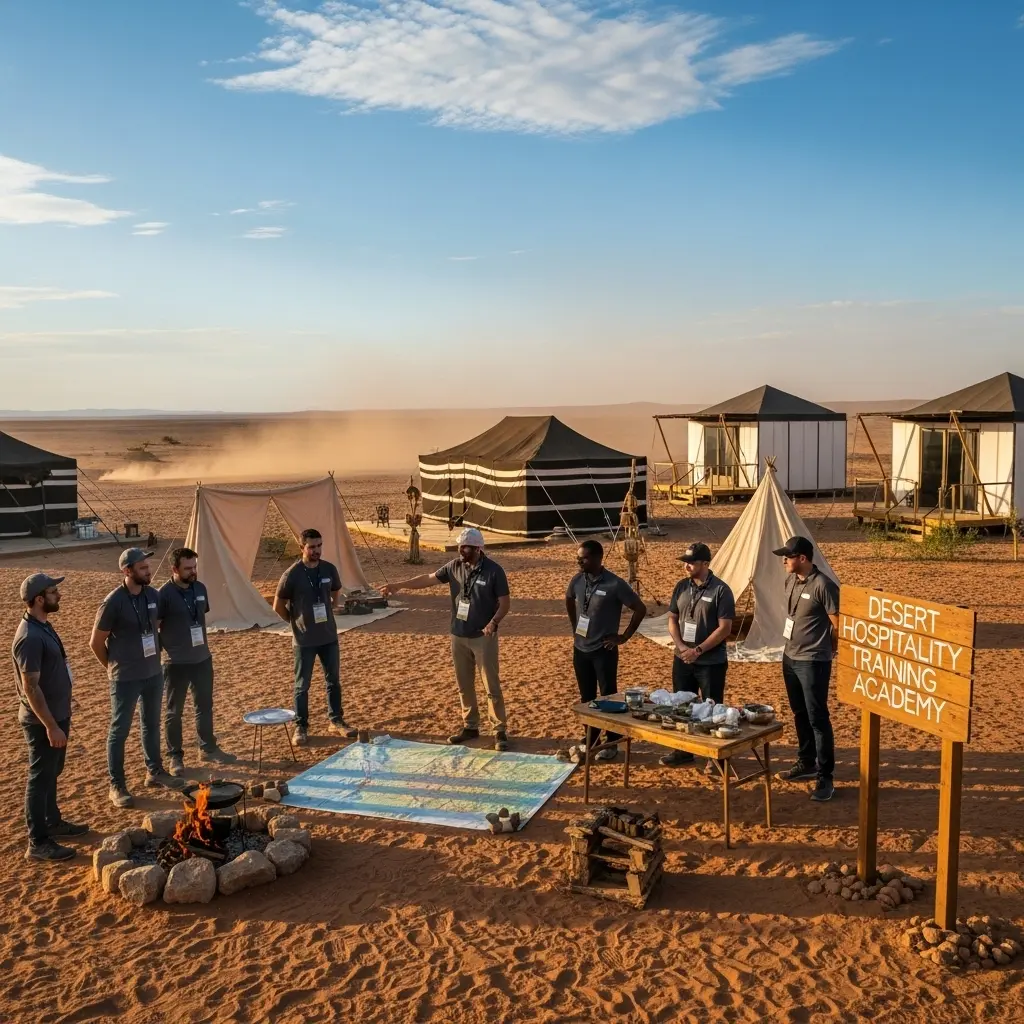
Practical, hands-on sessions are a major part of Desert Camp Training. Staff practice setting up tents, arranging carpets, and preparing the entertainment area until they can do it quickly and perfectly. This ensures the camp looks beautiful every single day, regardless of the weather.
17. What is the “Mystery Shopper” program in Desert Camp Training?
This is a quality control tool. Anonymous testers visit the camp and rate the staff based on the Desert Camp Training standards. The results are used to provide constructive feedback and to reward staff who are performing exceptionally well.
18. Can Desert Camp Training lead to a career in the city’s hotels?
Definitely. The hospitality skills learned during Desert Camp Training—such as guest relations, food service, and operations—are highly transferable. Many people start in the desert and move into senior roles in Dubai’s luxury hotels thanks to the rigorous training they received.
19. How do staff handle sandstorms during their Desert Camp Training?
Staff are trained on specific sandstorm protocols. This includes securing the camp equipment, moving guests to safe areas, and clear communication. Desert Camp Training ensures that the team knows exactly what to do to keep everyone safe and minimize damage to the facility.