Table of Contents
Desert Falconry History: A Timeless Bond Between Man and Sky
Desert Falconry History is more than just a record of hunting; it is the living breath of the Arabian Peninsula. For thousands of years, the relationship between the Bedouin and the falcon was a matter of life or death. In the vast, barren stretches of the desert, where food was scarce, the falcon was a vital partner.
The story of Desert Falconry History begins in the shadows of the shifting dunes. Nomadic tribes observed the incredible speed and precision of these raptors. They realized that by taming these birds, they could secure meat that was otherwise out of reach. This was not a sport for the elites in the beginning; it was a survival strategy.
As we explore Desert Falconry History, we find a deep mutual respect. The Bedouin did not view the falcon as a pet. They viewed it as a family member. This connection is what allowed the practice to survive through the centuries, evolving into the prestigious cultural symbol we see today.
The Origins of Falconry in the Middle East
The exact starting point of Desert Falconry History is often debated by historians. However, archaeological evidence suggests it dates back at least 2,000 to 4,000 years. Some ancient texts from the region mention birds of prey assisting hunters long before modern borders were drawn.
In the early stages of Desert Falconry History, the Saker falcon was the preferred species. These birds were known for their endurance and ability to thrive in harsh climates. They were caught during their autumn migration, trained quickly, and used for hunting throughout the winter.
Another interesting aspect of Desert Falconry History is that the birds were often released. After a season of hunting, the Bedouins would release the falcons back into the wild. This ensured the survival of the species and allowed the birds to breed, showing an early form of environmental conservation.
Traditional Training Methods in Desert Falconry History
The training process within Desert Falconry History is a masterclass in patience. A wild falcon is naturally fearful of humans. To bridge this gap, the trainer would spend day and night with the bird. This constant proximity helped the falcon recognize the trainer’s voice and scent.
One of the unique Desert Falconry History techniques is “man-manning.” The trainer carries the bird on their arm for hours, walking through busy camps. This desensitizes the falcon to human activity. It is a slow, methodical process that requires a calm temperament from the handler.
Feeding is the ultimate tool in Desert Falconry History. The bird learns that the trainer is the source of food. Eventually, the falcon is trained to fly toward the handler when called. This bond of trust is the core reason why the bird returns even though it has the freedom of the sky.
The Evolution of Falconry Equipment
No look at Desert Falconry History is complete without examining the specialized tools. The equipment has remained largely unchanged for centuries, reflecting the efficiency of ancient designs. Each piece has a specific purpose that serves both the bird and the hunter.
The “Burqa,” or the leather hood, is a central piece of Desert Falconry History. It covers the bird’s eyes to keep it calm. By limiting the bird’s vision, the trainer prevents it from being spooked by sudden movements. This allows the falcon to save its energy for the hunt.
The “Manqalah” is the thick glove used to protect the hunter’s arm from sharp talons. In Desert Falconry History, the glove was often made from whatever leather was available locally. Today, while materials have improved, the basic structure remains the same as it was a thousand years ago.
Species That Defined Desert Falconry History
While many birds can be trained, two species dominate Desert Falconry History. The Saker and the Peregrine falcons are the icons of the Arabian sands. Each has its own strengths that the Bedouin utilized for different types of terrain.
The Saker falcon is the rugged hero of Desert Falconry History. It is larger and can handle the rough winds of the desert. It was traditionally used to hunt Houbara bustards and desert hares. Its ability to strike from a low altitude made it perfect for the flat desert plains.
The Peregrine falcon brought speed to Desert Falconry History. Known as the fastest animal on earth, its high-speed dives are legendary. While more delicate than the Saker, its precision made it a favorite for hunters who wanted a spectacular display of aerial skill.
Comparison of Key Falcon Species
| Feature | Saker Falcon | Peregrine Falcon |
| Origin | Central Asia / Middle East | Global Migrator |
| Hunting Style | Low-altitude endurance | High-speed vertical stoops |
| Environment | Arid desert and scrubland | Cliffs and open plains |
| Primary Prey | Desert Hares / Bustards | Pigeons / Waterfowl |
| Role in History | Survival and utility | Speed and prestige |
Falconry as a Status Symbol in the Royal Courts
As the wealth of the region grew, the role of falconry shifted within Desert Falconry History. It moved from the tents of the nomads to the palaces of the ruling families. Falconry became known as the “Sport of Kings.”
This transition in Desert Falconry History brought about new levels of sophistication. Expeditions were organized on a massive scale. The rulers used these trips to connect with their people and to maintain their desert survival skills even as their cities modernized.
Today, the influence of Desert Falconry History is visible in national symbols. The falcon appears on currency, passports, and official emblems. It represents courage, strength, and the soaring spirit of the Arabian people.
Modern Conservation Efforts and the Future
In the 21st century, Desert Falconry History has entered a phase of protection. Overhunting and habitat loss in the mid-20th century threatened many falcon species. This led to the creation of specialized hospitals and breeding centers.
The Abu Dhabi Falcon Hospital is a modern miracle of Desert Falconry History. It provides world-class care for thousands of birds every year. From feather repairs to complex surgeries, the hospital ensures that these majestic birds continue to thrive.
The “Falcon Passport” is another modern addition to Desert Falconry History. These birds are so valued that they have their own travel documents. This allows them to be transported across borders for international competitions and health checks under strict regulations.
The Role of Falconry in Modern Desert Safaris
For the average traveler, Desert Falconry History is experienced through the lens of a desert safari. Most high-quality tours include a falconry demonstration as a highlight of the evening. It is a way for visitors to witness the bond between man and bird firsthand.
During these displays, the history is explained to the audience. Guests learn about the training, the diet, and the cultural weight of the sport. This educational component keeps Desert Falconry History relevant for a global audience.
Many camps work with professional falconers who are dedicated to preserving the ancient ways. By supporting these safaris, tourists contribute to the funds needed for falcon conservation and the continuation of the heritage.
External Resources and Heritage Leaders
If you want to see the results of this long Desert Falconry History, visiting a professional camp is essential. You can find authentic displays at https://royaldesertadventures.ae/ where the traditions are kept alive with great care.
For a deeper understanding of how these birds are integrated into broader tourism, https://dubaidesertsafarie.com/ provides extensive information on the cultural aspects of desert life.
Another excellent resource for those who want to see the intersection of luxury and tradition is https://htdesertsafari.com/. They focus heavily on the educational side of Arabian hunting culture.
For those looking for internal insights on our own heritage programs and how we honor this legacy, visit https://saharadesertsafaridubai.com to explore the richness of the desert.
The Seasonal Cycle of Falconry
The calendar of Desert Falconry History is dictated by the weather. In the summer, the heat is too intense for both the birds and the hunters. This is the time for “Moult,” where the falcons rest and grow new feathers.
As the temperature drops in October, the active phase of Desert Falconry History begins. This is when the training intensifies. The birds are prepared for the hunting season, which usually runs until March.
The migration patterns of prey also influence Desert Falconry History. The Bedouin knew exactly when the bustards would arrive, and they timed their hunting trips to match these natural cycles. This deep knowledge of the land is a core part of the falconer’s skill.
The Philosophy of the Falcon and the Falconer
There is a spiritual side to Desert Falconry History. It is often described as a form of meditation. In the silence of the desert, the falconer must be completely present. Any distraction can break the bond with the bird.
Patience is the most valuable virtue in Desert Falconry History. You cannot force a falcon to hunt. You can only guide it. This philosophy extends to the Bedouin way of life, emphasizing harmony with nature rather than dominance over it.
The falconer also learns humility. Sometimes, despite all the training, the bird chooses to fly away. In Desert Falconry History, this is accepted as the will of nature. It serves as a reminder that freedom is the ultimate state of being.
Social Impact of Falconry Clubs
The rise of organized clubs has secured the place of Desert Falconry History in modern society. These clubs organize competitions that test the speed and agility of the birds. This has turned the heritage into a competitive sport with high stakes.
Competitions like the “Fazza Championship” keep the youth interested in Desert Falconry History. By making it a sport with prizes and recognition, the elders ensure that the skills are passed down to the next generation.
These clubs also act as centers for scientific research. They track migration routes and study the health of wild populations. This means Desert Falconry History is now contributing to global avian science.
The Art of Falconry in Literature and Poetry
Arabian poetry is filled with references to Desert Falconry History. The falcon is a common metaphor for a brave warrior or a noble leader. These poems have preserved the emotions associated with the hunt for centuries.
In many classic works, the eyes of the falcon are praised for their sharpness. The way a falcon strikes is compared to the swiftness of justice. This literary connection shows how deeply Desert Falconry History is embedded in the collective soul of the region.
Modern writers continue this trend, using the falcon to explore themes of identity and change. As the UAE grows, the falcon remains a steady anchor to the past, providing a sense of continuity in a rapidly changing world.
Preparing for Your First Falconry Experience
If you are planning to witness Desert Falconry History on your next trip, it is important to go with a respectful mindset. Remember that these are not circus animals. They are highly trained raptors with a rich history.
Ask the falconer questions. Most are happy to share their knowledge of Desert Falconry History. Learning about the specific bird on the glove—its age, its name, and its personality—makes the experience much more meaningful.
Be mindful of your movements. While the falcons are well-socialized, they still have sharp instincts. Following the instructions of the handler ensures a safe and enjoyable encounter with the legacy of Desert Falconry History.
FAQ: Understanding the Legacy of Falconry
1. Why is Desert Falconry History so important to the UAE?
Desert Falconry History is the ultimate symbol of the nation’s heritage. It represents the resourcefulness of the Bedouin who used falcons to survive in a harsh environment. Today, it serves as a bridge between the humble past and the prosperous future. It is not just a sport; it is a cultural identity that teaches values like patience, bravery, and respect for nature, making it a cornerstone of Emirati pride.
2. How did the Bedouin catch wild falcons in the past?
In early Desert Falconry History, hunters used clever traps. One common method was using a pigeon as bait within a net. The hunter would hide in a hole in the sand, covered with brush. When the falcon dived for the pigeon, the hunter would carefully pull the net. This required hours of motionless waiting under the hot sun, demonstrating the incredible discipline of ancient hunters.
3. What is the significance of the falcon hood in Desert Falconry History?
The “Burqa” or hood is used to keep the bird calm. Falcons have incredibly sharp vision and are very sensitive to their surroundings. In Desert Falconry History, the hood was found to be the most effective way to prevent the bird from becoming stressed in a busy camp. By keeping the bird in darkness, it remains relaxed until it is time for the hunt or training.
4. How long does it take to train a falcon?
According to Desert Falconry History, a wild falcon can be basic-trained in about two to four weeks. However, mastering the bond takes much longer. The trainer must spend nearly every waking hour with the bird to build a deep level of trust. Modern trainers still follow these ancient timelines to ensure the bird is responsive and healthy before taking it into the open desert.
5. Are falcons still used for hunting food today?
While some traditional hunting still occurs, most activities in modern Desert Falconry History focus on heritage displays, competitions, and conservation. The UAE has strict laws regarding hunting to protect local wildlife. Most falconry today is a “cultural sport” where the birds are trained to hunt lures rather than wild prey, ensuring the tradition continues without harming the ecosystem.
6. Can anyone own a falcon in the UAE?
Owning a falcon is a major responsibility and is regulated. Within the context of Desert Falconry History, owners must have the proper permits and the means to care for the bird. Many Emiratis grow up with falcons in their homes, learning the skills from their fathers. For expats and tourists, the best way to participate is through licensed clubs and cultural centers.
7. Why do falcons have passports in the Middle East?
This is a unique modern development in Desert Falconry History. To prevent the illegal trade of these valuable birds, the UAE issued passports for falcons. These documents track the bird’s origin and medical history. Since falcons are often taken on planes to international competitions, the passport ensures they can travel legally and safely with their owners.
8. What happens to falcons during the hot summer months?
As recorded in Desert Falconry History, the summer is the “Moult” period. Falcons are kept in specially designed, air-conditioned rooms or large aviaries. They are given a high-protein diet and allowed to rest. This is when they shed their old feathers and grow a fresh, strong set for the upcoming winter season. It is a period of total recovery for the bird.
9. Is falconry an expensive hobby in modern times?
Yes, modern Desert Falconry History can be very costly. High-quality falcons can sell for tens of thousands of dollars. Additionally, the cost of specialized food, veterinary care at falcon hospitals, and the equipment adds up. However, for many, it is considered an investment in their heritage rather than just an expense.
10. How is falconry being taught to the younger generation?
Schools and cultural festivals are the modern classrooms for Desert Falconry History. The government organizes youth competitions and workshops. Elders are encouraged to bring their grandchildren to falconry events. By making the tradition fun and prestigious, the UAE ensures that the “Falconry of the Desert” will never be forgotten by future generations.
The Economic Value of Falconry Tourism
The global interest in Desert Falconry History has created a significant niche in the tourism market. People travel from all over the world to witness the traditional hunting festivals and the beauty of the birds.
This interest supports a wide range of jobs. From the artisans who hand-stitch the leather hoods to the veterinarians who specialize in raptor health, Desert Falconry History is an economic driver. It encourages the preservation of skills that might otherwise have died out.
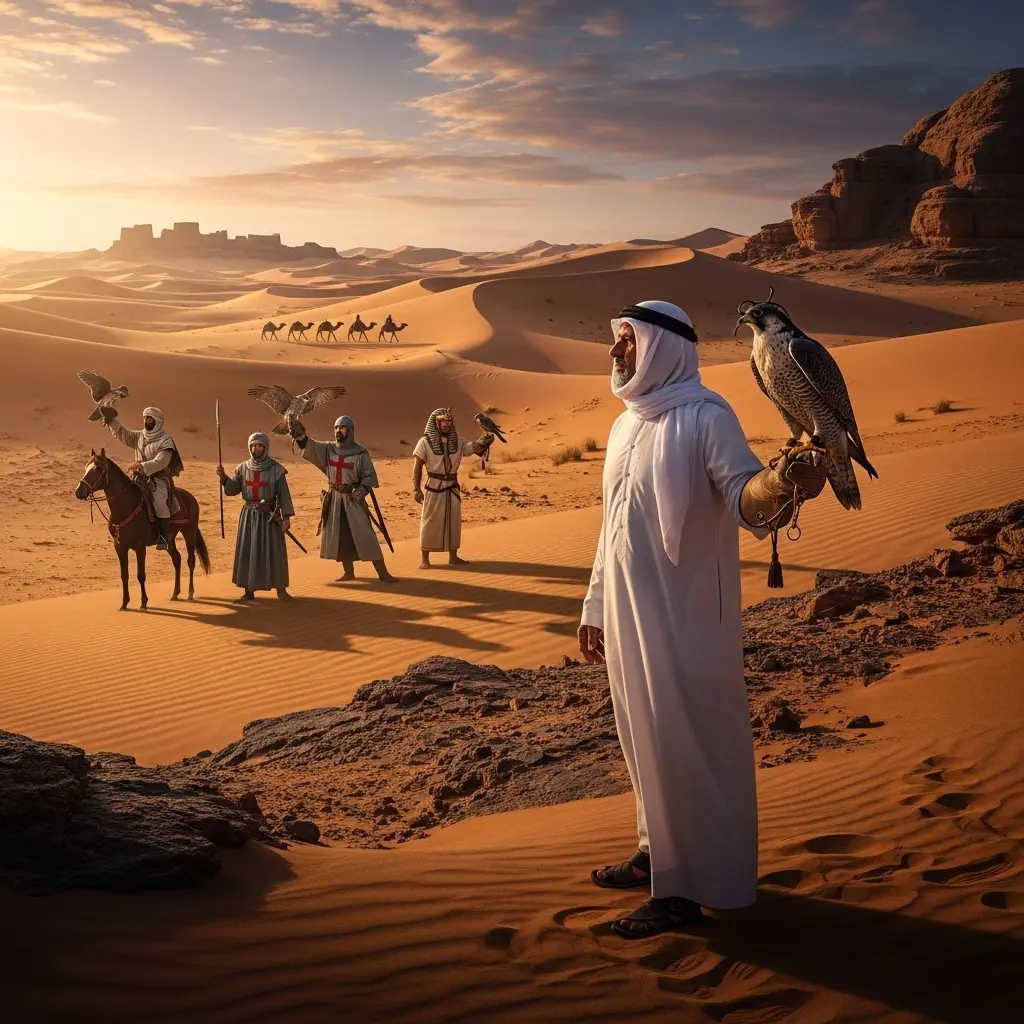
International film crews and photographers are also drawn to the aesthetics of Desert Falconry History. The sight of a man in traditional robes with a falcon on his arm against a sunset is one of the most iconic images of the Middle East.
Falconry and International Relations
The UAE has used Desert Falconry History as a tool for cultural diplomacy. Falcons are often presented as gifts to visiting dignitaries, representing the highest form of honor. This shares the spirit of Arabia with leaders across the globe.
International conferences on falconry often take place in Dubai and Abu Dhabi. These events bring together experts from Europe, Asia, and the Americas to discuss conservation and Desert Falconry History. This collaboration helps protect migratory routes that span entire continents.
By leading these global discussions, the UAE has positioned itself as the world capital of falconry. It is a source of “soft power” that highlights the nation’s commitment to both its ancient roots and modern environmental science.
The Role of Technology in Tracking Falcons
While the training is ancient, modern Desert Falconry History utilizes cutting-edge technology. GPS trackers are now commonly attached to the bird’s tail feathers. This allows the falconer to find the bird if it chases prey out of sight.
Drones are also being used in training. A drone can carry a lure high into the sky, encouraging the falcon to fly higher and dive faster than traditional methods allowed. This fusion of old and new is a fascinating chapter in Desert Falconry History.
High-speed cameras are used in competitions to judge the exact millisecond a falcon strikes its target. This level of precision has turned falconry into a high-tech sport while still honoring the traditional skills of the handler.
The Spiritual Significance of the Hunt
For many Bedouin, the hunt was a time for reflection. Desert Falconry History tells us that these trips were often silent affairs. The vastness of the desert and the focus required for the hunt created a space for spiritual connection.
The falcon was seen as a messenger from the heavens. Its ability to soar high and see what man could not was viewed with awe. This respect for the bird’s natural gifts is what defined the ethical boundaries of Desert Falconry History.
Even today, those who practice falconry speak of the peace it brings. In a world of constant digital noise, the ancient rhythms of Desert Falconry History offer a way to disconnect and find balance.
Educational Programs in Schools
To ensure the survival of Desert Falconry History, the UAE government has integrated heritage studies into the national curriculum. Students learn about the biology of falcons and the history of the sport.
Field trips to falcon hospitals and breeding centers are common. This hands-on approach makes Desert Falconry History real for the children. They see the birds not as symbols on a coin, but as living creatures that require care and respect.
Competitions for school-aged children are also popular. These events allow young falconers to show off their skills in a supportive environment. It builds confidence and a sense of belonging to a long and noble lineage.
Sustainable Tourism and Ethical Falconry
As tourism grows, the need for ethical Desert Falconry History becomes more important. Reputable operators ensure that the birds are not stressed by too many visitors. They prioritize the bird’s health over the tourist’s photo opportunity.
Educational talks are now a standard part of the experience. Instead of just seeing a bird fly, guests learn about the conservation status of the species. This turns a simple holiday activity into a lesson in environmental responsibility.
By choosing ethical tours, visitors help support the high standards of care that define modern Desert Falconry History. This ensures that the industry remains a positive force for both the culture and the wildlife.
The Art of Falconry in Modern Design
The influence of Desert Falconry History can be seen in modern architecture and fashion. The shape of a falcon’s wing has inspired building designs in Dubai. Local designers often use falcon motifs in their clothing lines.
High-end brands have created luxury falconry kits, using exotic leathers and precious metals. While these are far from the simple tools of the past, they show how Desert Falconry History continues to inspire creativity and craftsmanship.
Art galleries in the UAE frequently host exhibitions focused on the falcon. From traditional paintings to modern sculptures, the bird remains a central muse for artists exploring the identity of the desert.
Checklist for a Great Falconry Experience
Research: Choose an operator with a strong focus on heritage and animal welfare.
Respect: Follow the instructions of the falconer to keep yourself and the bird safe.
Patience: Falconry is about waiting for the right moment; don’t rush the experience.
Photography: Ask permission before using a flash, as it can startle the birds.
Learning: Take the time to listen to the history and stories shared by the guides.
Observation: Watch the interaction between the trainer and the bird; it tells the real story.
The Global Recognition of Falconry
In 2010, UNESCO recognized falconry as a Living Human Heritage. This was a massive milestone for Desert Falconry History. It placed the Arabian traditions on the world stage as something worth protecting for all of humanity.
This international recognition has brought more resources to conservation. It has also created a global network of falconers who share best practices. Desert Falconry History is now part of a global conversation about our relationship with the natural world.
The UAE played a leading role in the UNESCO bid. By working with other nations, they showed that the love of falconry is a universal language that can bring different cultures together in a spirit of cooperation.
Looking Forward: The Next Millennium
What does the future hold for Desert Falconry History? As long as the desert exists, the bond between the falconer and the bird will likely remain. It is too deeply ingrained in the culture to ever truly vanish.
We will likely see more advances in avian medicine and conservation. The goal is to ensure that wild populations are so healthy that they no longer need intensive management. This would be the ultimate success for Desert Falconry History.
The sport will continue to adapt. Whether through new technology or new ways of teaching, the core values will remain the same. The falcon will always be a symbol of the desert’s beauty and the human spirit’s desire to soar.
Conclusion: A Legacy Written in the Sky
Desert Falconry History is a story of survival, respect, and beauty. It began as a way to find food and became a way to find oneself. From the ancient Bedouin to the modern kings, the falcon has been a constant companion.
When you see a falcon in the desert, you are not just looking at a bird. You are looking at thousands of years of history. You are looking at a bond that has survived wars, economic shifts, and the birth of a nation.
Embrace the tradition, respect the bird, and listen to the stories of the sand. Desert Falconry History is waiting to be discovered, one wingbeat at a time. It is a legacy that belongs to the desert, but its beauty belongs to the world.