Table of Contents
Desert Hospitality Traditions: The Timeless Spirit of Arabian Generosity
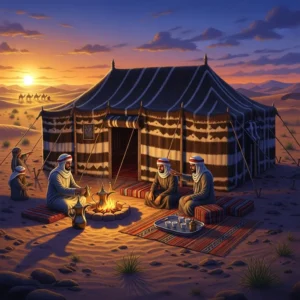
Desert Hospitality Traditions represent the core essence of life in the Arabian Peninsula. For millennia, the vast and unforgiving landscape of the desert dictated a unique social contract. In a place where resources were scarce and the sun was relentless, kindness was not just a virtue; it was a survival mechanism.
The history of Desert Hospitality Traditions is rooted in the nomadic lifestyle of the Bedouin tribes. These people understood that today’s host could easily be tomorrow’s traveler in need. This mutual understanding birthed a culture of generosity that remains unparalleled in the modern world.
As we explore the depths of Desert Hospitality Traditions, we see how these ancient practices have evolved. While the setting has changed from goatskin tents to luxury resorts, the underlying values of honor, safety, and respect continue to define the region’s identity.
The Sacred Law of the Three Days
One of the most remarkable aspects of Desert Hospitality Traditions is the “three-day rule.” Traditionally, any traveler who approached a Bedouin tent was entitled to food, water, and shelter for three days and one-third of a day.
During this period, according to Desert Hospitality Traditions, the host would never ask the guest their name, their tribe, or the purpose of their journey. This anonymity ensured that the hospitality was unconditional and not based on political or social gain.
This specific part of Desert Hospitality Traditions allowed people to travel safely across tribal borders. It created a network of safety zones where a person’s life was protected by the honor of the host. Even enemies could find temporary refuge under this sacred code.
The Ritual of Coffee and Welcome
No discussion of Desert Hospitality Traditions is complete without mentioning the Arabic coffee ritual, known as Gahwa. The preparation of coffee is the first signal of a host’s readiness to receive a guest.
In Desert Hospitality Traditions, the sound of the “Mihbash” (the mortar and pestle) grinding the coffee beans was an invitation to the neighbors and travelers alike. It was an auditory beacon signaling that a fresh pot of coffee was being brewed.
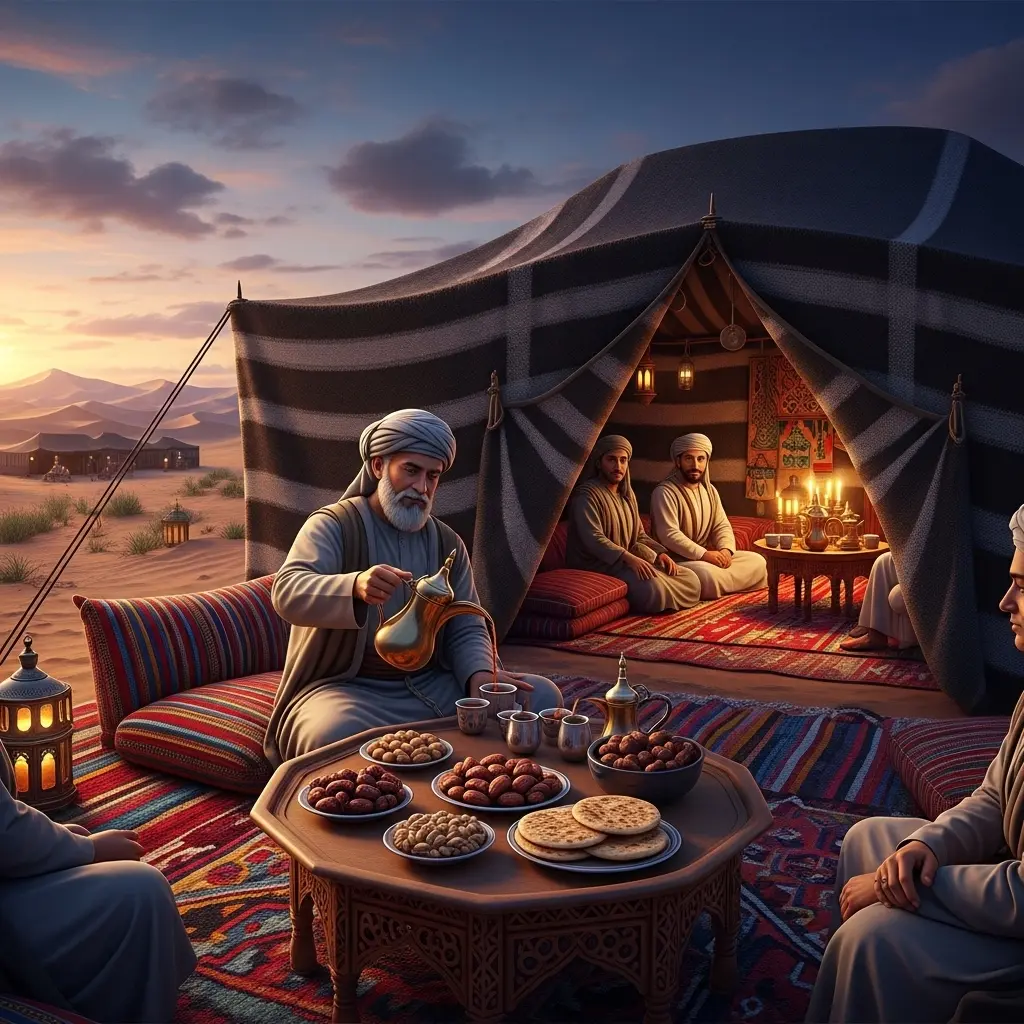
The etiquette of serving coffee is a major pillar of Desert Hospitality Traditions. The host always serves with the left hand holding the pot and the right hand offering the cup. The cup is never filled to the top; it is served in small amounts to encourage the guest to stay longer and engage in conversation.
Social Hierarchy and the Majlis
The “Majlis,” or the sitting place, is the physical heart of Desert Hospitality Traditions. This is where the community gathers to share news, resolve disputes, and welcome newcomers. The layout of the Majlis reflects the tribal social structure.
In Desert Hospitality Traditions, the most honored guest is seated furthest from the entrance, symbolizing their protection by the tribe. The host sits near the entrance to ensure they can greet anyone who approaches immediately.
The Majlis serves as a school for the younger generation to learn Desert Hospitality Traditions. Children observe their elders, learning how to speak with respect, how to serve coffee, and how to maintain the family’s honor through their actions.
The Role of Food in Tribal Honor
Food is a central medium for expressing Desert Hospitality Traditions. The presentation of a large communal platter, usually featuring rice and lamb, symbolizes unity and shared destiny.
Under Desert Hospitality Traditions, the host often does not eat with the guest. Instead, they stand and serve, ensuring that the guest’s plate is never empty. This act of service is a profound display of humility and dedication to the guest’s comfort.
The quality of the meal is often used to measure the depth of Desert Hospitality Traditions. Even the poorest families would slaughter their last sheep to honor a guest, believing that the blessing brought by the visitor was worth more than any material possession.
Comparison of Hospitality Eras
| Feature | Ancient Bedouin Era | Modern Luxury Era |
| Primary Shelter | Goatskin Tents (Bayt al-Shar) | Five-Star Desert Resorts |
| Welcome Drink | Freshly Ground Bitter Coffee | Gahwa with Organic Dates |
| Guest Status | Protected for 3 Days | High-Value Tourist |
| Entertainment | Oral Poetry and Rababa | Live Cultural Performances |
| Focus | Physical Survival | Emotional Experience |
Protection and the Code of Refuge
Safety is the ultimate promise in Desert Hospitality Traditions. Once a guest has eaten salt or bread with the host, they are under the host’s “Dakhala” or protection. This bond is considered unbreakable in tribal law.
In Desert Hospitality Traditions, a host would defend their guest even at the cost of their own life. This level of commitment created a sense of order in a landscape that lacked central government or formal police forces.
This aspect of Desert Hospitality Traditions also extended to the guest’s property. A traveler’s camels and goods were as safe as the host’s own belongings. This integrity allowed trade routes to flourish across the vast Arabian deserts for centuries.
The Significance of Dates and Water
In the extreme climate of the desert, water is life. Desert Hospitality Traditions place an immense value on the sharing of water. Offering a drink of cool water is the most fundamental act of kindness a host can provide.
Dates are the perfect companion to water in Desert Hospitality Traditions. Rich in energy and easily stored, they were the staple food offered to weary travelers. Different types of dates often signaled the geographic origin of the tribe.
Together, water and dates form the “Basics of Welcome” in Desert Hospitality Traditions. Even before a full meal is prepared, these items are provided to stabilize the traveler after a long trek through the dunes.
Environmental Influence on Kindness
The geography of the region played a major role in shaping Desert Hospitality Traditions. Because the environment was so hostile, individuals realized they could not survive alone. Interdependence became the foundation of the culture.
The heat of the day and the cold of the night influenced the timing of Desert Hospitality Traditions. Most welcoming rituals occurred at sunset when the heat broke, and the camp became a place of rest and social rejuvenation.
This environmental pressure turned Desert Hospitality Traditions into a highly efficient system. There was no room for waste or vanity; every gesture had a practical purpose related to the guest’s recovery and the host’s reputation.
The Language of the Desert Host
The vocabulary of welcome is a specialized part of Desert Hospitality Traditions. Phrases like “Ahlan wa Sahlan” (Welcome and be at ease) are more than just words; they are an invitation to become part of the family.
Poetry and proverbs often celebrate Desert Hospitality Traditions. A famous saying suggests that “a guest is a guest of God,” implying that the host is merely the earthly steward of a divine appointment.
In Desert Hospitality Traditions, listening is as important as speaking. The host provides a platform for the guest to share their news, making the tent or the Majlis a hub of information in a world without newspapers or digital media.
Modern Safaris and Heritage Preservation
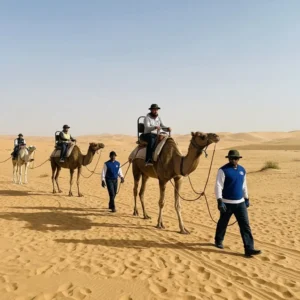
Today, the spirit of Desert Hospitality Traditions is the driving force behind the tourism industry in Dubai and the UAE. Visitors from across the world come to experience this legendary kindness.
Operators like https://royaldesertadventures.ae/ strive to maintain the authenticity of these customs. By offering traditional welcomes and Majlis seating, they ensure that the ancient values remain visible to modern travelers.
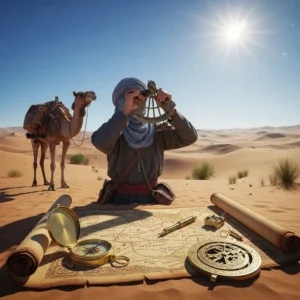
For those interested in the logistical history of these moves, https://dubaidesertsafarie.com/ offers deep insights into how the Bedouin navigated and maintained their camps.
Another champion of these values is https://htdesertsafari.com/, where the focus is on the educational aspect of the desert, teaching guests the “why” behind every traditional gesture.
For more internal insights on how we structure our cultural camps to reflect these ancient ways, visit our main site at https://saharadesertsafaridubai.com to learn about our commitment to heritage.
The Ethics of Giving and Receiving
In Desert Hospitality Traditions, there is an etiquette for the guest as well. A guest should not overstay their welcome beyond the allotted three days unless invited to stay longer for a specific reason.
Gratitude is expressed subtly in Desert Hospitality Traditions. While a guest doesn’t necessarily pay for their stay, they often share news, stories, or skills that benefit the host community. This exchange of knowledge was the “currency” of the desert.
This mutual respect ensures that Desert Hospitality Traditions remain sustainable. If guests took too much without contributing to the social fabric, the system would collapse. The balance of giving and receiving is what kept the culture healthy.
The Role of Women in Hosting
While the Majlis was traditionally a male space, women were the silent architects of Desert Hospitality Traditions. They managed the supplies, prepared the elaborate meals, and ensured the tent was comfortable for visitors.
The “Harem” section of the tent (as mentioned in our previous discussions on tent symbolism) was where women practiced their own version of Desert Hospitality Traditions for female travelers and family members.
The division of labor in Desert Hospitality Traditions was highly organized. While the man acted as the “public face,” the woman acted as the “operational heart.” Both roles were essential for the successful hosting of a guest.
Traditional Clothing and Identity
The attire worn during the welcoming rituals is part of Desert Hospitality Traditions. The “Kandura” for men and the “Abaya” for women are symbols of modesty and respect.
In Desert Hospitality Traditions, wearing clean and dignified clothing when receiving a guest is a sign of respect for the visitor. It shows that the host has prepared specifically for the guest’s arrival, elevating the importance of the encounter.
Even the way a headscarf (Ghutra) is tied can signal the host’s readiness to serve or their tribal affiliation, adding a layer of non-verbal communication to the overall experience of Desert Hospitality Traditions.
Evolution into the Digital Age
How do Desert Hospitality Traditions survive in 2026? While the physical landscape has changed, the psychological need for connection remains. The UAE uses technology to enhance these traditions rather than replace them.
Digital booking platforms for safaris now include options for “Authentic Heritage Experiences,” ensuring that Desert Hospitality Traditions are accessible to a global market.
Social media has become a new way to share Desert Hospitality Traditions. Videos of traditional coffee making and desert feasts reach millions, keeping the interest in Bedouin culture alive across continents.
The Global Impact of Arabian Kindness
The influence of Desert Hospitality Traditions can be seen in global hospitality standards. The idea of the “guest-centric” service found in top-tier hotels often draws inspiration from the unconditional care found in the desert.
Diplomatic relations in the region are often built on the foundations of Desert Hospitality Traditions. Meetings between world leaders in the UAE frequently take place in desert settings to tap into the atmosphere of mutual respect and ancient honor.
This “soft power” of Desert Hospitality Traditions is a source of pride for the nation. It shows that ancient values can provide modern solutions for conflict resolution and international cooperation.
Training for Modern Hospitality Staff
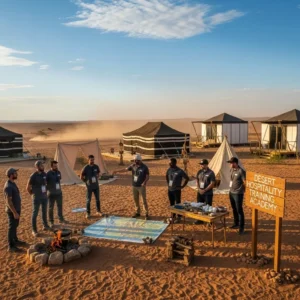
Today’s safari guides and camp staff undergo rigorous training to uphold Desert Hospitality Traditions. They must understand the history of the coffee ritual, the etiquette of the Majlis, and the stories of the desert.
This training (as we explored in our blog on staff training) ensures that the guest receives a consistent and respectful experience. It bridges the gap between the raw history of the desert and the expectations of modern luxury travelers.
By professionalizing Desert Hospitality Traditions, the industry ensures that the culture is not just a costume, but a deeply understood way of interacting with the world.
Essential Rituals of the Desert Welcome
The Scent of Bukhoor: Burning incense to clear the air and welcome the guest’s senses.
The Pouring of Water: A symbolic cleansing of the hands before any meal or drink.
The First Cup of Gahwa: A bitter, cardamom-infused coffee to awaken the palate.
The Handover of Dates: Providing immediate energy and sweetness.
The Inquiry of Comfort: Ensuring the guest has a soft place to sit and rest.
The Shared Meal: Breaking bread (and rice) together to seal the bond of protection.
The Spirituality of the Guest
Many Bedouin believe that a guest is sent by a higher power. This spiritual dimension of Desert Hospitality Traditions makes the act of hosting a form of worship.
This belief influences how the host views their resources. They are not the “owners” of the food and water, but the “trustees.” This perspective encourages a spirit of abundance in Desert Hospitality Traditions, even when supplies are low.
When a guest leaves, they leave a blessing behind. This spiritual exchange is the hidden engine of Desert Hospitality Traditions, ensuring that the host feels enriched by the experience of giving.
Resilience and the Preservation of Memory
In a rapidly changing world, Desert Hospitality Traditions act as an anchor. They remind the people of the UAE of their humble beginnings and the values that helped them build a modern nation.
Cultural festivals and heritage villages are dedicated to showcasing Desert Hospitality Traditions. These events allow the youth to see these practices in action, ensuring the chain of tradition remains unbroken.
Museums like the Etihad Museum and the Shindagha Museum provide a historical record of Desert Hospitality Traditions, using artifacts and oral histories to document the evolution of kindness across the decades.
Conclusion: The Unending Welcome of the Sands
Desert Hospitality Traditions are the heart and soul of the Arabian Peninsula. They are a testament to the fact that even in the most difficult circumstances, humans can choose to be kind, generous, and honorable.
As you plan your journey into the dunes, remember that you are stepping into a landscape with a very long memory. The Desert Hospitality Traditions you experience today are the result of thousands of years of human connection.
The dunes may shift, and the cities may grow, but the spirit of the welcome remains. Embrace the coffee, share the meal, and listen to the stories. In doing so, you become a part of the grand history of Desert Hospitality Traditions.
20 FAQs About Desert Hospitality Traditions
1. What is the fundamental principle of Desert Hospitality Traditions?
The fundamental principle of Desert Hospitality Traditions is that a guest is a gift from God and must be treated with unconditional honor. This means providing the best possible food, shelter, and protection without asking for anything in return. Historically, this ensured that travelers could survive the extreme conditions of the desert, creating a culture where generosity became the highest social value and a key indicator of a family’s or tribe’s honor.
2. How long can a guest stay under Desert Hospitality Traditions?
Traditionally, under Desert Hospitality Traditions, a guest is entitled to three days and one-third of a day of full hospitality. During this time, the host is responsible for the guest’s every need. After this period, the guest is expected to move on or contribute to the household if they stay longer. This rule helped balance the duty of generosity with the practical limitations of food and water in a nomadic environment.
3. Why is Arabic coffee so central to Desert Hospitality Traditions?
Arabic coffee, or Gahwa, is the “first handshake” of Desert Hospitality Traditions. It is more than a drink; it is a ritual that signals a host’s readiness to welcome a guest. The smell of the roasting beans and the sound of the mortar and pestle served as a signal to anyone nearby that the tent was open for company. Serving coffee is a way to establish rapport and show respect to the visitor.
4. What is the “Salt and Bread” bond in Desert Hospitality Traditions?
In Desert Hospitality Traditions, once a host and guest have shared a meal (specifically salt and bread), they are bound by a sacred contract of protection. The guest is no longer a stranger; they are a member of the tribe’s extended family. This bond means the host must defend the guest’s life and property against any threat, ensuring safety in a landscape where formal laws did not exist.
5. How do Desert Hospitality Traditions handle social status?
While everyone is welcomed, Desert Hospitality Traditions include subtle signals of respect for status. The most honored guest is seated in the “Sadr” or the most prestigious part of the Majlis. However, the host’s behavior—standing while the guest sits and serving the food personally—remains the same regardless of the guest’s status, reinforcing the idea that the act of hosting is an equalizer.
6. Do Desert Hospitality Traditions still exist in modern cities like Dubai?
Yes, Desert Hospitality Traditions are deeply embedded in modern Emirati culture. You can see them in the way people welcome guests into their homes, the ubiquitous presence of coffee and dates in offices, and the government’s focus on high-quality service in tourism. The setting has moved from tents to villas and hotels, but the values of “Karam” (generosity) and “Tayyib” (goodness) remain the same.
7. What is the role of incense in Desert Hospitality Traditions?
Burning Bukhoor or Oud is a sensory part of Desert Hospitality Traditions. It is used to fragrance the home and the guest’s clothing before they leave. This gesture is a sign of high respect and a way to ensure the guest carries a pleasant memory (and scent) of the host’s home back into the world. It marks the transition from the arrival to the social engagement.
8. Why does the host stand while the guest eats in Desert Hospitality Traditions?
This is a profound act of humility in Desert Hospitality Traditions. By standing and serving, the host demonstrates that their priority is the guest’s comfort above their own. It ensures that the guest feels completely at ease and doesn’t feel guilty for consuming the host’s resources. It is a visual representation of the “servant-leader” philosophy found in Bedouin culture.
9. How are children taught Desert Hospitality Traditions?
Children are taught through observation and participation from a very young age. In Desert Hospitality Traditions, young boys are often tasked with serving the coffee in the Majlis, which teaches them how to move gracefully, listen respectfully, and learn the tribal lineages. This hands-on education ensures that the values of generosity are passed down through the generations.
10. What is the significance of the “Empty Cup” in Desert Hospitality Traditions?
In Desert Hospitality Traditions, if a guest wants more coffee, they simply hold out their cup. If they have had enough, they gently shake the cup from side to side before handing it back to the server. This non-verbal communication allows the conversation in the Majlis to continue without being interrupted by verbal requests for more drink.
11. How do Desert Hospitality Traditions influence modern business meetings?
Business meetings in the Middle East often begin with a long period of social conversation, coffee, and dates. This is a direct inheritance from Desert Hospitality Traditions. Before discussing contracts or money, trust must be established. The “hospitality phase” of a meeting is where the participants assess each other’s character and honor, which are more important than any legal document.
12. Can a host refuse a guest in Desert Hospitality Traditions?
Historically, refusing a guest was unheard of and would bring immense shame on the tribe. According to Desert Hospitality Traditions, even an enemy seeking refuge must be protected if they reach the host’s tent. The only exception would be if the guest had previously committed a grave crime against the tribe’s honor, but even then, the rules of temporary sanctuary often applied.
13. What is the connection between Desert Hospitality Traditions and the environment?
The harshness of the desert created the need for Desert Hospitality Traditions. Because water and food were so scarce, everyone understood that their own survival might one day depend on the kindness of a stranger. This environmental reality turned hospitality from a “nice gesture” into a rigid social law, ensuring the survival of the species in a lethal climate.
14. Are Desert Hospitality Traditions the same for men and women?
While the public Majlis was traditionally for men, women practiced Desert Hospitality Traditions with equal intensity in the family section of the tent. They hosted female travelers, shared resources with other families, and were the ones responsible for the massive logistical effort of preparing the food and maintaining the supplies needed for grand hospitality.
15. How do modern desert safaris reflect Desert Hospitality Traditions?
Modern safaris recreate the atmosphere of the traditional welcome. When you arrive at a camp like https://royaldesertadventures.ae/, the offering of coffee, dates, and a comfortable place to sit are all derived from Desert Hospitality Traditions. These experiences allow global travelers to touch the history of the region in a way that is both educational and respectful.
16. What is the most honors-giving food in Desert Hospitality Traditions?
Lamb or camel meat served on a bed of rice (often called Ghuzi or Mandi) is the ultimate expression of Desert Hospitality Traditions. Slaughtering a valuable animal for a guest is the highest mark of respect. It shows that the host values the guest’s presence more than their own future food security, a powerful statement in a nomadic economy.
17. Why is the coffee cup never filled to the top in Desert Hospitality Traditions?
A full cup of coffee in Desert Hospitality Traditions is actually a subtle hint that the guest should drink quickly and leave. Conversely, filling only the bottom third of the cup is a sign that the host wants the guest to stay, as the server will have to return frequently to refill the cup, encouraging longer conversation and bonding.
18. How do Desert Hospitality Traditions affect the layout of a home?
Even modern villas are designed with Desert Hospitality Traditions in mind. Most homes have a separate “Majlis” entrance so that guests can be received without disturbing the privacy of the family. This architectural choice reflects the ancient Bedouin tent’s division between public honor and private life.
19. What is the spiritual meaning of a guest in Desert Hospitality Traditions?
A common saying in Desert Hospitality Traditions is that “the guest comes with their own sustenance and leaves with the sins of the household.” This means that the host should not worry about the cost of hosting, as the blessings brought by the guest far outweigh the material expense. It turns hospitality into a spiritual investment.
20. Where can I experience the most authentic Desert Hospitality Traditions?
While you can see it in every Emirati home, the best public experiences are found in heritage-focused desert camps and during cultural festivals like the Sheikh Zayed Heritage Festival. Sites like https://saharadesertsafaridubai.com offer a bridge to these ancient Desert Hospitality Traditions, providing a space where history comes to life for visitors.