Table of Contents
Desert Photography Spots 11 Gorgeous Dubai Safari Photo Locations
Desert Photography Spots are the secret ingredient to turning a standard vacation into a portfolio of breathtaking visual stories. In a world driven by digital memories, the vast, rolling dunes of the United Arab Emirates provide a canvas that is both ancient and eternally fresh. Whether you are an influencer seeking the next viral shot or a hobbyist capturing the family’s joy, the location you choose dictates the mood of your entire gallery.
The Dubai desert is not just one big pile of sand; it is a diverse ecosystem with varying colors, textures, and landscapes. From the deep crimson dunes of the north to the fossil-embedded rocks of the east, each area offers a unique aesthetic. Finding the right Desert Photography Spots requires a mix of local knowledge and a bit of adventurous spirit to go beyond the typical tourist paths.
When you book your excursion with a trusted operator like https://htdesertsafari.com/ you gain access to remote areas that are often hidden from the general public. Their guides understand where the light hits the ridges most effectively, ensuring your Desert Photography Spots are perfectly illuminated. Preparation is key, as the desert light changes faster than you might expect once the sun begins its descent.
The Crimson Allure of Lahbab Red Dunes
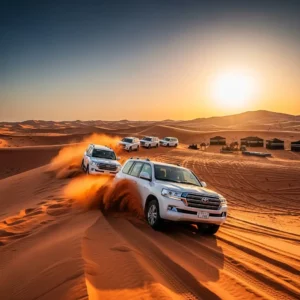
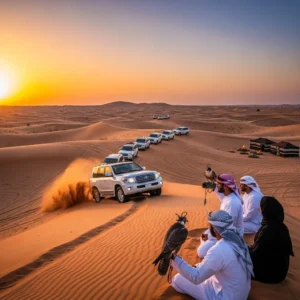
Lahbab is widely considered the king of Desert Photography Spots for those who crave high contrast and vibrant colors. The sand here is famous for its deep reddish-orange hue, which becomes almost neon as the sun reaches the horizon. It is the perfect place for high-action shots like sandboarding or dune bashing because the red sand creates a stunning trail against the blue sky.
For a classic portrait, stand on the sharp ridge of a “Big Red” dune. The way the wind ripples the surface of these dunes creates natural leading lines that guide the viewer’s eye directly to the subject. Because the dunes in Lahbab are among the tallest in the region, you can also capture expansive panoramic views that make the human figure look beautifully small against the infinite landscape.
To see examples of professional shoots in this area, you can browse the galleries at https://dubaidesertsafarie.com/. They often highlight the Lahbab region for its cinematic quality. It is a location that never fails to deliver a “wow” factor, especially for those using drones to capture the sprawling, blood-red patterns from above.
Reflective Beauty at Al Qudra Lakes
If you want to break the monotony of sand and sky, Al Qudra Lakes is one of the most refreshing Desert Photography Spots in the UAE. This man-made oasis offers a startling contrast of blue water surrounded by golden dunes and green ghaf trees. The “Love Lakes,” shaped like two interlocking hearts, are a global favorite for drone photographers and couples.
The real magic here happens during the “Golden Hour.” The reflection of the setting sun on the calm water surfaces creates a symmetry that is hard to find elsewhere in the desert. It is also a prime location for wildlife photography, as flamingos, swans, and various migratory birds frequent the area.
For those planning a romantic photoshoot, checking out the packages at https://royaldesertadventures.ae/ can give you ideas on how to set up a private, aesthetic picnic by the water. Combining the harshness of the desert with the tranquility of the lakes results in a diverse and sophisticated photo collection.
Dramatic Textures at Fossil Rock
For a more rugged and geological feel, Fossil Rock is a standout among Desert Photography Spots. Located near Mleiha, this area features ancient marine fossils embedded in massive rock formations that rise abruptly from the sand. The mix of sharp stone textures and soft dune curves provides a visual complexity that is perfect for fashion or architectural-style photography.
As the sun sets, the shadows cast by these rocks are long and dramatic, creating a moody atmosphere. It is less crowded than the central safari hubs, meaning you have more time to set up complex shots without other tour vehicles entering your frame. The dark, weathered stone serves as an excellent neutral backdrop for subjects wearing bright, flowing fabrics.
If you are interested in the historical and natural significance of these formations, https://saharadesertsafaridubai.com provides excellent background information. Knowing the “story” of the landscape often helps photographers find more meaningful angles and compositions, turning a simple photo into a narrative piece.
Capturing the Movement of Camel Caravans
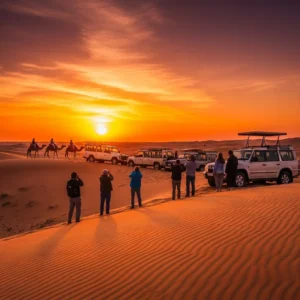
No list of Desert Photography Spots is complete without the inclusion of the camel trekking areas. The silhouette of a camel caravan against a sunset sky is perhaps the most iconic image of the Middle East. To get the best results, you need to shoot from a low angle to make the camels appear more majestic against the horizon.
Focus on the details: the intricate patterns of the woven saddles, the way the sand kicks up under the camel’s wide feet, and the interaction between the rider and the animal. These candid moments add a layer of authenticity to your safari gallery that posed shots often lack.
| Activity | Best Time | Photography Focus |
| Camel Trekking | Late Afternoon | Silhouettes and cultural details. |
| Dune Bashing | Mid Afternoon | Fast shutter speeds and sand sprays. |
| Stargazing | Late Night | Long exposures and light painting. |
Lighting Secrets for the Perfect Desert Shot
The quality of light in the desert is unlike anywhere else, but it can be your best friend or your worst enemy. The most successful Desert Photography Spots rely on the “Golden Hour”—the 60 minutes before sunset and after sunrise. During this time, the light is soft, warm, and horizontal, which highlights the delicate ripples and textures of the sand dunes.
Avoid shooting at midday if possible. The overhead sun creates “flat” images with harsh, vertical shadows that can make the landscape look dull and the subjects look tired. If you must shoot during the day, look for “framed” shots using ghaf trees or tent structures to create some depth and shade.
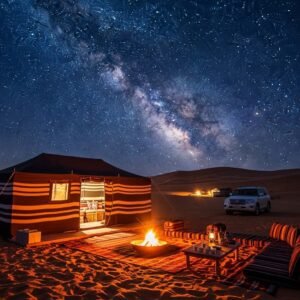
For night photography, the lack of light pollution in the deeper desert areas makes them incredible Desert Photography Spots for astrophotography. With a sturdy tripod and a long exposure, you can capture the Milky Way stretching over the silent dunes, a sight that is truly spiritual and visually overwhelming.
Gear Maintenance in a Sandy Environment
Choosing the best Desert Photography Spots is only half the battle; the other half is keeping your equipment functional. The fine desert sand is like liquid; it finds its way into every button, dial, and lens mount. One grain of sand inside your lens can cause permanent scratches or mechanical failure.
Always use a UV filter to protect your front element and avoid changing lenses in the open air. If you must switch lenses, do it inside the 4×4 with the windows rolled up. Professional photographers often use “camera skins” or even simple plastic bags to wrap their gear, leaving only the lens tip exposed to the elements.
After your trip, use a blower or a soft brush to clean your gear. Never rub the sand off with a cloth, as this will act like sandpaper on your camera’s finish. Taking care of your tools ensures you can return to these Desert Photography Spots again and again without expensive repair bills.
Cultural Etiquette and Privacy
While you are exploring various Desert Photography Spots, it is important to remain mindful of local customs and privacy. If you are visiting a Bedouin camp or a local village, always ask for permission before taking portraits of the staff or residents. In UAE culture, privacy is highly valued, and a polite request goes a long way.
Avoid taking photos of government buildings or military installations if they happen to be near your safari route. These are often strictly off-limits. Most tour guides from companies like https://htdesertsafari.com/ are well-versed in these rules and will warn you if you are in a sensitive area.
Respect the wildlife as well. If you spot an Arabian Oryx or a desert fox, use a long zoom lens rather than trying to get close. Distressing the animals for a “better shot” is not only unethical but also prohibited in protected conservation areas like the DDCR.
Compositional Techniques for Success
To make your photos stand out in the sea of social media content, use classic compositional rules at your chosen Desert Photography Spots. The “Rule of Thirds” is particularly effective in the desert; place the horizon on the lower third line to emphasize a dramatic sky, or on the upper third to focus on the textures of the sand.
“Leading Lines” are everywhere in the dunes. The wind-swept ridges create natural paths that lead the viewer’s eye toward your subject. If you place your subject at the end of a long, curving dune ridge, it creates a sense of journey and scale that is very powerful.
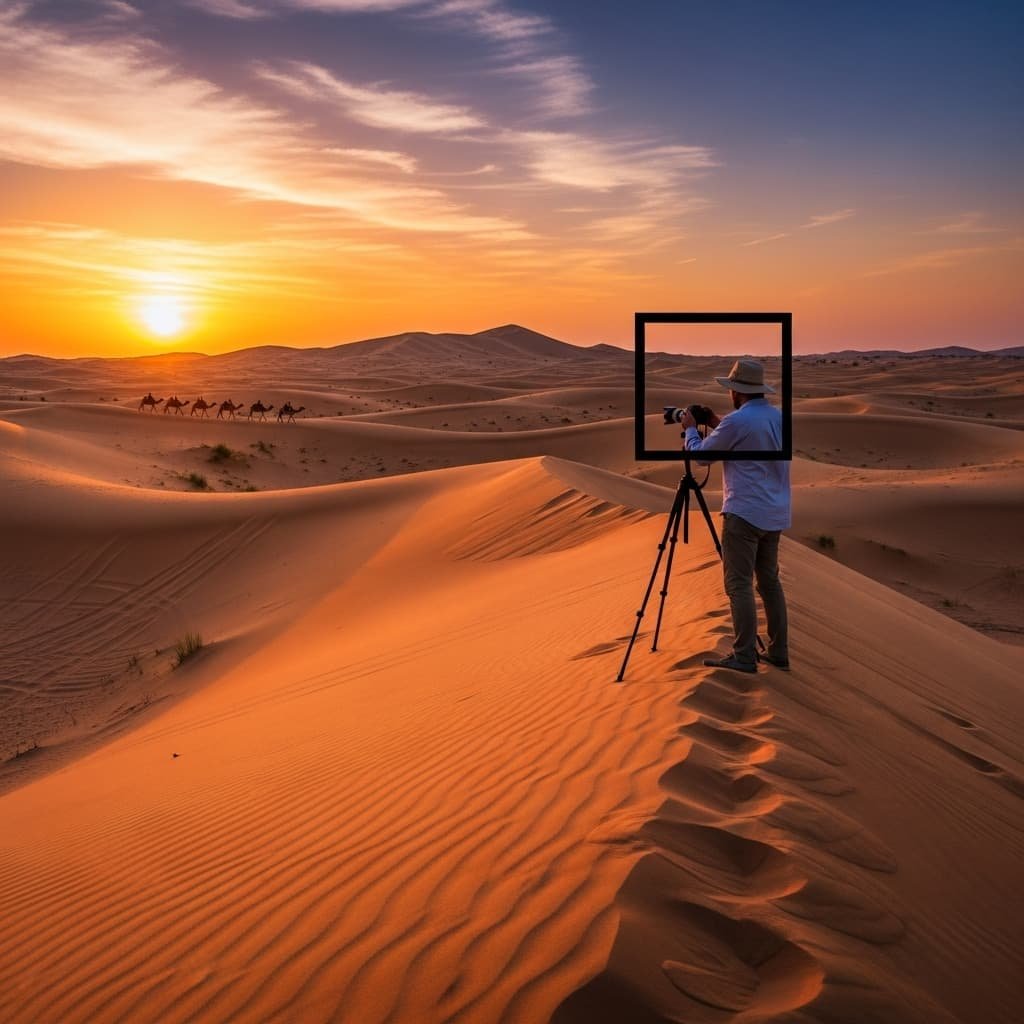
Don’t forget to include “Scale.” The desert is vast, and without a point of reference like a person, a camel, or a vehicle, the dunes can look like small piles of dirt. Including a human element at a distance helps the viewer understand the true, massive scale of the Arabian landscape.
Post-Processing Your Desert Masterpieces
Once you leave your Desert Photography Spots, the work continues in the editing room. Desert photos often come out of the camera looking a bit “washed out” because of the intense brightness. Boosting the contrast and slightly increasing the saturation of the oranges and yellows can bring back the “warmth” that the human eye naturally perceives.
Be careful with the “Dehaze” tool. While it can make the sky look blue and clear, overusing it can make the sand look muddy and artificial. Aim for a look that enhances the natural beauty rather than replacing it with something fake.
Black and white photography is also a hidden gem for the desert. When you remove the color, the focus shifts entirely to the shapes, shadows, and textures of the dunes. It can create a timeless, abstract feel that is very artistic and different from the usual “golden” sunset shots.
Frequently Asked Questions
1. What are the best Desert Photography Spots for a sunrise shoot?
The Al Marmoom Desert Conservation Reserve is arguably the best for sunrise. The light comes up over the vast, flat plains before hitting the dunes, creating a very soft and ethereal glow. Because it is a protected area, you often have the dunes all to yourself, which is perfect for capturing that “untouched” look before the footprints of the day’s tourists arrive.
2. Is a smartphone good enough for desert photography?
Modern smartphones are incredible for the desert. Most high-end phones have “Night Mode” for camp shots and “Portrait Mode” for beautiful bokeh in the dunes. However, if you want to capture the Milky Way or very distant wildlife, a dedicated DSLR or mirrorless camera with a zoom lens will still provide superior results at most Desert Photography Spots.
3. Do I need a permit for photography in the Dubai desert?
For personal use and social media, you do not need a permit in most open desert areas. However, if you are conducting a commercial shoot (for a brand or a paid advertisement), you will need a permit from the Dubai Film and TV Commission. Some conservation areas also have their own specific rules for professional gear, so always check with your tour operator first.
4. What is the best lens for a desert safari?
A 24-70mm lens is the most versatile choice. It allows you to take wide-angle landscape shots and zoom in for tighter portraits without having to change lenses in the sand. If you are a wildlife fan, bringing a 70-200mm or even a 400mm lens is necessary to capture the Arabian Oryx without disturbing them.
5. How do I avoid “flat” photos in the desert?
“Flat” photos happen when the light is too direct (like at noon). To avoid this, always aim to shoot when the sun is at an angle. This creates shadows on one side of the dunes, which provides “depth” and shows the three-dimensional shape of the sand. Backlighting your subject can also create a beautiful “glow” around their hair or clothing, adding more life to the shot.
6. Is it safe to fly a drone in the desert?
Drone laws in the UAE are strict. You must register your drone with the GCAA (General Civil Aviation Authority) and follow all “No-Fly Zone” rules. Many desert areas are near airports or flight paths. If you have the proper registration and are in a legal zone, the desert is one of the best Desert Photography Spots for aerial footage, but never fly near wildlife or other people’s private camps.
7. Should I bring a tripod to the desert?
Yes, if you plan on doing sunset or night photography. As the light fades, your camera will need a longer shutter speed to keep the image bright. Without a tripod, your photos will come out blurry. A tripod also allows you to take high-quality “panning” shots of moving vehicles or camels, which can add a dynamic feel to your collection.
8. What color clothes look best in desert photos?
White and beige are classic because they look clean and minimalist against the sand. However, for a “pop” of color, bright red, emerald green, or deep royal blue work wonders. These colors are the direct opposite of the orange sand on the color wheel, creating a high-impact visual that immediately grabs attention on Instagram.
9. How can I protect my camera from the heat?
The heat can cause your camera to shut down or drain the battery faster. Keep your gear in a padded bag when not in use and try to keep the bag in the air-conditioned car for as long as possible. If your camera feels hot to the touch, give it a break in the shade. Never leave your gear in a parked car under the direct sun for more than a few minutes.
10. What is the best way to photograph a fire show?
To capture the “trails” of fire, you need a slightly slower shutter speed (around 1/50th or 1/80th of a second). If your shutter is too fast, the fire looks like frozen sparks; if it’s too slow, it’s just a blurry mess. Use the burst mode on your camera to take dozens of photos in a few seconds, increasing your chances of getting that one perfect frame where the fire forms a complete circle.
11. Are there specific Desert Photography Spots for wildlife?
The DDCR (Dubai Desert Conservation Reserve) is your best bet. Because it is a protected zone with limited vehicle access, the animals are less shy. You can often find Arabian Oryx and sand gazelles near the Ghaf trees or the watering holes. Early morning is the best time, as the animals are active before the midday heat forces them into the shade.
12. How do I take photos of the sand dunes without footprints?
This is a challenge! The best way is to go to a remote area with a private guide who can take you to “virgin” dunes. Alternatively, go to the desert very early in the morning after a windy night. The wind acts as a natural eraser, smoothing out all the tracks from the previous day and leaving the dunes looking perfect and untouched.
13. What should I do if sand gets inside my camera?
Do not try to blow it out with your mouth, as moisture can make the sand stick. Use a dedicated air blower. If the sand is deep inside the sensor or the lens mechanism, do not attempt to clean it yourself. Take it to a professional camera service center in Dubai (like those in Al Quoz or near the Mall of the Emirates) as soon as you get back to the city.
14. Can I take photos of the sunset from the 4×4?
You can, but the vibrations of the car will likely make the photos blurry. It is much better to wait for the designated “sunset stop.” All safari drivers will pull over at a high point for about 20 minutes to allow everyone to get out and take their photos. This is your prime time to work your Desert Photography Spots strategy.
15. How do I get a “starburst” effect with the sun?
To get the sun to look like a star in your desert photos, use a very small aperture (like f/16 or f/22). When the sun is just peeking over the edge of a dune or a rock, the small aperture will diffract the light into sharp points. It adds a magical, sparkling quality to your landscape shots.
16. Is the “Blue Hour” good for desert photography?
Yes! The 20 minutes after the sun disappears but before it’s completely dark is called the “Blue Hour.” The desert takes on a cool, peaceful, and almost alien blue-purple hue. It is an amazing time for long-exposure portraits using a small lantern or even your phone’s flashlight as a light source to illuminate the subject.
17. How do I capture the “ripples” in the sand?
Ripples are best captured when the sun is very low. The low angle of the light creates tiny shadows behind each tiny ridge of sand, making them “pop.” If you shoot when the sun is high, the ripples disappear and the sand looks like a flat, smooth surface. Get down low with your camera to emphasize these patterns.
18. What is the most common mistake in desert photography?
The most common mistake is over-exposure. Because the sand is so bright, your camera’s light meter might get “confused” and make the photo too dark, or you might over-compensate and blow out the highlights. Always check your histogram to make sure you aren’t losing the detail in the brightest parts of the dunes.
19. Can I take professional-looking photos at the safari camp?
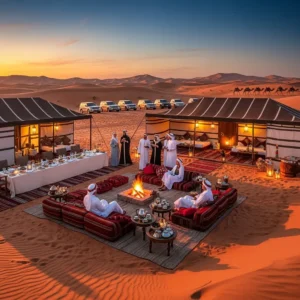
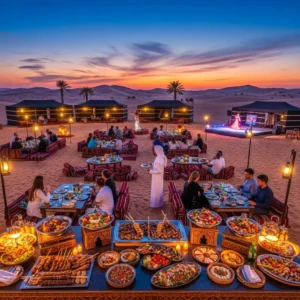
Yes. The camp is full of “micro” Desert Photography Spots. Focus on the glowing lanterns, the steam rising from the Arabic coffee pot, and the colorful carpets. These close-up shots provide the “cultural” side of your story and look great when mixed with the wide landscape photos in a gallery or a blog post.
20. How much time should I spend taking photos?
Don’t forget to put the camera down! While capturing the beauty is important, the desert experience is also about the silence and the scale of nature. Spend 70% of your time shooting and 30% just soaking in the view. Sometimes the best “memory” is the one you didn’t have to look through a viewfinder to see.
Final Words on Your Photography Journey
The desert is a fickle but rewarding subject. Every time you visit these Desert Photography Spots, the landscape will be different. The wind moves the dunes, the light shifts with the seasons, and the wildlife comes and goes. This unpredictability is what makes desert photography so addictive.
By following these tips and choosing your locations wisely, you aren’t just taking pictures; you are preserving the soul of the Arabian wilderness. Whether you are in the red sands of Lahbab or the quiet lakes of Al Qudra, the desert is waiting to be framed through your lens.
Are you ready to capture your own desert masterpiece? I can help you find the best camera settings for your specific model before you head out into the dunes!